Module Two Lessons and Overview of Assignment Two
Activity 2.5: REQUIRED: Existing Plants
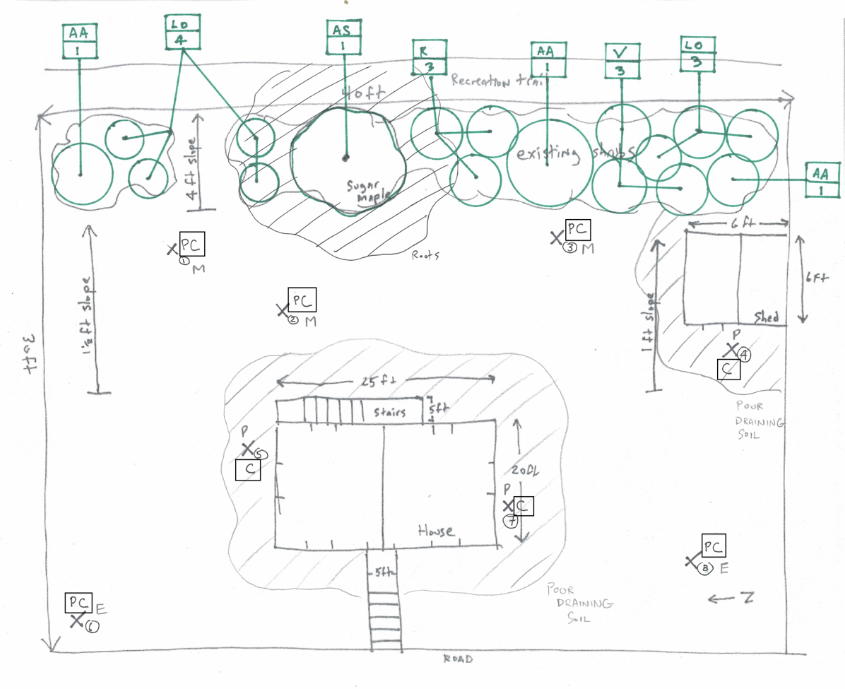
Step One: Draw the existing plants you have on your base map. Simply use your circle template; creativity is not necessary here. Try to group plant species with multiple connected circles as in the example sketch below (figure 1). Label each different plant with a symbol or letter and then start your list from there. For this activity you should have all existing plants roughly drawn in on your plan using simple circle shapes to depict a general area.
figure 1: Example of a base map labeled with existing plants. Be sure to label each plant, and correspond the labels to the Exiting Plant List document which will also submit:
Step Two: Create an Existing Plant Lists or use one of the templates below to record this information for all existing plants on your site.
Existing Plant List (Word)
Existing Plant List (pdf) and then a list with the following:
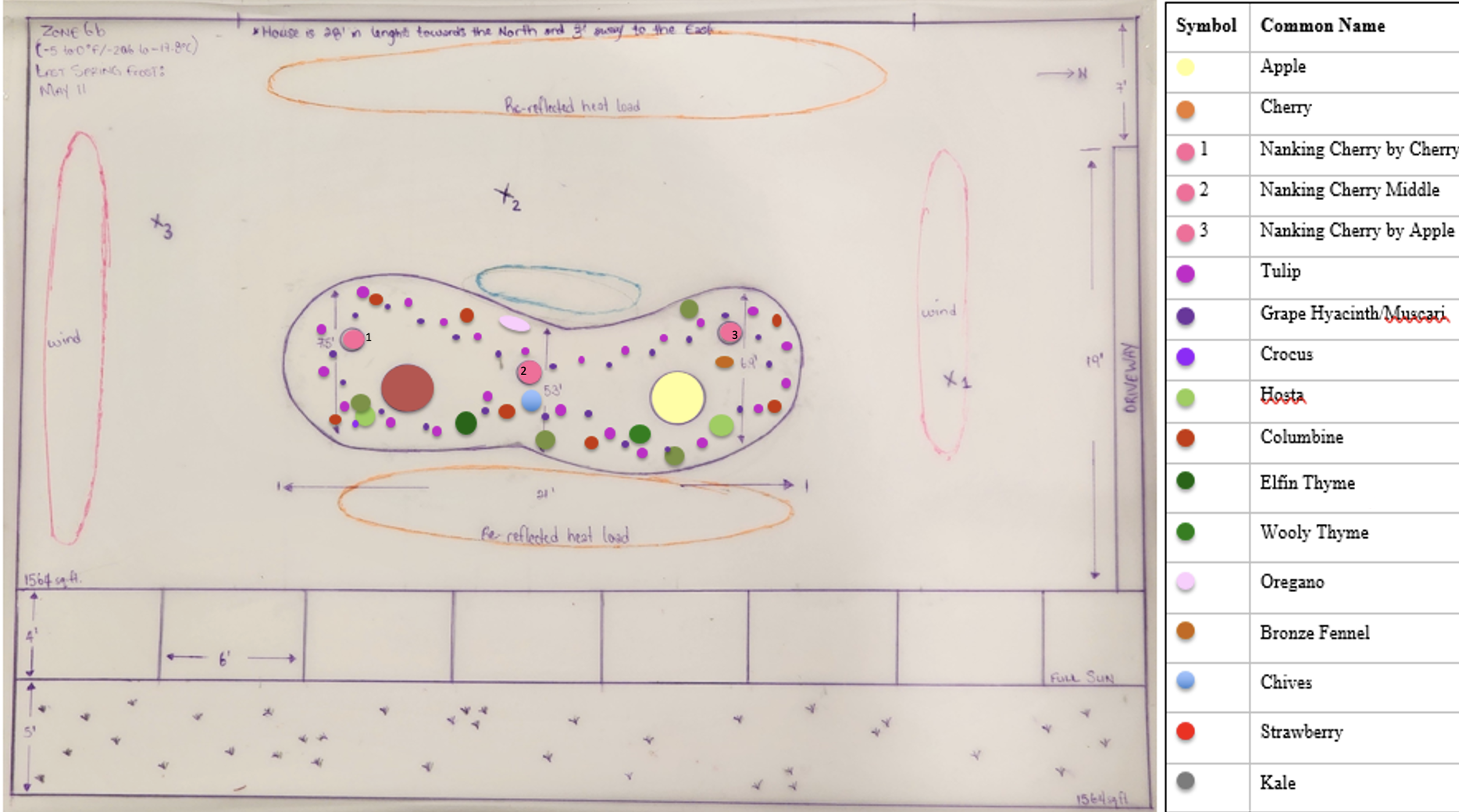
figure 2b: Student example of her corresponding Existing Plants List that was submitted with the base map shown in figure 2a:
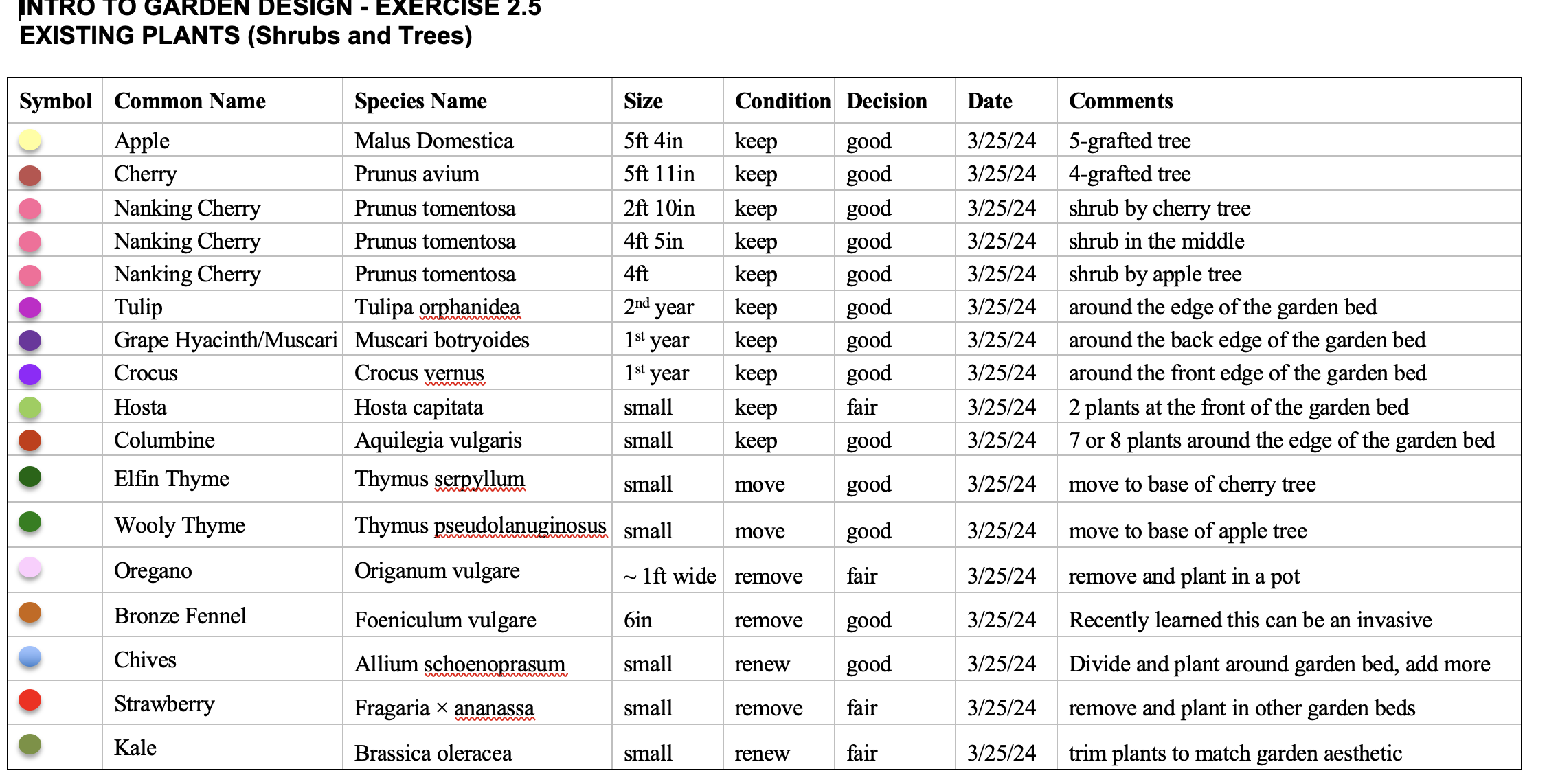
figure 1: Example of a base map labeled with existing plants. Be sure to label each plant, and correspond the labels to the Exiting Plant List document which will also submit:
Step Two: Create an Existing Plant Lists or use one of the templates below to record this information for all existing plants on your site.
Existing Plant List (Word)
Existing Plant List (pdf) and then a list with the following:
- Symbol of plant on the Based Map
- Common Name & Species Name (include cultivar if you know it, we will go over this in detail later)
- Size (Diameter of plant leaf tip to leaf tip roughly the bulk of the plant, trees are measured by Diameter of Breast Height (DBH) in inches but use the workbook method to roughly draw the diameter of the canopy)
- Condition of Plant (Good/Fair/Poor)
- Decision on what to do with it (Keep/Revamp/Eliminate/Transplant)
- Date of Decision
- Comments
In figures 2a and 2b below, you can see an example of one student assignment, her base map and corresponding Existing Plant List.
figure 2a: Student example of a base map with existing plants:
figure 2b: Student example of her corresponding Existing Plants List that was submitted with the base map shown in figure 2a:
🪴🪴🪴🪴🪴
Once you have completed your 2 chosen activities, add them with your Base Map and Existing Plant List. Click here to submit Assignment Two.