Week 2 Q & A

Week 2 Q & A

Week 2 Q & A

Number of replies: 61

Do you have questions about this week's content? Post them here to get the answers! 

To Post Your Question:

Click on Reply and type your response in the text box. To post an image click on the Advanced link and then click on the image icon in the tool bar at the top of the text box. To post an attachment, click on the Advanced link and drag and drop your file in the attachment box. Click on Post to forum to submit your question or reply.


In reply to First post

Re: Week 2 Q & A

by Amy Howansky -
Hi all,
In the additional resources sections, there is a vide on aphids, and a video on lacewings, but I am not able to get them to play. Is there something I am missing with the tech? Thank you for your help.
Amy
In reply to Amy Howansky

Re: Week 2 Q & A

by Elizabeth Lamb -
Amy, 
If I impersonate a student, they work for me.  Can anyone else report on whether they work or not?
In reply to Elizabeth Lamb

Re: Week 2 Q & A

by Amy Howansky -
Betsy,
Thanks for checking. I tried again, but they just spin without loading. I will seek computer help on my side here... You know what they say about it being an "end user problem." :)
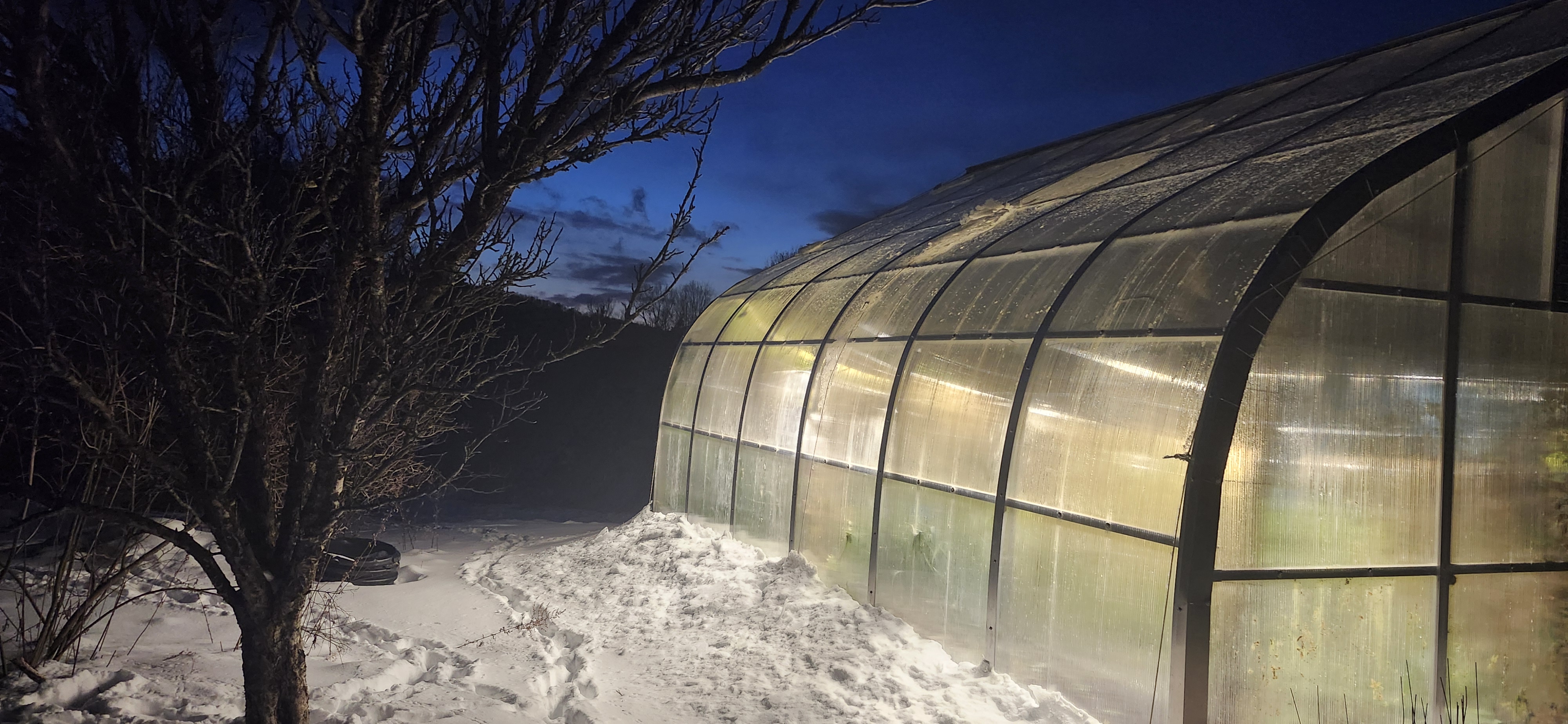
I am snowed in, and the greenhouse I am using for scouting closed today as a storm precaution, so I am trying the reading and videos.
Stay warm!
Amy
In reply to Amy Howansky

Re: Week 2 Q & A

by Elise Schillo-Lobdell -

For anyone snowed in this week or anyone who has not found a greenhouse to scout in yet you can always cut one of your sticky cards into several smaller pieces and stick them in your houseplants.   If you do catch anything you can try out using your optivisor and figuring out which lens works best for your eyes.  Can you ID your pests just using the otivisor or do you need the hand lens? If you have glued your clothespins together you’ll see how easy it is to hold on to the clothespin to ‘read’ your sticky card without having to touch the sticky card.  You can write on your sticky cards with a ballpoint pen (no one will want to borrow your pens after you do this for awhile), circle unidentified creatures to photograph & ID later.

In reply to Elizabeth Lamb

Re: Week 2 Q & A

by Elise Schillo-Lobdell -
I can get both videos to play but no audio comes out - and that’s with my IT guy helping.  Do they have audio?   Elise 
In reply to Elise Schillo-Lobdell

Re: Week 2 Q & A

by Elizabeth Lamb -
There isn't any audio. Let me reload them and see what happens.
In reply to Elizabeth Lamb

Re: Week 2 Q & A

by Elizabeth Lamb -
Try them now - if one works and not the other, let me know which one as they are loaded in different ways. Plus i made them smaller (in storage units).
In reply to First post

Re: Week 2 Q & A

by Amy Howansky -
Hi,
In some of the reading for this week, the articles mention that good IPM management practices can include "managing the environment" and "cultural practices." In my mind, those two phrases mean the same thing, but they were listed as two different options. Would they be different by saying that "managing the environment" would be pulling out weeds around the greenhouse and keeping the humidity at a certain level, whereas "cultural practices" might be watering from the bottom instead of overhead and also making sure to use the correct amount of fertilizer instead of over-fertilizing? Thank you for your help.
Amy
In reply to Amy Howansky

Re: Week 2 Q & A

by Elise Schillo-Lobdell -
Managing the environment would be temp., ventilation, humidity, light levels (use of shading or shade cloths or supplemental lighting), and probably more things I can’t think of right now. Cultural practices would be more like the weed control, watering methods, fertilizer and growth regulator use, and even things like keeping the ends of the hoses off the ground, disinfecting tools between use, not allowing smokers in the growing areas, sanitizing benches and pots between crops, rouging out diseased & infested plants regularly, keeping garbage pails covered and dumped regularly, and all the many other tasks that go in to growing a healthy crop.
In reply to Elise Schillo-Lobdell

Re: Week 2 Q & A

by Amy Howansky -
Elise,
Thank you for the detailed differentiation. That makes more sense now.
Amy
In reply to Amy Howansky

Re: Week 2 Q & A

by Elizabeth Lamb -
I love the fact that Elise gets there before me and gives terrific answers!
In reply to Elizabeth Lamb

Re: Week 2 Q & A

by Amy Howansky -
I think that is because Elise and I appear to be true night owls... working on these items late in the evening (or early in the morning...)
In reply to First post

Re: Week 2 Q & A

by Amy Howansky -
Hi all,
In this week's webinar materials, it says
"Here are the slides for Aphid Natural Enemies"
but I can't click on it. Could be my end again.
Thanks for your help!
Stay warm.
Amy
In reply to Amy Howansky

Re: Week 2 Q & A

by Elizabeth Lamb -
Not you - there is nothing there at the moment. I suspect Cheryl will post the slides soon.
In reply to First post

Re: Week 2 Q & A

by River Waterman -
Hello!
For aphid identification, will the characteristics we learned about during class help distinguish the four species we went over from other aphids we may encounter? Or are they only enough to tell those four most common pests apart?
Thank you,
River
In reply to River Waterman

Re: Week 2 Q & A

by Elise Schillo-Lobdell -
Hi River, John can answer this one better but I wanted to say that these are the most common ones you are likely to encounter in a greenhouse, at least in North America let’s say, and those characteristics should be able to distinguish them from any others that show up in the greenhouse. Also, if you get some strange type show up it very likely will be limited in it’s preferred host plants whereas the ones John presented have very large host ranges. Take the oleander aphids that are found on milkweeds - they will show up on sticky cards in later summer - but if you don’t have any milkweeds, oleanders, or hoyas in your greenhouse you can just ignore them, they were just flying through the house. Also, it is possible to have more than one type of aphid infestation going on at the same time in the same house. If you are using biological controls you can purchase mixes of the various types (same goes for whitefly controls) so you don’t always have to have an exact ID before ordering.
In reply to Elise Schillo-Lobdell

Re: Week 2 Q & A

by Elizabeth Lamb -
River,
But you are also looking at native plants as i recall and you may well find other types there. I'll look for additional resources on identifying aphids to see what i can find.
In reply to River Waterman

Re: Week 2 Q & A

by John Sanderson -
Elise is correct, River. The four aphids we learned about are by far the most common aphid pests on greenhouse crops. The characteristics I presented for some of them are diagnostic for that species, such as the dark green patches at the base of the cornicles for foxglove aphid. You won't find another aphid with those patches on any greenhouse plants. But we don't have enough time to describe characteristics for all the aphid species that could be encountered, and some of these could be confused with the ones we did describe. For example, cannabis aphid looks quite a bit like green peach aphid at first glance. But it has a very distinctive antennal characteristic that green peach aphid lacks, plus it will only be found on cannabis. Likewise, there are some aphids that only infest certain species of herbaceous perennials though they may look similar to one of the four we talked about, but they will only be found on the perennial species that they infest. So, knowing which species infest a given perennial will often help identify that aphid.
In reply to John Sanderson

Re: Week 2 Q & A

by Elise Schillo-Lobdell -

And conversely - one can find foxglove aphids for years before ever seeing them on a foxglove.   And what’s up with the name ‘green peach’?, were they 1st discovered on unripe peaches - or is the name referring to their range of colors?

In reply to Elise Schillo-Lobdell

Re: Week 2 Q & A

by Ana Gourlay -
I had the same question. Is it "green peach" aphid or green "peach aphid"?
In reply to Ana Gourlay

Re: Week 2 Q & A

by John Sanderson -
Ana, it's formal common name is Green Peach Aphid, at least in North America. In Europe it may be called "Peach-potato Aphid". Because common names can differ by region, scientists like to use scientific names because these names don't change. For green peach aphid, its scientific name is Myzus persicae. And under outdoor natural conditions, its primary host plants are in the Prunus genus, such as peach or plum trees. Such trees are where they lay eggs and spend the winter. I assume that's why "peach" is in their name.
Foxglove aphid is often called Glasshouse-potato Aphid in Europe, but its scientific name is Aulacorthum solani. Not sure what its primary host plant is.

(Yes, I'm full of useless information about bugs!)
In reply to John Sanderson

Re: Week 2 Q & A

by Tiffany Donaldson -
John just replied to one of my aphid posts on week one's assignment. He suspects the aphids on my fuchsia are the less common leaf-curling plum aphid based off my photos. This is an aphid that we did not cover in class, so I thought I would just add it in here if you wanted to check it out!
In reply to First post

Re: Week 2 Q & A

by Tiffany Donaldson -
One of the gardens I manage at Allegany State Park is dedicated to native species that attracts butterflies and hummingbirds. We have a lot of milkweeds that become totally infested with milkweed aphids in the summertime. I'd love to leave them and let nature prevail, but they leave an unsightly sooty mold on the leaves. I want to encourage people to plant native species in their home gardens, and I feel this might be a deterrent. Last year, I tried to stay on top of it through spraying with soapy water and removing the aphids by hand, but they always reestablished themselves. I did notice 1 or 2 ladybugs last year, so I deferred from spraying for a few weeks, but I don't think the ladybugs could keep up.

My question is, is there anything I can do in the environment to attract their natural enemies? Perhaps other native species that the predators are attracted to, or a pheromone I can place to attract ladybugs or other enemies? It is an open garden and not a greenhouse, but I would love some insight on this!

Thank you!
In reply to Tiffany Donaldson

Re: Week 2 Q & A

by Elise Schillo-Lobdell -

Hi Tiffany, Great question and I love that you have a native garden and are educating the public about providing habitat for birds and pollinators.  If the aphids you are seeing are the school bus orange ones those are oleander aphids - commonly called milkweed aphids because that’s where most people encounter them now.  [They will go to hoyas and mandevillas if no milkweeds are available].  Yes they can make a mess of your milkweeds but try to trust me on this one - you CAN draw in enough beneficial insects to control them IF you let the population get large enough to attract them.  Don’t wash them off with soapy water because you will also be hurting the beneficials.  If/when there are just too many of them crowded at the top pf the plant just cut the top few inches off,  inspect it for beneficials and relocate them, and discard the clipping.  Another thing I do is to cut most of my plants back by at least a third after they are done flowering.  I do maybe a quarter of my plants every week and continue doing it throughout the summer.  This insures that there is always fresh growth for the monarch caterpillars and the plants are more manageable at four feet high than six feet.  I also remove any lower leaves that have honeydew or sooty mold, the plants and the caterpillars don’t need them.  Good luck and I hope this helps!

In reply to First post

Re: Week 2 Q & A

by Joseph Moreno -
Hi all,
The head grower of the perennial department in the nursery that I work for manages pests using strictly beneficial insects. The two other departments (annuals and ground covers) use pesticides. I found the presentation on aphids and their natural enemies to be very helpful. I was wondering if there is any way of reducing the risk of catching beneficial predators on sticky cards when scouting.
In reply to Joseph Moreno

Re: Week 2 Q & A

by Elise Schillo-Lobdell -
Hi Joseph, The only way to prevent flying beneficials from getting caught on the cards is to remove the cards (or greatly reduce the number of cards) at least on the day you are releasing the beneficials and maybe the next few days. For the cards I do leave up I try to position them away from where the beneficials are being released (if they are using blister packs I make sure they are hung facing away from the closest sticky card for example).
In reply to Joseph Moreno

Re: Week 2 Q & A

by John Sanderson -
Again, Elise's advice is spot-on. However, I'll add one point. The most effective way to use most beneficials for biocontrol under greenhouse conditions is to release them preventatively, even when few or no pests have been detected yet; release them in very high numbers, artificially high numbers, many more than would be found in nature; and with repeated releases, perhaps weekly or biweekly. Under these circumstances, you'll probably lose more beneficials due to starvation (i.e., pest levels are so low that the beneficials can't find anything to eat) than the few that get stuck on the cards.
In reply to First post

Re: Week 2 Q & A

by Ryan O'Connor -
Hi all,
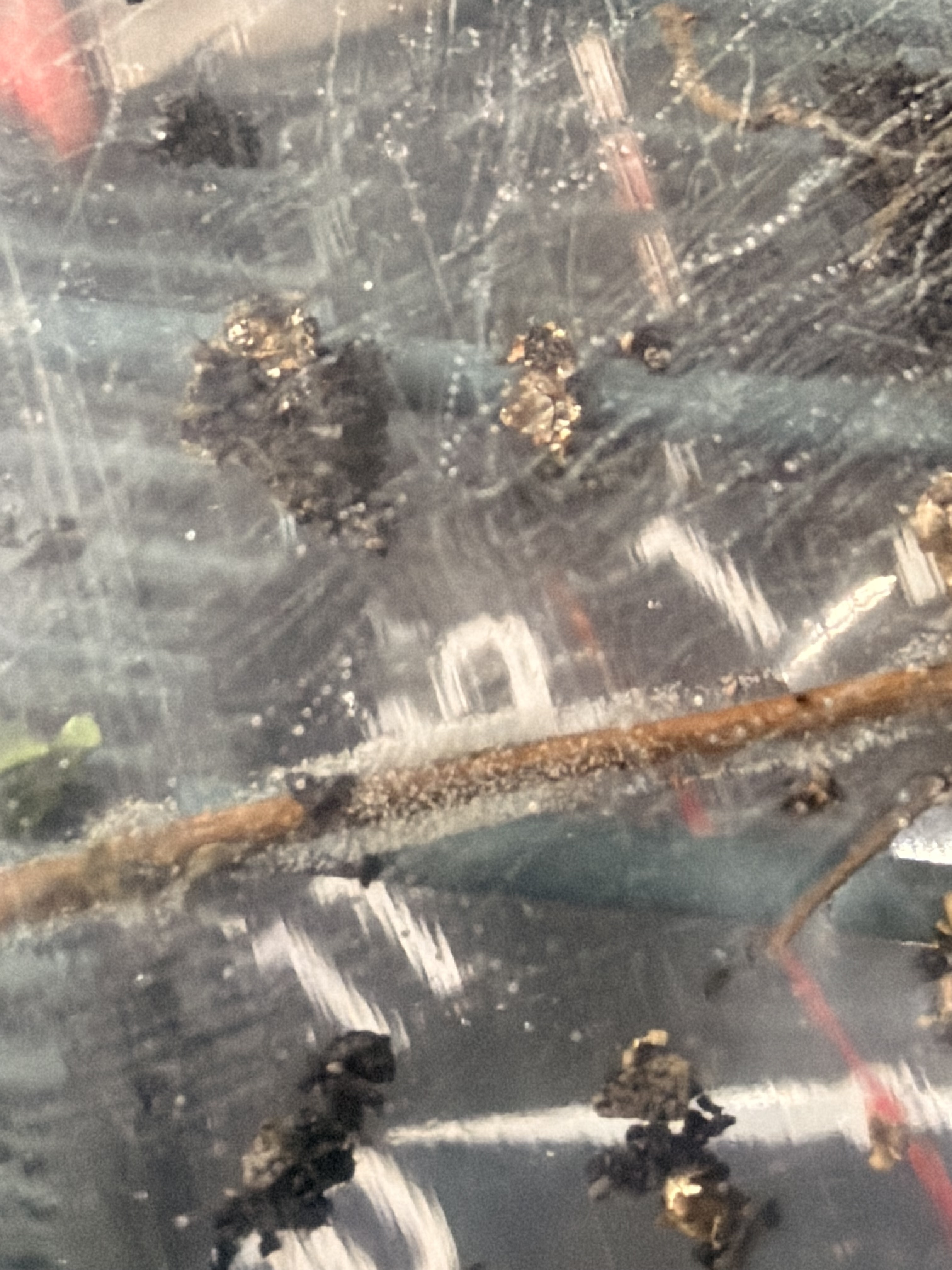
I have a question about rove beetle release in a greenhouse. I've been putting out a rearing pail of 1,000 rove beetles every two weeks in our 5,000 sq ft. greenhouse. We had some fungus gnats here and there but nothing serious so I was doing this just as a preventative control method. My beneficial insect provider told me to just hang the bucket under the benches and the beetles will naturally come out at night. I also put some piles of them around the greenhouse as well. However, to my surprise, I still had an explosion (well, what I consider an explosion at least!) of fungus gnats on our rununculus and anemone plugs. When I pulled the plugs out I could see lots of larvae crawling around. So, the questions running through my mind are: 1) is letting the bucket hang under the bench really the best deployment strategy or should I have just placed piles out around the greenhouse, 2) were the rove beetles somewhere else in the greenhouse and just hadn't found the outbreak yet and they will eventually get it under control, or 3) Should I be releasing more frequently than every two weeks? In any event, I'm gonna use nematodes now. Here is a picture of the bucket under the bench.


On a separate note, I suspected botrytis on the stems of some of our potted basil so I tried the humidity trick by putting it in a bag and I got spores! So I'm assuming it is indeed botrytis.


Thanks!
Ryan
In reply to Ryan O'Connor

Re: Week 2 Q & A

by John Sanderson -
Ryan, to check what's happening with the rove beetles, sounds like you might want to do some detective work with sticky traps and/or fungus gnat-infested plants. First, please check that you really do have lots of rove beetles in the buckets or piles. Don't assume that they are alive and healthy until you see them yourself. And be sure that you know what the adults, as well as the larvae, look like. Second, rove beetles can and do get stuck on sticky traps once in a while. You could put a trap or two right next to some new buckets and some piles (in which you saw beetles) and check them the next day or after a couple days. Also put some traps on the bench above the buckets. Put traps anywhere that are most likely to find the beetles if indeed they are dispersing as they should. Third, you may also want to put a fungus gnat-infested pot near some buckets/piles to see if rove beetles eventually show up in them.
But lastly, my first choice of beneficial to use for fungus gnats, before trying rove beetles, is definitely nematodes, Steinernema feltiae.
In reply to John Sanderson

Re: Week 2 Q & A

by Elise Schillo-Lobdell -
John, Ryan has been releasing rove beetles every two weeks, I’m thinking, except for the recent flush of fungus gnats, maybe the beetles have eaten everything they can and possibly are dying out? I’m just saying, isn’t that a pretty heavy application rate for Atheta? In my experience the growers who have used them have only added them once or twice a season.
In reply to John Sanderson

Re: Week 2 Q & A

by Ryan O'Connor -
 Thank you for the information, John. There were definitely lots of alive beetles when I put it out. I opened it up and checked and they started flying out of the tub while I was looking. Perhaps my fungus gnat population was greater than I thought from the start and there were too many from the start for the rove beetles to keep in check? Another reason for me to get better at scouting! I haven't found any on my sticky cards but putting them next to the bucket is a good idea. In any event, I did a nematode application today. On that note, in your opinion, does it seem like there are more straight (dead) nematodes than curled or hooked (alive) nematodes in this video? It's not the best resolution video. My apologies.
 
 
In reply to Ryan O'Connor

Re: Week 2 Q & A

by John Sanderson -
Ryan, thanks for the nematode video. They look very healthy to me. I saw very few straight nematodes. There are always a few dead ones, but relatively few in your video. Be sure to check out the information we have in the resources about how to apply nematodes. There are some common mistakes that can greatly reduce the efficacy of an application. For example, be sure the tank is stirred constantly so the nematodes don't all sink to the bottom of the tank. If they've been stored in a refrigerator, let them come to room temperature so they aren't temperature shocked when they're added to the tank water. There are some other tips in the resources.
In reply to Ryan O'Connor

Re: Week 2 Q & A

by Elizabeth Lamb -
I agree with Elise that that seems like a high release rate but we often see them put out with dirt floors not concrete. If you look in the old buckets, do you still see rove beetles? John's trapping suggestions are also a good idea. I assume you put the new buckets near where you see the fungus gnats? The rove beetles are pretty mobile but maybe they aren't getting there.

Also, for fungus gnat control. keep the soil surface dry. Ranunculus and anemones may not be growing very fast yet and so they stay wetter than they would when they start really moving.
In reply to Elizabeth Lamb

Re: Week 2 Q & A

by Ryan O'Connor -
Yeah I was definitely putting the bucket near where I saw most of the fungus gnats and it didn't look like there were any beetles left in the bucket. That's interesting most growers only do one or two releases. Good to know! I guess I'll just stick with nematodes from now on! Thank you for the information!
In reply to Ryan O'Connor

Re: Week 2 Q & A

by Margery Daughtrey -
Ryan, They are not only spores, they really look like Botrytis spores from here....you can see the little "grape like clusters" of white attached at the end of whiskery sporangiophores. Glad the trick worked for you! Botrytis likes basil real well.
Cheers,
Margery
In reply to First post

Re: Week 2 Q & A

by Ana Gourlay -
I have a few questions about botrytis. Is there normally a progression on the leaf from zonate spots (rings) to the v-shaped wedge? Are some plants more likely to have zonate spots (because the fungus is progressing more slowly) than others? And does the leaf structure play any role in how the fungus develops? For example does a leaf with a thicker cuticle display different symptoms or have a different progression? Thank you.
In reply to Ana Gourlay

Re: Week 2 Q & A

by Elizabeth Lamb -
All great questions and i am going to see if Margery can answer them!
In reply to Elizabeth Lamb

Re: Week 2 Q & A

by Margery Daughtrey -
No, Margery can't answer them but I love your questions! I'll be able to make a plant pathologist out of you. I don't think anyone has ever studied the answer to your question....but it makes sense that there might be some patterns of the Botrytis symptoms. The plant species has a big effect. If water is dripping off, the fungus is more likely to enter through a hydathode gland and get into the leaf at the perimeter, thus creating a wedge. Sizes and zonality of spots probably has to do with humidity levels, and well as with the texture of the leaf. Succulents don't get much Botrytis! You should watch your plants to see if you can pick up on which patterns of lesions come from which circumstances and which plants. I think both are important!
In reply to Ana Gourlay

Re: Week 2 Q & A

by Margery Daughtrey -
Hi Ana,
A few more thoughts: It's not really a progression...if a plant gets round spots and is real susceptible and the environment is conducive (meaning humid)...those spots might grow another ring of dead tissue every night and become zonate over time. If the conditions improve, they'll just stay as small tan spots. The Vee-shaped wedges probably started from a drop of water at the edge of the leaf where a spore happened to land. With either of those symptoms, if the enviroment is conducive enough and the plant is suceptible enough, than the fungus will BLIGHT the foliage, killing it completely and runnning down the petiole into the stem to wreak more havoc on the stem tissue, forming a canker.
In reply to First post

Re: Week 2 Q & A

by Grace Harper -
Hi everyone! This is probably a weird question, but when we use the potato trick to view fungus gnats larvae, what do we do with cotanimated potato? I didn't want to just throw it away because I wasn't sure if if it would contaminated anything else.
In reply to Grace Harper

Re: Week 2 Q & A

by John Sanderson -
Grace, I'd just throw the potato in the garbage.
In reply to John Sanderson

Re: Week 2 Q & A

by Elizabeth Lamb -
Bag it if you are worried about the fungus gnats developing - or throw it in the garbage well away from the greenhouse.
In reply to First post

Re: Week 2 Q & A

by Grace Harper -
I tried posting pics in this weeks assignments and for some reason it won't show up that I did. Do I need to email them?
In reply to Grace Harper

Re: Week 2 Q & A

by Stephanie Burnett -
Hi Grace,

Your image files might be too big. You could either try compressing them or share a link to the images in google docs. Hope this helps!
In reply to Grace Harper

Re: Week 2 Q & A

by Elise Schillo-Lobdell -
Also, there is a delay between when you post something and when it actually shows up, maybe a half hour or something, to give you some time to edit it if you want.
In reply to First post

Week 2 Q & A

by Mary Taylor -

I have a question about the difference between sentinel plants, indicator plants, and host plants. I have been reading over the guide and through my notes and I’m finding some overlap so some clarification would help. My current understanding is that a Sentinel plant is a plant within the crop that is tracked throughout the growing season to check for pests and/or signs of disease. An indicator plant is one that is specifically more prone to a pest that that crop is vulnerable to and therefore placed within the crop to monitor for that pest. And then a host plant is the same thing as an indicator plant?

In reply to Mary Taylor

Re: Week 2 Q & A

by Elizabeth Lamb -
Mary,

Sentinel and indicator plants are largely the same thing - and your definition of sentinel plant is spot on. What you defined as an indicator plant i would probably call a trap plant - specifically chosen to attract whatever pest - usually insects. But in all cases you scout them repeatedly to see what changes there are, if your control is working, etc.
In reply to Mary Taylor

Re: Week 2 Q & A

by John Sanderson -
Mary, I like your definitions of a sentinel plant (used for tracking whether pests are dying or surviving control tactics over time) and indicator plant (a plant prone to a given pest to give early indication that pest is present). Entomologists use the term "host plant" to indicate plant species that a given insect can survive on; e.g., mini roses are a host plant for twospotted spider mites.