A Place to Share

Module 1.4 Plant Pathology Knowledge Check

Module 1.4 Plant Pathology Knowledge Check

de Laura Trudell -
Número de respuestas: 8

Respond to this thread to answer these questions for the Module 1.4 Plant Pathology Knowledge Check

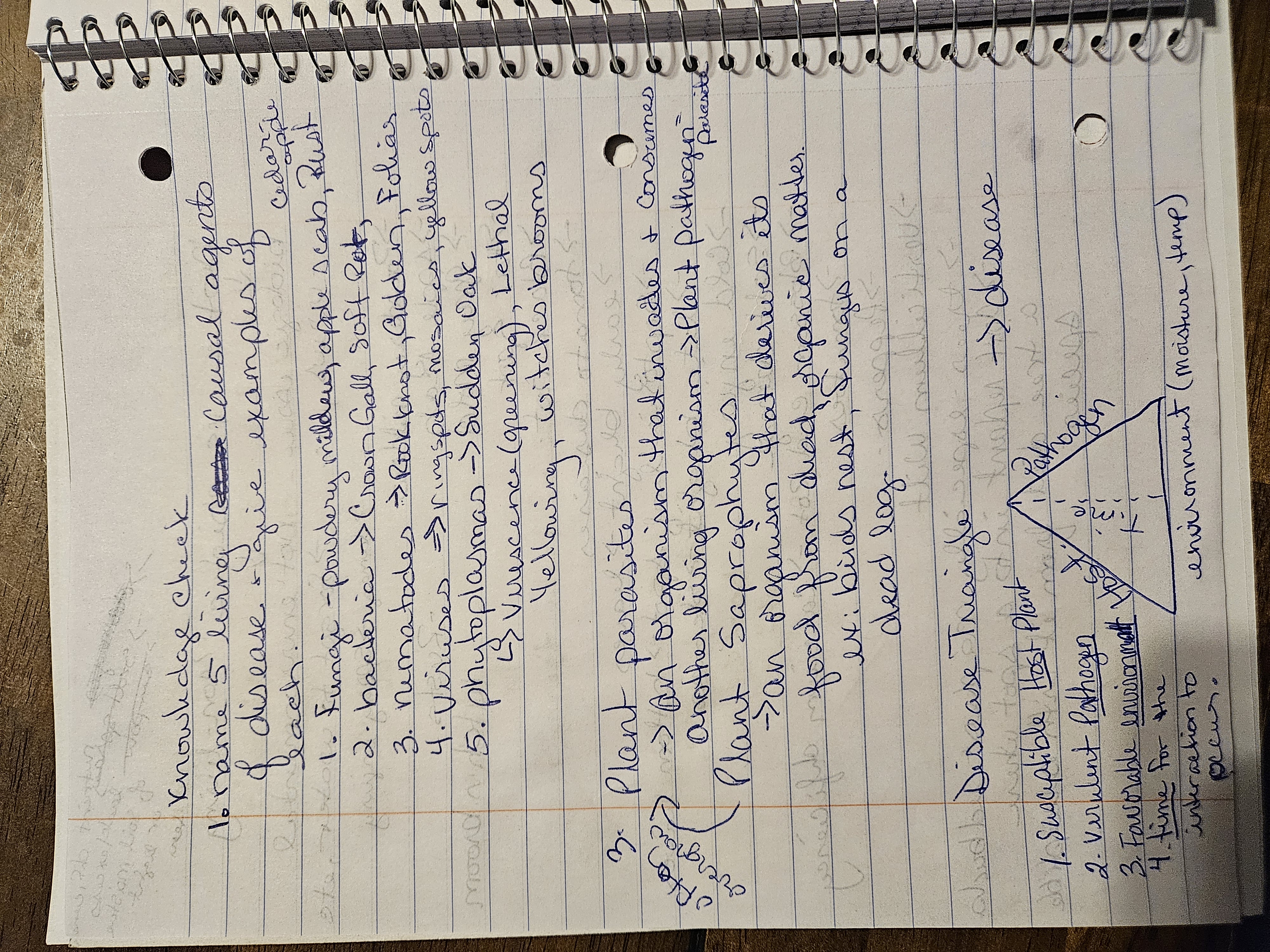
1. Name 5 living causal agents of disease and give examples of each.  

2. What are some examples of abiotic damage?  

3. How do plant parasites differ from plant saprophytes?  

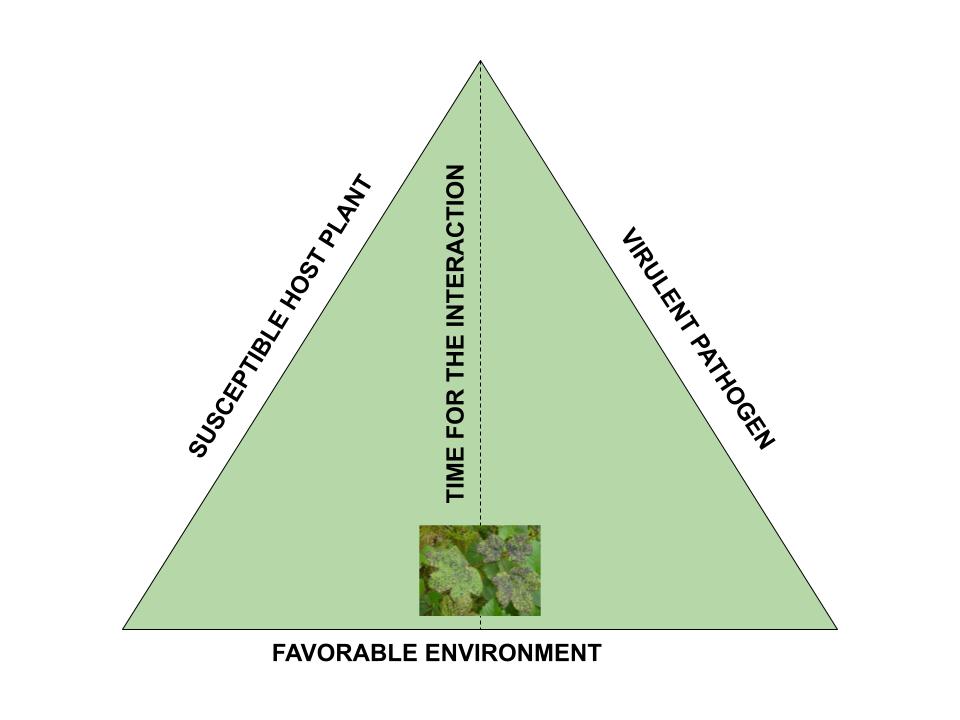
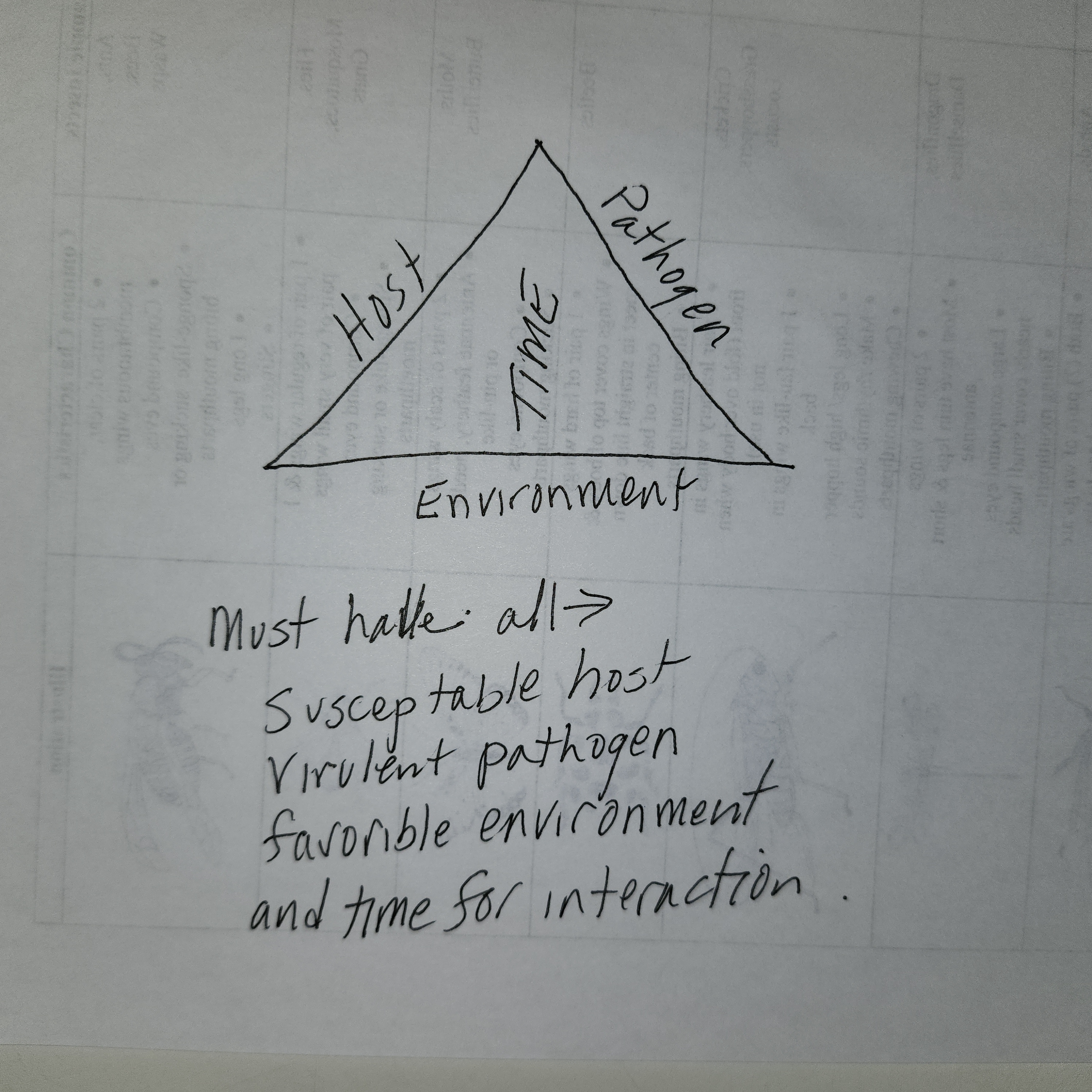
4. Sketch and label the disease pyramid/triangle. 

En respuesta a Laura Trudell

Re: Module 1.4 Plant Pathology Knowledge Check

de Tina Clark -
Plant Pathology: 1. Five biotic or living agents of disease include fungi (rust fungus Pucciniastrum geoppertaninum caused witches broom on my blueberries), water molds (botrytis gray mold was found in my strawberries), bacteria (such as Erwinia tracheiphia which causes wilt in cucumbers), nematodes (Golden rostochienis causes decline in potato plants) and viruses (such as the Plum Pox virus).
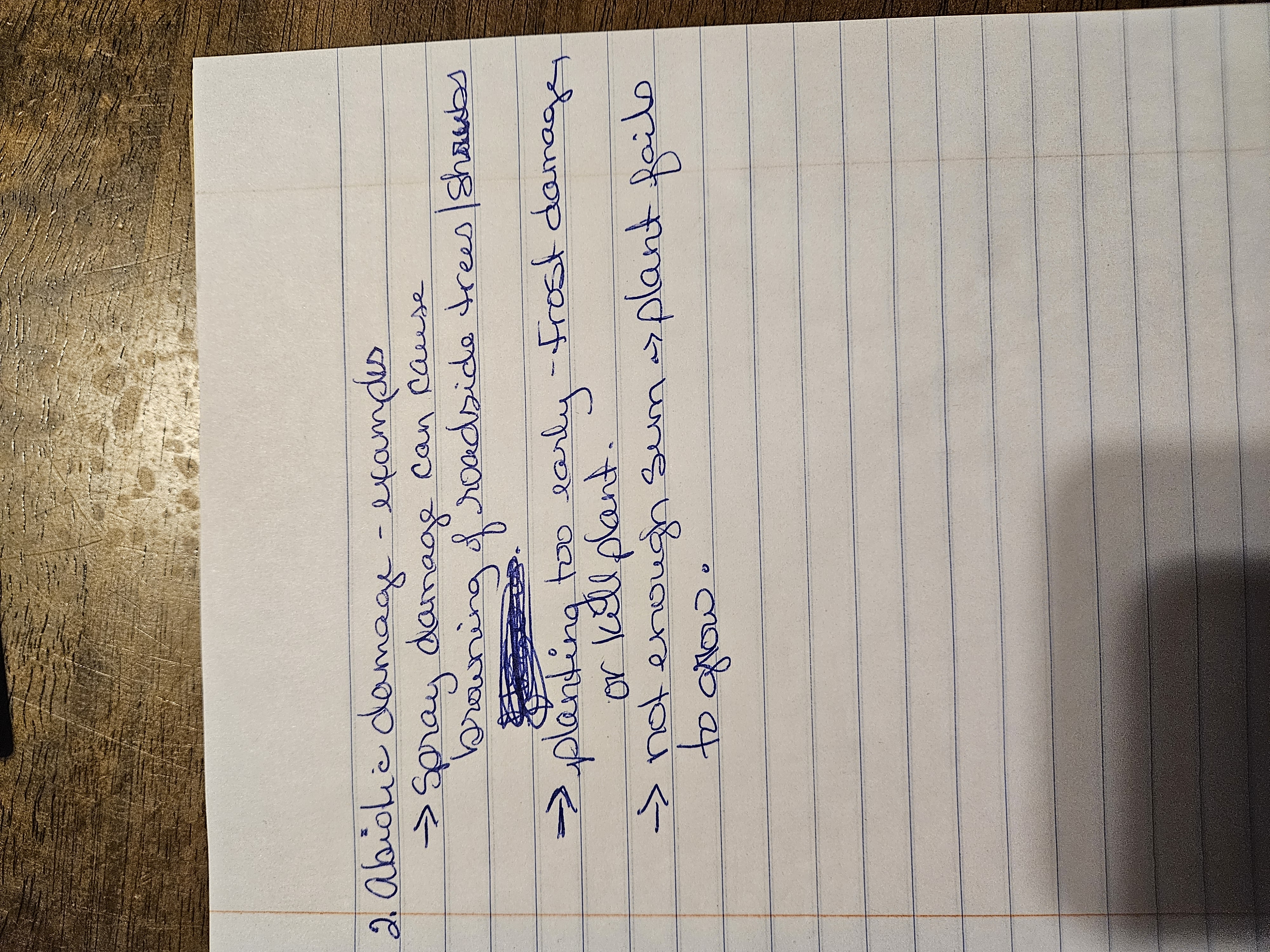
2. A common example of abiotic damage is a poor water schedule or wrong sun exposure.
3. Plant parasites are organisms that invade and consumes another living organism. Saprophyte derives its from dead organic matter.
4.  See below.
Adjunto Disease PyramidTriangle.jpg
En respuesta a Laura Trudell

Re: Module 1.4 Plant Pathology Knowledge Check

de Teressa Troy -
1. Name 5 living causal agents of disease and give examples of each.
Fungus: Plasmodiophora brassicae (clubroot, affecting cabbages and other brassicas)
Bacteria: Erwinia amylovora (fire blight, affecting apple and pear trees)
Nematodes: Meloidogyne spp (root-knot nematode, affects many garden plants)
Viruses: Cucumovirus cucumovirus (cucumber mosaic virus, affects many garden plants)
Phytoplasmas: Candidatus Phytoplasma (witches broom, affects many garden plants)
2. What are some examples of abiotic damage?
Corn falling over due to wind, wilted and blackened leaf tips due to frost damage, and yellowing of foliage due to lack of water.
3. How do plant parasites differ from plant saprophytes?
Parasites feed from a living host, whereas saprophytes feed exclusively on dead and decaying matter
4. Sketch and label the disease pyramid/triangle:
I painstakingly sketched this in Microsoft word and it didn't copy over. Clockwise: Pathogen, Environment, Host. Dotted line representing time up center.
En respuesta a Laura Trudell

Re: Module 1.4 Plant Pathology Knowledge Check

de Robin Abbott -

Respond to this thread to answer these questions for the Module 1.4 Plant Pathology Knowledge Check

1. Name 5 living causal agents of disease and give examples of each.
Fungi, bacteria, nematodes, viruses and phytoplasmas   

2. What are some examples of abiotic damage? Excessive moisture, inappropriate pH level for the plant, salt exposure.

3. How do plant parasites differ from plant saprophytes? Parasites feed off a living host organism, while saprophytes feed only on dead matter.

4. Sketch and label the disease pyramid/triangle. See the attached file. The three elements of host, pathogen and environment must all be consistent over time for a plant disease to develop.

En respuesta a Robin Abbott

Re: Module 1.4 Plant Pathology Knowledge Check

de Robin Abbott -
And... of course my answer to #1 was incomplete. This is how my brain works. Let me ammend:
Fungi: Powdery mildew (LOTS of experience with that one!)
Bacteria: Erwinia amylovora, AKA Fire Blight. I've done battle with this on roses in NC. Had to sanitize and transplant.
Nematodes: Root-know nematodes, I haven't actually seen any nematodes in my garden.
Virus: Cucumber mosaic virus. Pretty sure we have this at Wilder.
Phytoplasmas: Had to look up an example here: Aster Yellows. I didn't even know this was a thing until this class!
En respuesta a Laura Trudell

Re: Module 1.4 Plant Pathology Knowledge Check

de Patricia Croteau -
1.
Fungi: Botrytis cinerea, which causes gray mold (such as on strawberries and tomatoes), I have seen this but I did not know what it actually was.
Venturia inaequalis affects apples trees and flowering crabapples also known as apple scab is also something that I have seen.
Bacteria: Erwinia amylovora, causes fire blight in apple and pear trees.
Nematodes: Meloidogyne species (root-knot nematodes), I have had this affect my carrots, I believe.
Viruses: Cucumovirus (such as cucumber mosaic virus), which affects many common garden vegetables and ornamentals.
Phytoplasmas: Candidatus Phytoplasma, which causes conditions like witches' broom across various plant species.

2.
Abiotic (non-living) damage in a garden are typically caused by environmental, physical, or chemical factors rather than living pathogens:
One that seems to affect me every year in my garden is the moisture extremes. When we get heavy rains there is too much water. (causing root rot, edema, or wilting from saturated soil)

3.
Plant Parasites: These are organisms that invade and feed on a living host organism, deriving their nutrients directly from the living plant cells, which often harms or weakens the host in the process. (The spaghetti weed, I think it was called dodder, that was in the video was interesting and I have never seen anything like that before.)
Plant Saprophytes: These are organisms that feed exclusively on dead and decaying organic matter, breaking down non-living plant or animal material to obtain their nutrients without harming living plants.
En respuesta a Laura Trudell

Re: Module 1.4 Plant Pathology Knowledge Check

de Keyah Jacobs -
(Hey sorry for turning it in late,just catching up on some stuff)

1. Name 5 living causal agents of disease and give examples of each. Bacteria. :Aster Yellow (a Phytoplasma bacterium that infects Marigolds.)
:Basal rot (A widespread disease caused by a variety of fungi and bacteria that effects flowers and crops bulbs)
Fungal. :Ergot (A fungal disease that infects cereal grasses especially rye.)
:Corn Smut (caused by Ustilago maydis that attack corn and teosinte plants)
Virus. :Psorosis ,a disease that affects citrus plants
2. What are some examples of abiotic damage?
Wind damage:due to high winds or storms that would up root the plant and deform its growth and herbicides chemicals.
3. How do plant parasites differ from plant saprophytes?
Impact on Organism, they don’t do harm on living organisms but instead they perform as decomposers that recycle organic waste.
4. Sketch and label the disease pyramid/triangle
I try to send the sketch in but I’m having trouble with my tablet that I’m using for this.
En respuesta a Laura Trudell

Re: Module 1.4 Plant Pathology Knowledge Check

de Julie Hensley -
1. Name 5 living causal agents of disease and give examples of each.  
1. Fungi Apple Scab
2. Water molds oomycete-these seem like fungi but instead of chitin they have cellulose in cell walls. They’re what caused the potato famine
3. Bacteria Crown Gall on cherries at the base of stem. Fire blight which forms cankers on stems not leaves-common in apple
4. Phytoplasm Viresence where floral parts become green and leaf like Leafhoppers and other sucking insects help introduce the phytoplasm (bacteria-like but no cell walls) Also witches broom
5. Nematodes. Beech leaf wilt
6. Virus-mosaic virus makes variegated leave

2. What are some examples of abiotic damage?  Salt Temperature Wind This would be more seen in populations or even plant groupings of different species rather than an individual or one species.
3. How do plant parasites differ from plant saprophytes?  Plant parasites feed on living tissue including phloem, leaves, etc.. Gall wasps are plant parasites. Saprophytes live on dead tissue. Shelf Fungi living on a dead tree is an example.

4. Sketch and label the disease pyramid/triangle.  The drawing I made would not copy so I’m describing it instead. A susceptible host (often because of environmental factors like bunch o’ rain can suffer pathogen infection. It often takes time to show up which makes diagnosis somewhat tricky because it didn’t happen overnight.
The host, pathogen and environment are labeled on the sides of the triangle. Time is written inside the triangle (the height).