Submit Assignment 2.2: Developing a Logic Model
The logic model process can sound intimidating, but it is a very useful tool to assist you in planning, organizing and assessing your garden project goals, activities, partners and more. This tool is priceless for planning effectively and will surely give you an edge when used for grant writing!
Whether or not you have an existing garden program, this will help lay the foundation for what you accomplish in this course and beyond. The purpose of this assignment is to visually organize your goals, objectives and desired outcomes of your garden program. This visualization will take the form of a graphic organizer known as a logic model.
➡️ Keep in mind that this assignment might be a first draft of your logic model. As you work through this course, you may find you want to add to it or make changes. You will submit a final version in your Final Portfolio in Module 6.
While there are many different logic models and graphic organizers available, we have two versions we often use for GBL, so feel free to use the template that appeals to you for this assignment: the "Children, Youth, School, & Community Garden Logic Model" or the "Logic Model Flow Chart". Below are templates in Word or pdf of either version to choose from, which you will fill out and submit here.
Refer back to the list of program goals that you defined in Exercise 2.1, as well as the guidance questions on pages 16-17 of Getting Started with Garden Based Learning.
In the readings this week, "Learn about Logic Models," illustrates another format of the Logic Model (shown below) and illustrates steps to follow.
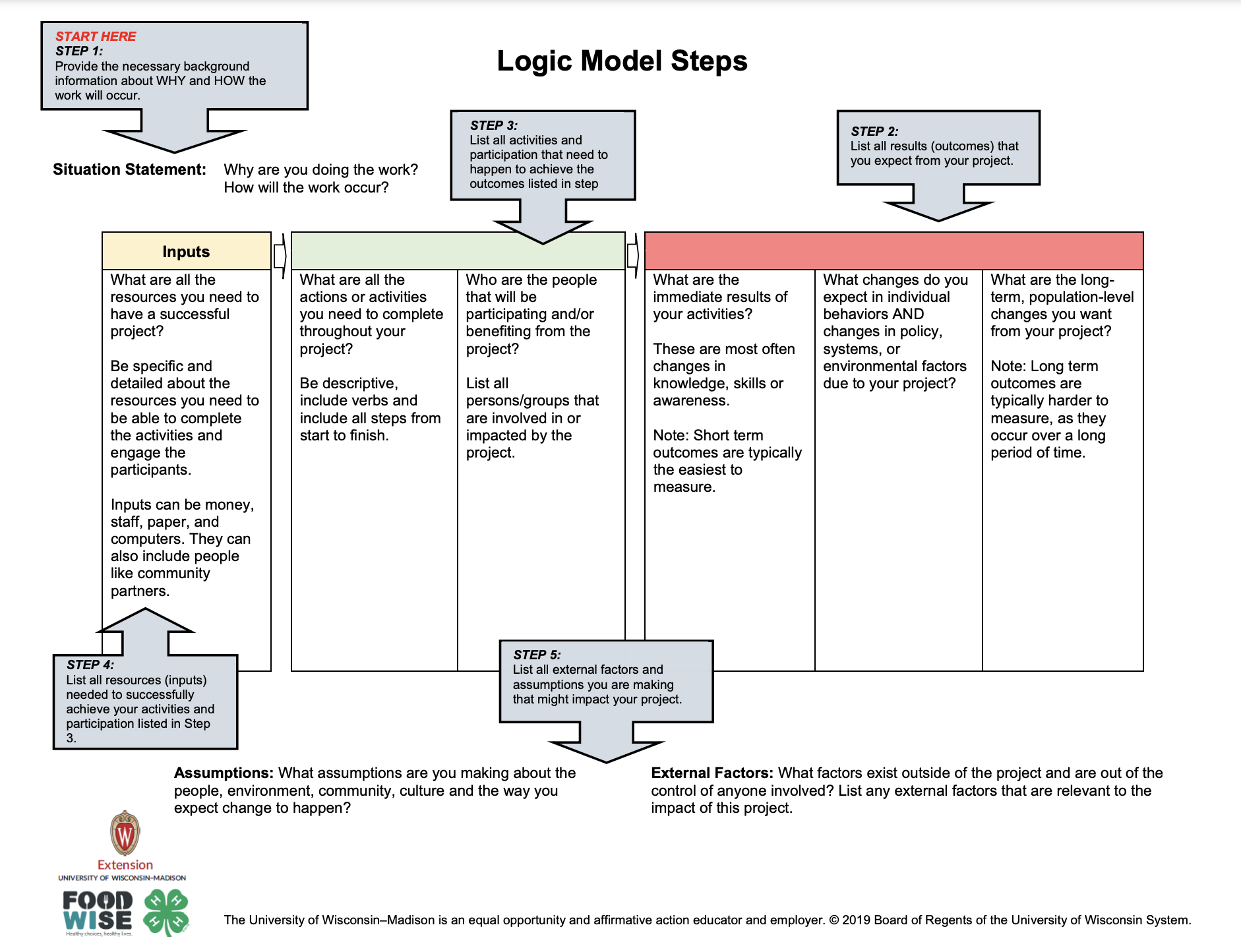
If you have formed a garden planning team, creating your logic model is ideally done as a group activity! Think of this as a first draft as you will likely revise your model over the coming weeks and months, so if you are still forming your garden planning team you will want to revisit this activity later to make sure all voices are included.
Below is an example of a Logic Model the instructor created (figure 1), with the goal of revitalizing a Master Gardener Volunteer program after the pandemic. Note how the Long-term Outcomes demonstrates changes in behaviors, the desired goal.
The second Logic Model (figure 2) was created by a student in one of the past courses. You can also refer back to these examples in the Resources section of this week's module.
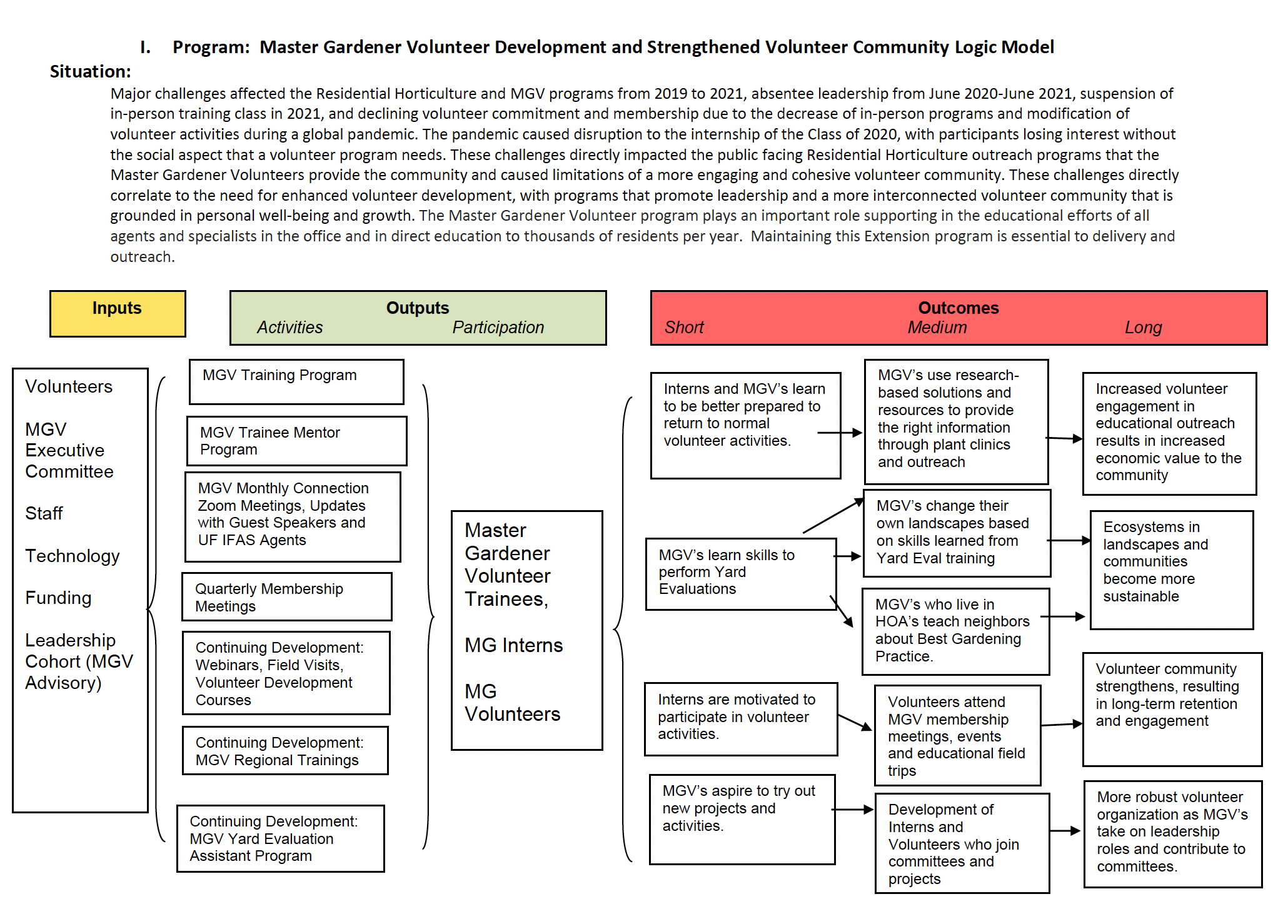
figure 1
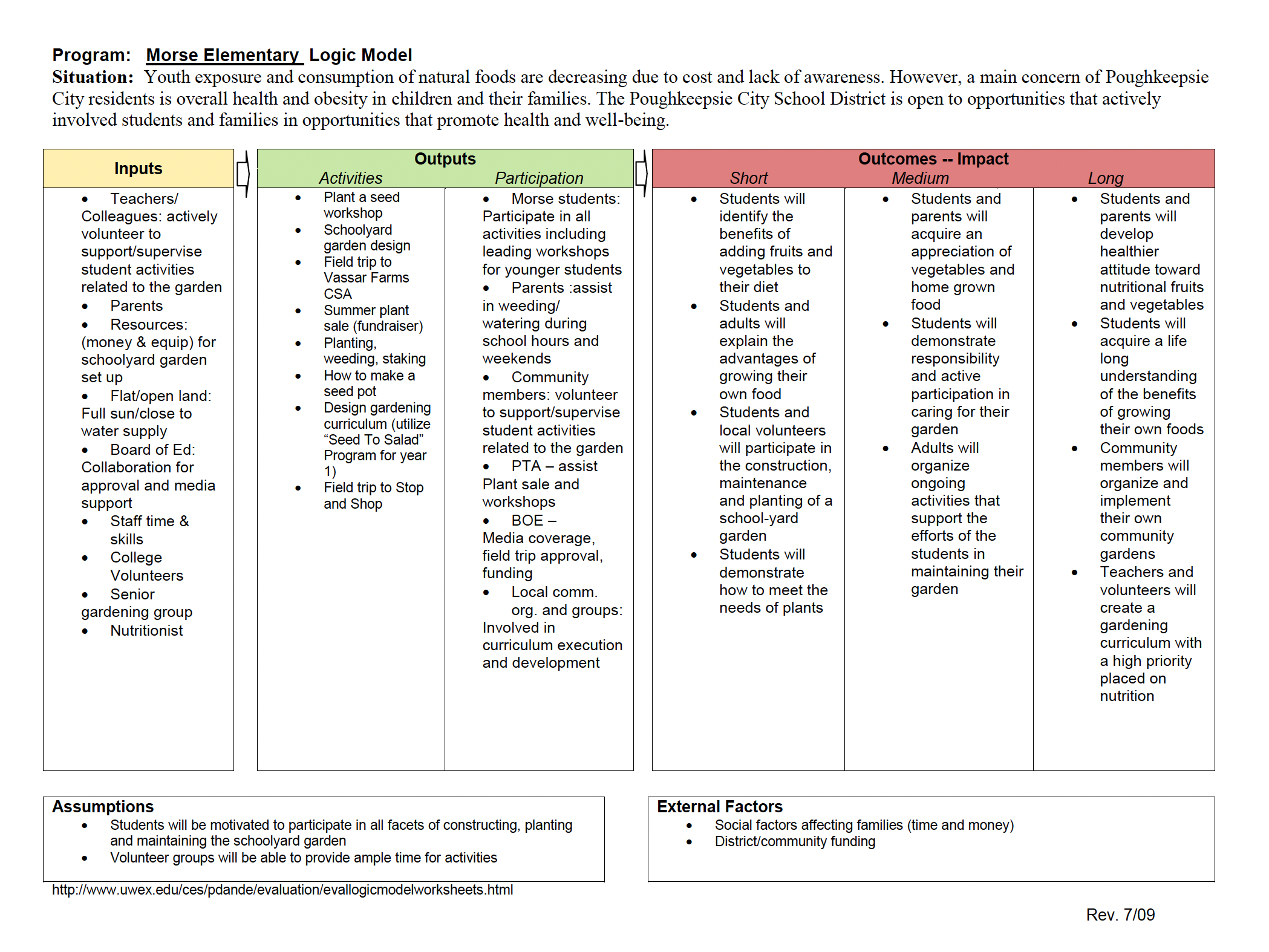
figure 2
- 14 July 2024, 10:01 AM
- 14 July 2024, 10:01 AM
- 14 July 2024, 10:01 AM
- 14 July 2024, 10:01 AM
- 1 October 2025, 8:13 AM
- 1 October 2025, 8:13 AM