Section M2.4:Values-Based Approach to Community Garden Leadership
The theory of values based leadership emphasizes the moral and ethical obligation of leaders to maintain the integrity of the organization. Leaders do this by acting in ways that align with the organizational values, and the ethical and social commitments of the organization (Askeland et al., 2020). Values-based leadership theory also prioritizes the physical and psychological well-being of the team(Skogstad et. al, 2007). A values-based approach to community garden leadership ensures the garden’s activities, protocols and decisions represent the organizational values or the garden. In 2014, Mary Copeland investigated the efficacy and impact of three dimensions of a values-based leadership -- authentic, ethical and transformational leadership -- and developed a comprehensive model to understand values based leadership and the impact on teams. Please note this theory has been posed to look at the combined impact of these three dimensions based on known information about each dimension. The theory itself is still evolving with new approaches to leadership. The excerpt below is reproduced from Table 6, Table 7 and excerpts from Copeland, M. (2014). The Emerging Significance of Values Based Leadership: A Literature Review. Regent University. Retrieved from https://www.regent.edu/journal/international-journal-of-leadership-studies/significance-of-values-based-leadership/ to fit Moodle formatting requirements:
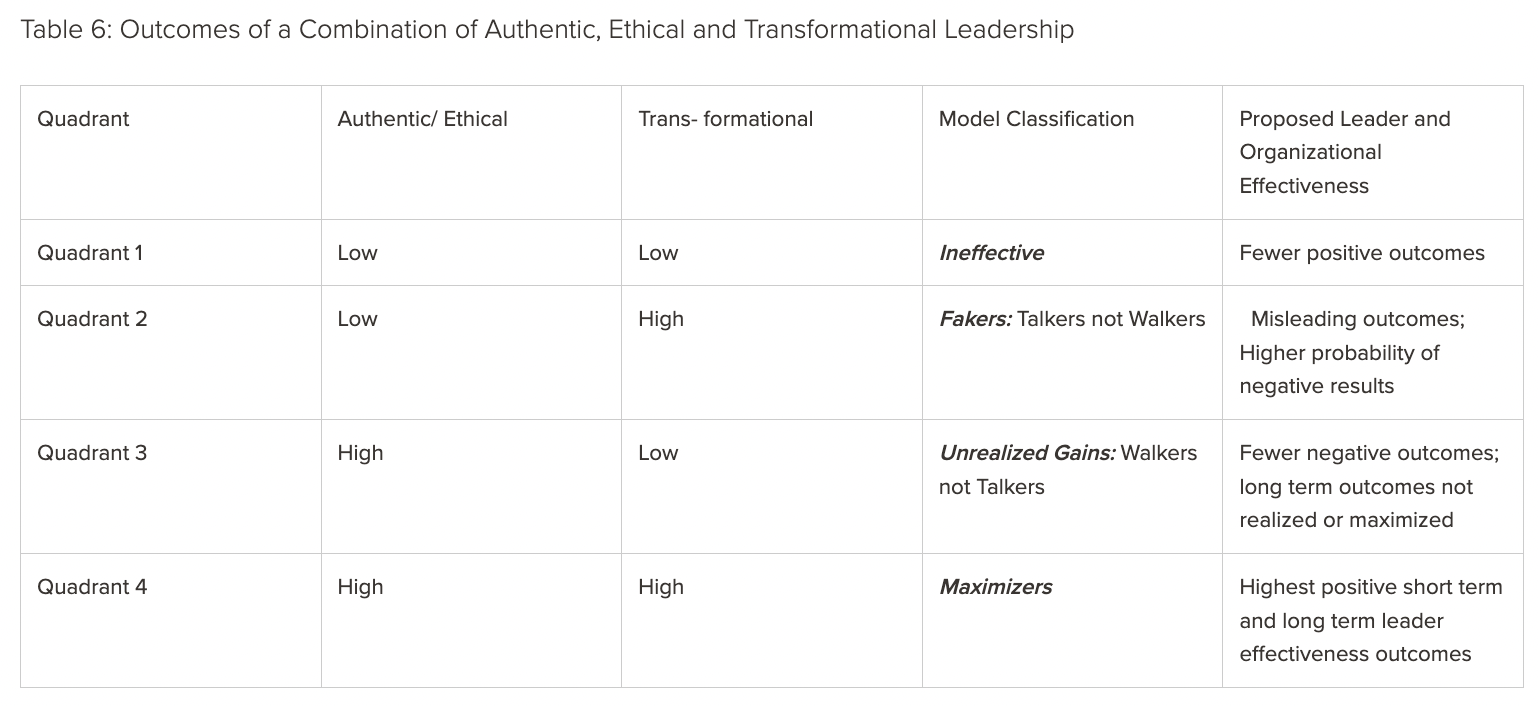
"The model theorizes the impact and outcomes when leaders possess different levels and combinations of authentic, ethical and transformational behaviors and is further explained as follows.
Quadrant 1: Ineffective Leaders. Leaders who fall into the first quadrant are classified as ineffective and are those that are described as possessing low levels of authentic, ethical and transformational leadership behaviors. Leader’s who are authentic, ethical or transformational are found to be more effective, so leader’s that lack these behaviors will inherently be less effective as compared to leaders that possess them (Bass, 1985; Bass & Avolio, 1993; Brown & Treviño, 2006; Copeland, 2009).
Quadrant 2: Fakers. Leaders in the second quadrant are fakers or in other words, talkers and not walkers. These leaders lack authenticity and true ethical behaviors, but possess some level of transformational leadership behaviors. Bass and Steidlmeier (1999) call these leaders pseudo transformational leaders, as they argue a leader must be authentic and ethical to truly be transformational. These pseudo transformational leaders possess charismatic characteristics, a component of transformational leadership, and seek to motivate and guide through rhetoric and promotion of their position. They are deficient in the ability to be in touch with their inner selves and lack a moral and ethical dimension. The leaders promote and require authenticity and ethics in others but fail to possess and model these behaviors themselves. In other words, they talk the talk but don’t walk the walk.
Quadrant 3: Unrealized Gains. Leader’s characterized as walkers and not talkers are those that have high levels of authentic and ethical leadership but lack transformational and charismatic leadership behaviors. These leaders experience unrealized gains as their lack of transformational leadership behaviors results in their inability to reap the returns that leaders with a combination of authentic, ethical and transformational behaviors experience.
Quadrant 4: The Maximizers. Copeland (2009) demonstrated that authentic, ethical and transformational leadership behaviors each made a separate and significant contribution to explaining the effectiveness of a leader. Leaders that were most effective were those that possessed all three behaviors. This model outlines that leaders in this forth quadrant are optimal and will have the most significant follower and organizational outcomes.
This matrix attempts to explain why ethical/authentic leadership coupled with a leader that is transformational has positive leader outcomes and why the absence of these behaviors has negative consequences or lower overall leader effectiveness. While the outcomes proposed by the model in figure 1 are not specifically researched in Copeland (2009), they provide a theoretical foundation for future analysis and may provide further theories that attempt to explain the outcomes of research that addresses leaders that are authentic, ethical and transformational.
The model suggests that a leader’s style, values and ethic/authentic disposition influences follower behavior and impacts overall leader effectiveness. Explanation of each quadrant and the leader behaviors associated with that quadrant is further described in Table 7. "
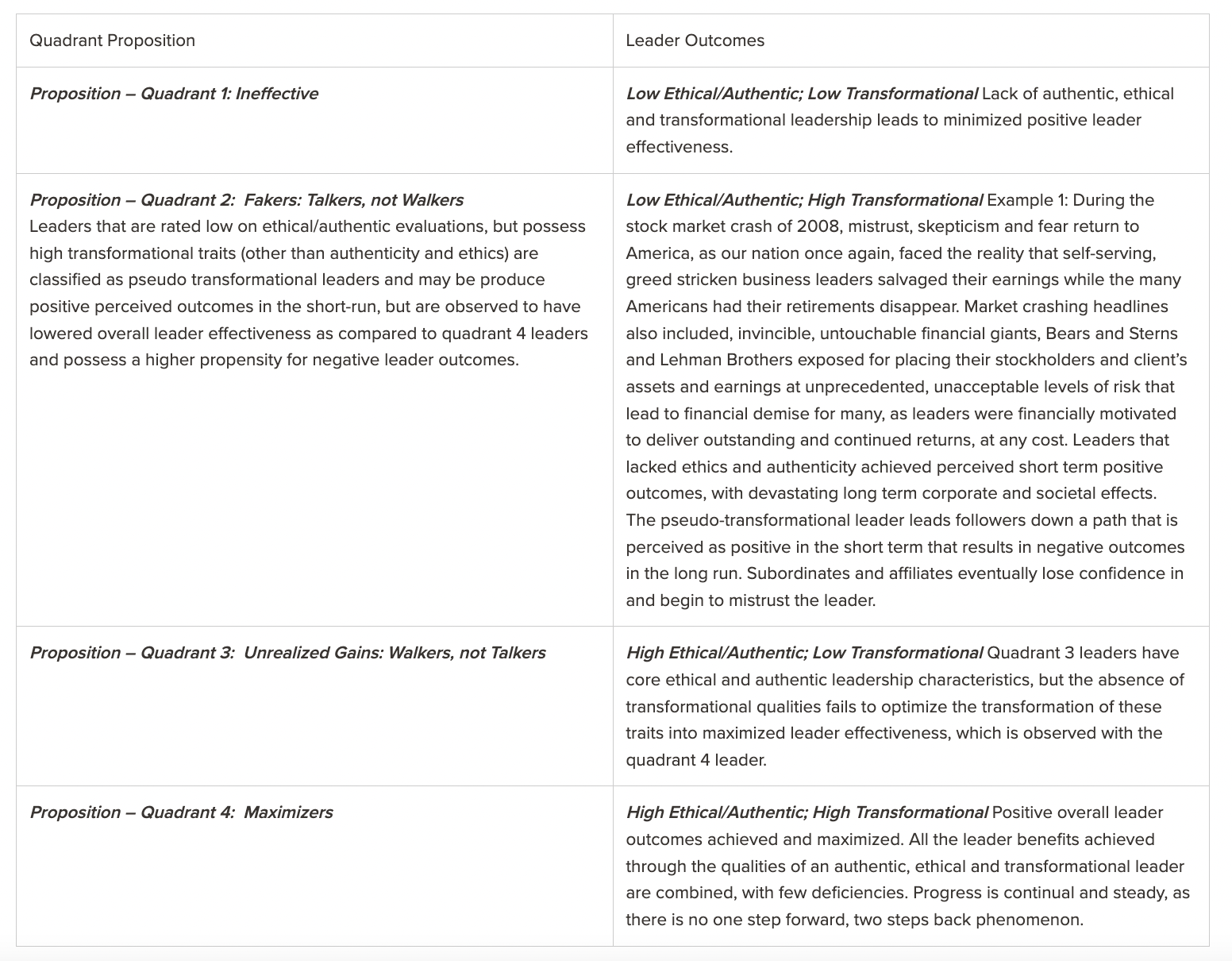
Table 7 provides interesting theories that require additional testing and validation. Copeland (2009) validated that leaders that had combined behaviors of authentic, ethical and transformational leadership were more effective and that each of the behaviors contributed incrementally to the leader’s effectiveness. Copeland (2013) validated that leaders that had ethical and transformational leadership behaviors each significantly predicted leader effectiveness for leaders in the accounting industry."
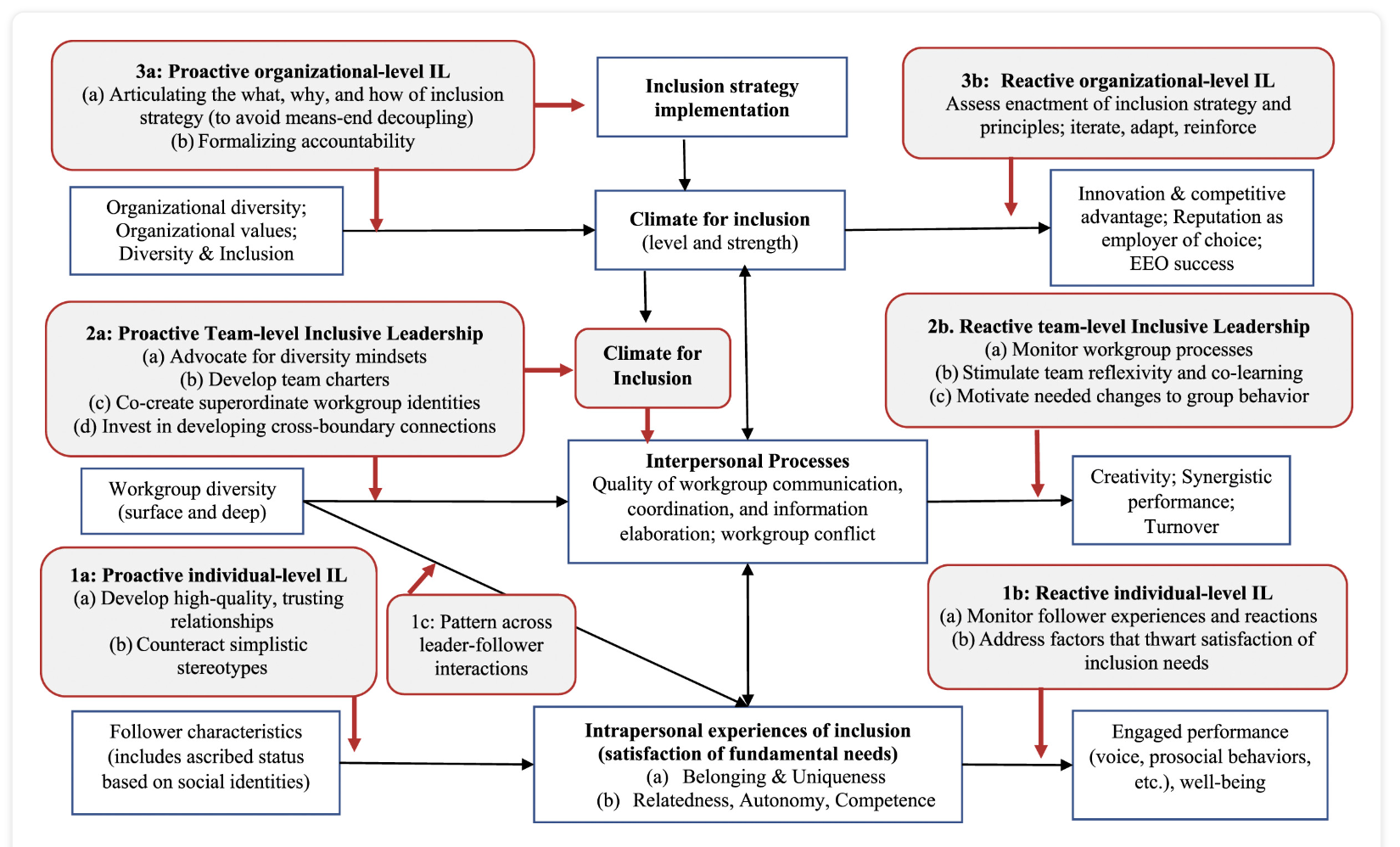
Figure 1: Multi-level framework for inclusive Leadership (Nishii & Leroy 2022)
Values Based Leadership theory is applicable to many leadership styles, but the transformational leadership style and inclusive leadership style both embody the theory of values-based leadership and are applicable to a community garden setting.
For the purpose of this module, we will focus on the inclusive leadership style and build off of Section 1.3 to emphasize the importance of transforming gardens into inclusive and welcoming spaces to account for diversity within a given community. Inclusive leadership involves leaders creating an environment where all team members feel valued and included, enabling them to contribute their unique perspectives and talents. This approach emphasizes openness, accessibility, and a commitment to diversity, fostering a sense of belonging and encouraging full participation from everyone (Nishii & Leroy, 2022). One of the benefits of community gardens is that it promotes social cohesion (Clark et al., 2023). For social cohesion to be achieved, elements of inclusive leadership should be evident at the individual (self), team (membership), and organizational level(garden).
At the individual level, inclusive leaders engage in behaviors that make employees feel valued and respected. This includes actively seeking input from team members, demonstrating openness to diverse perspectives, and providing support for personal and professional development. Such actions help employees feel a sense of belonging while maintaining their unique identities, leading to increased job satisfaction and commitment. See chart above for specific actions one can take at the individual level.
Within teams, which could be garden membership of volunteer groups at a community garden, inclusive leadership fosters a climate where collaboration and open communication are encouraged. Leaders facilitate this by promoting trust, ensuring equitable participation in decision-making, and managing conflicts constructively. This inclusive team environment enhances cohesion, leverages diverse talents, and improves overall team performance. See chart above for specific actions one can take at the individual level.
At the organizational level, inclusive leaders play a critical role in shaping policies and practices that promote inclusion. They align organizational strategies with inclusive values, model inclusive behaviors, and hold others accountable for maintaining an inclusive culture. This top-down commitment ensures that inclusion is embedded in the organization's fabric, leading to sustainable cultural change. See chart above for specific actions one can take at the organizational level.
In the context of community gardens, an inclusive and supportive leadership approach can mitigate stress, encourage participation, and create a sense of belonging.
Next, do 2.4 Assignment 1: Operational Process