Section M2.2: Community Organizing for Garden Leaders
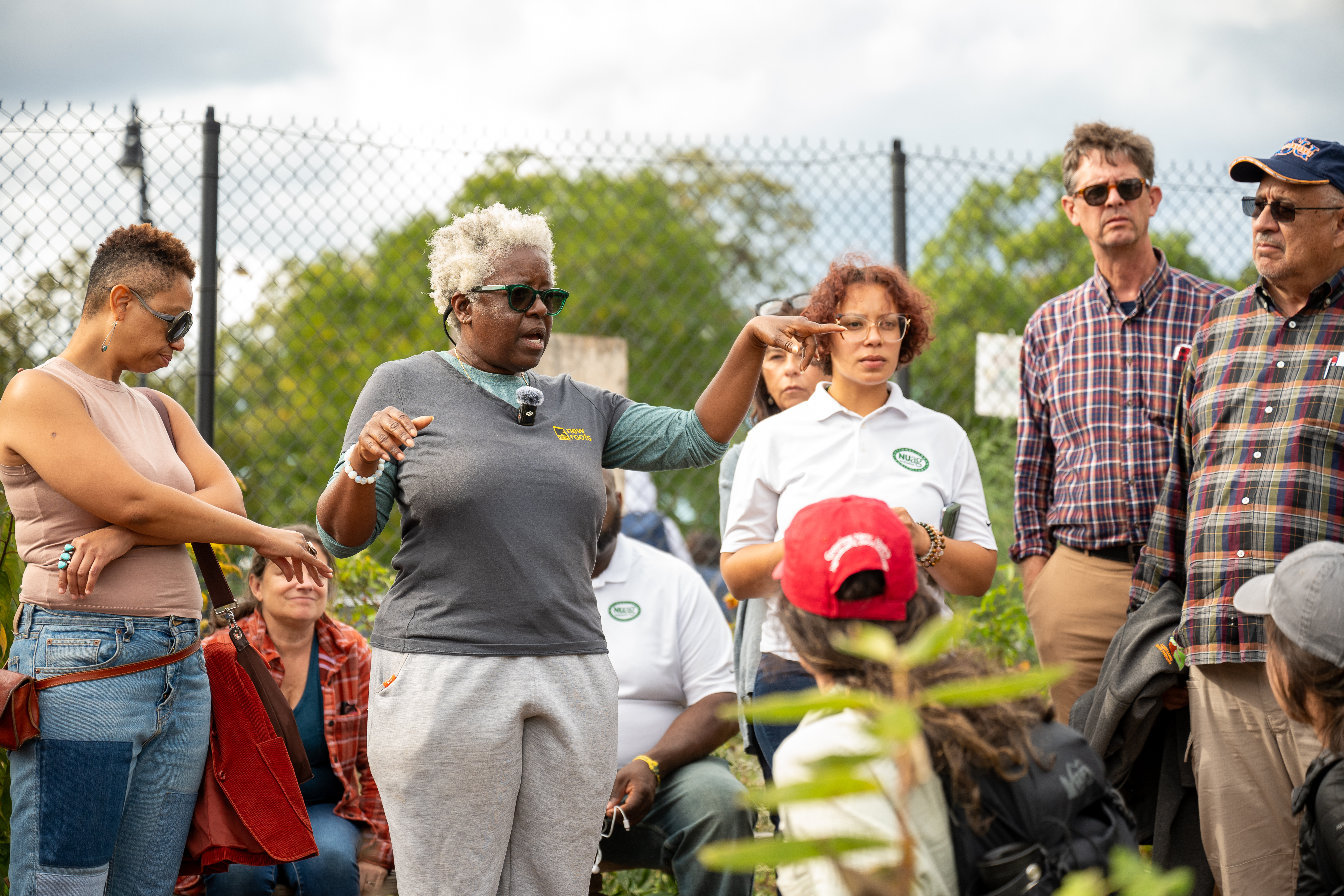
Community gardens typically emerge out of necessity, in under-resourced areas that lack access to fresh nutritious food, green spaces and engage in civic agriculture (DeLind, 2002). Gardens fill these critical needs and provide a multitude of additional health and environmental benefits to these communities through intentional community organizing efforts. Community organizing for social action, like starting or activating a garden, is a powerful tool for empowering local populations and fostering social changes. In community gardens, the principles of organizing can be used to promote social cohesion, encourage participation, and ensure sustainability. In a future module, you will dig deeper into the food system, which does impact the activities in food-based community gardens. In this section, you will get a broad overview of community organizing for social change to inspire future actions you may take at your garden to increase participation.
Principles of Community Organizing
Community organizing is a process of mobilizing people to address issues that affect their lives and well-being (Mizrahi, 2014). To learn the fundamentals of community organizing, it is essential to understand three core principles: power dynamics, collective action, and social capital. Key elements such as balancing process and product, recognizing community diversity, identifying decision-making structures, and maintaining open communication, which are useful for a community garden context, can be drawn out of the three core principles. By applying elements of community organizing into routine garden activities, gardeners can cultivate and sustain these green spaces, enhancing food security, environmental sustainability, and social cohesion.
For example, balancing process and product is essential in community gardening. While the goal is to establish a thriving green space and provide food access, community engagement and decision-making are equally important to ensure volunteerism and membership stays high (Mizrahi, 2014). Maintaining a garden becomes difficult when participation is low, thus investing on social capital and social cohesion at the garden should be prioritized to maximize food production. People want to be a part of a movement they feel connected to and are more likely to contribute when asked by someone they have deep, positive relationships with. Clarke et al. (2023) further emphasize the significance of fostering social cohesion, noting that urban green spaces can either bridge or reinforce social divides, depending on their management and the garden leader.
The Role of Power and Decision-Making
Power dynamics influence participation in social action, like gardening, and the decision making process for which activities are permissible at a community garden. While garden leaders may have some level of power within a community garden, It is important to recognize decision-making structures—both formal and informal -- that impact community gardens (Mizrahi, 2014). In community gardens, power may be distributed among local government agencies, nonprofit organizations, and community members. Because of the many stakeholders, it is important for gardens themselves to establish a clear internal leadership and structured decision-making processes so garden efforts are not slowed ( Bradley, 2019).
Building Social Capital and Engagement
A major benefit of community organizing in garden projects is the enhancement of social capital. Community gardens serve as hubs where relationships form, resources are mobilized, and social networks are strengthened (Glover,2004; Glover et al., 2005). Social capital -- the networks, norms, and trust that facilitate collective action -- are essential for long-term sustainability of community gardens (Putnam, 2000). It is important for garden leaders to also build trust, foster relationships, and create spaces where community members feel empowered to participate. In addition to large-scale events that activate the community and bring people together, garden leaders can energize new, committed gardeners through 1:1 mentorship and knowledge-sharing strengthens both individual participation and broader community engagement (Beavers et.al, 2025).
Addressing Challenges at the Garden Through Organizing
Community gardens often face challenges such as securing land, funding, and sustained participation. When stepping into leadership roles, gardeners must understand these circumstances, anticipate opposition and assess risks realistically (Mizrahi, 2014). In these instances, mobilizing social capital is essential for securing resources, whether through local partnerships, donations, volunteer labor and advocacy efforts (Glover et al., 2005). In community gardens, social capital is built through collaboration, trust, and mutual support.
Developing a leadership style that centers trust-building and leadership transparency is invaluable for a garden leader. It's not only critical for maintaining community engagement and building social capital, but can also decrease the amount and severity of conflicts that emerge at the garden (Lansing et al., 2023).
The principles of community organizing provide a strong foundation for establishing and sustaining community gardens. By balancing process and product, recognizing power dynamics, fostering social capital, and addressing challenges strategically, communities can create thriving green spaces that serve social, economic, and environmental purposes.