
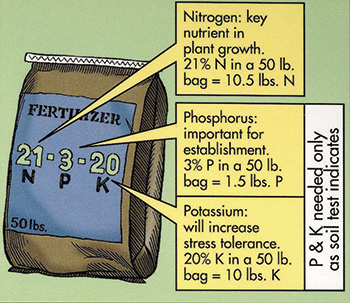
Fertilizers contain the primary macronutrients needed by plants: nitrogen (N), phosphorus (P), and potassium (K) . The three numbers on a bag of fertilizer represent the percentage (by weight) of NPK found in that bag. For example, the numbers on a 50-lb. bag of 21-3-20 fertilizer contains 21% N (10.5 lbs.), 3% P (1.5 lbs.), and 20% K (10 lbs.) The remaining 56% (28 lbs.) of the mixture is made up of secondary nutrients like calcium, magnesium and sulfur, trace elements, and fillers that make it easier to spread.
Each macronutrient is essential to healthy plant growth. Nitrogen (N) is used for to promote foliar growth. Phosphorus (P) supports the plant’s roots and reproductive system including flower and fruit development. Potassium (K) is important in root development and for overall plant health, including disease and stress resistance.
Here are two resources that will help you calculate the amount of fertilizer you need:
Image from Cornell Turfgrass "Lawn Care - The Easiest Steps To An Attractive Environmental Asset"