Section 4.2 Lesson and Overview of Assignments
Strategic Planning for Successful Partnerships – Background Information
Strategic planning is a structured process that helps organizations define their goals, assess their current situation, and create actionable strategies for long-term success. It involves evaluating internal and external factors that influence an organization’s operations and future growth. There are many strategic planning models and frameworks, but in Module we will focus on two widely used strategic planning frameworks: the SWOT analysis (Strengths, Weaknesses, Opportunities, and Threats) and the SOAR analysis (Strengths, Opportunities, Aspirations, and Results). While both tools help organizations assess their positioning and plan strategically, they differ in focus and application. Community gardens, which rely on community engagement, resource management, and sustainability, can benefit from both frameworks depending on their specific needs. A SWOT analysis is effective for risk assessment and problem-solving, while SOAR encourages a strengths-based and aspirational approach to growth. Understanding when and how to use these frameworks can help community gardens maximize their impact and sustainability.
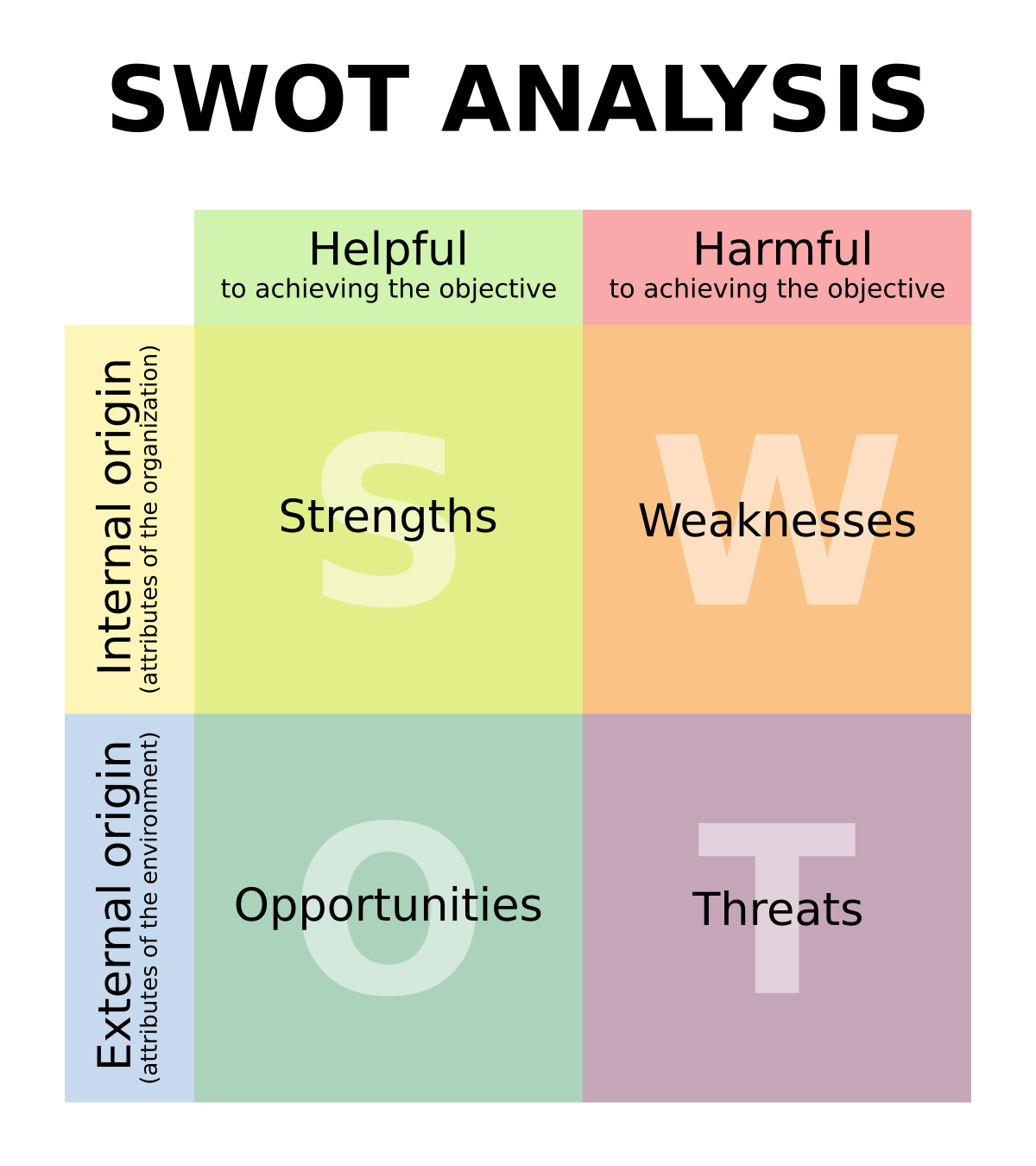
The SWOT analysis is a traditional and widely used strategic planning tool that examines both internal and external factors affecting an organization. Strengths and weaknesses focus on internal attributes, such as available resources, community engagement, or garden maintenance challenges. Opportunities and threats assess external conditions, such as funding availability, government policies, and environmental factors. Typically, only garden members or garden leadership participate in a SWOT analysis because it relies on deep institutional knowledge and prioritizes the organization, or garden, as the most valuable assessors.
For community gardens, SWOT is useful when identifying risks and areas for improvement. If a garden struggles with low volunteer participation, inconsistent funding, or external policy barriers, a SWOT analysis can help leaders assess these challenges while leveraging existing strengths. This approach is especially relevant when a garden faces uncertainty, competition for resources, or potential threats like land-use changes or environmental shifts and wants to prepare for these external factors. By conducting a SWOT analysis, garden leaders can create strategies to mitigate weaknesses and threats while capitalizing on strengths and opportunities.
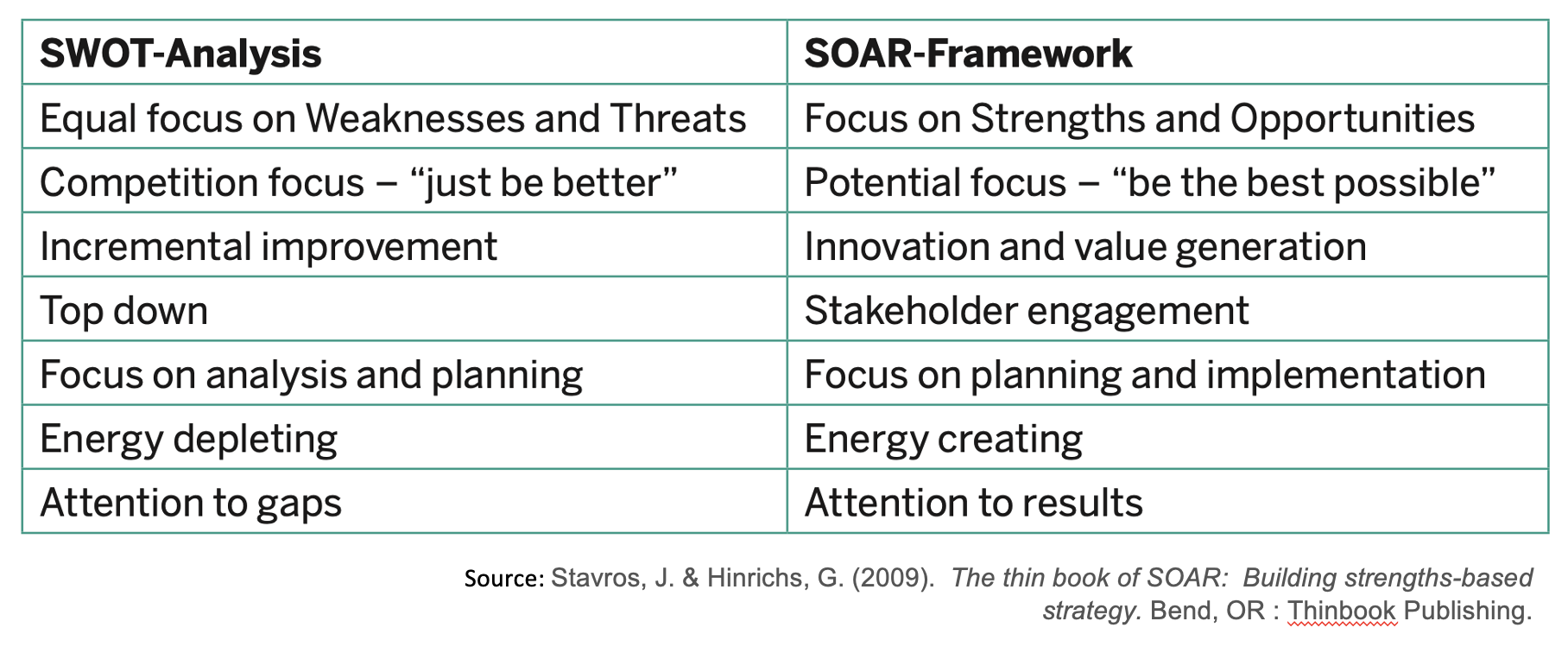
Unlike SWOT, the SOAR analysis takes a more strengths-focused approach, emphasizing what an organization does well and how it can expand upon these successes. SOAR replaces weaknesses and threats with aspirations and results, encouraging organizations to envision their future and identify measurable outcomes (Stavros, 2013). This framework is particularly effective for organizations looking to grow, innovate, and foster collaboration.
For community gardens, SOAR is valuable when leaders seek to expand programs, enhance community engagement, or secure long-term sustainability. Rather than focusing on problems, SOAR helps gardens build upon their strengths, such as strong volunteer support, successful harvests, or educational partnerships. It also encourages leaders to align their strategies with long-term aspirations, such as increasing local food security, providing environmental education, or creating a social hub for the community (Stavros et al., 2014). By using SOAR, community gardens can develop positive, future-oriented strategies that inspire community members and potential partners to invest in their success.