3. DISCUSS: How will you put these ideas to work?

Número de respuestas: 33

At this point you have started to talk to others about your project, you have been gathering your thoughts and some documentation, you have started looking at the plans of work.... how will you put this information into practice?  What helps to clarify what you want to do?  What gets in the way?  Take a few minutes to share your thoughts. (Post a response and respond to two colleagues...)

Add your objectives to your program plan in Box.

En respuesta a Primera publicación

Re: 3. DISCUSS: How will you put these ideas to work?

por Heather Kase -
After the session I sat and thought about my project because I was going to have to pivot due to the research aspect of it. Thinking of topics for a few weeks have given me clarity on where I will be shifting my energy. Looking at the state plan of work, gathering some thoughts on documentation, I believe so far I'm heading in the right direction. I opened up and started working on the PDLC Project Template with my new project idea to help put the ideas on paper, and I feel better about giving myself time to think about it. This helped me to clarify what I want to do, as I can break everything down how it makes sense to me in these early stages. I also redid some of the documents I did at the kick off with my new project in mind. I was worried I was getting behind, because my season is just starting to ramp up and it is certainly going to get in the way! I think it will continue to get in the way, so I need to take advantage of our Zoom sessions and down time.
En respuesta a Heather Kase

Re: 3. DISCUSS: How will you put these ideas to work?

por Jeremy Kraus -
I completely agree with the put program plans from brainstorm or ideas to paper (or spreadsheet) - having some kind of visual always helps me. I have been so busy this spring as well and couldn't agree more on finding time to work on PDLC - I am trying to make a point to take a few hours a week to chip away. :D
En respuesta a Heather Kase

Re: 3. DISCUSS: How will you put these ideas to work?

por Celeste Carmichael -
Good thoughts! And again - glad you are reflecting on what resources can help, and what you need to push forward. It is important to value the back and forth that happens as ideas grow and develop. I'll take a look at your project template to get caught up with where your project is at this point.
En respuesta a Heather Kase

Re: 3. DISCUSS: How will you put these ideas to work?

por Jane Rothschild -
Hi Heather! I agree the PDLC program project templates have been helpful for making the task more clear. Also it seems to me you aren't behind at all. But everything feels hectic in spring. I'm sure I'll see you on a zoom session sometime soon!
En respuesta a Heather Kase

Re: 3. DISCUSS: How will you put these ideas to work?

por Eric Antrim -
Nice job on the pivot, not an easy thing to do when you have something at the forefront of your mind, at least not for me. That's awesome you have the clarity on your project. I also found the template helpful; I tend to second guess and over complicate things sometimes when they aren't determined. Having them written down in an organized manor defiantly improves my ability to make progress. Spring is already starting to fly by, I am also feeling a bit of a time crunch and need to attend the Zoom sessions :)
En respuesta a Primera publicación

Re: 3. DISCUSS: How will you put these ideas to work?

por Jeremy Kraus -
Most of what I am planning for program delivery hits all the POW needs or can be adjusted to meet those needs. Creating a spreadsheet with checkboxes and an explanation box may be helpful on making sure there is documentation/justification on how specific pow needs are going to be met. The biggest and most difficult next step for me is understanding the exact volunteer need and making sure those bases are covered.
En respuesta a Jeremy Kraus

Re: 3. DISCUSS: How will you put these ideas to work?

por Celeste Carmichael -
I like the reflective points here, Jeremy. There is a tension between what you we need and what emerges, isn't there? Like we might consider the ideal volunteer engagement and development, which we can encourage through recruitment and training - but reality of time, capacity, and people...almost always remains in flux. I'll check your project template for details. Looking forward to seeing this evolve.
En respuesta a Jeremy Kraus

Re: 3. DISCUSS: How will you put these ideas to work?

por Jane Rothschild -
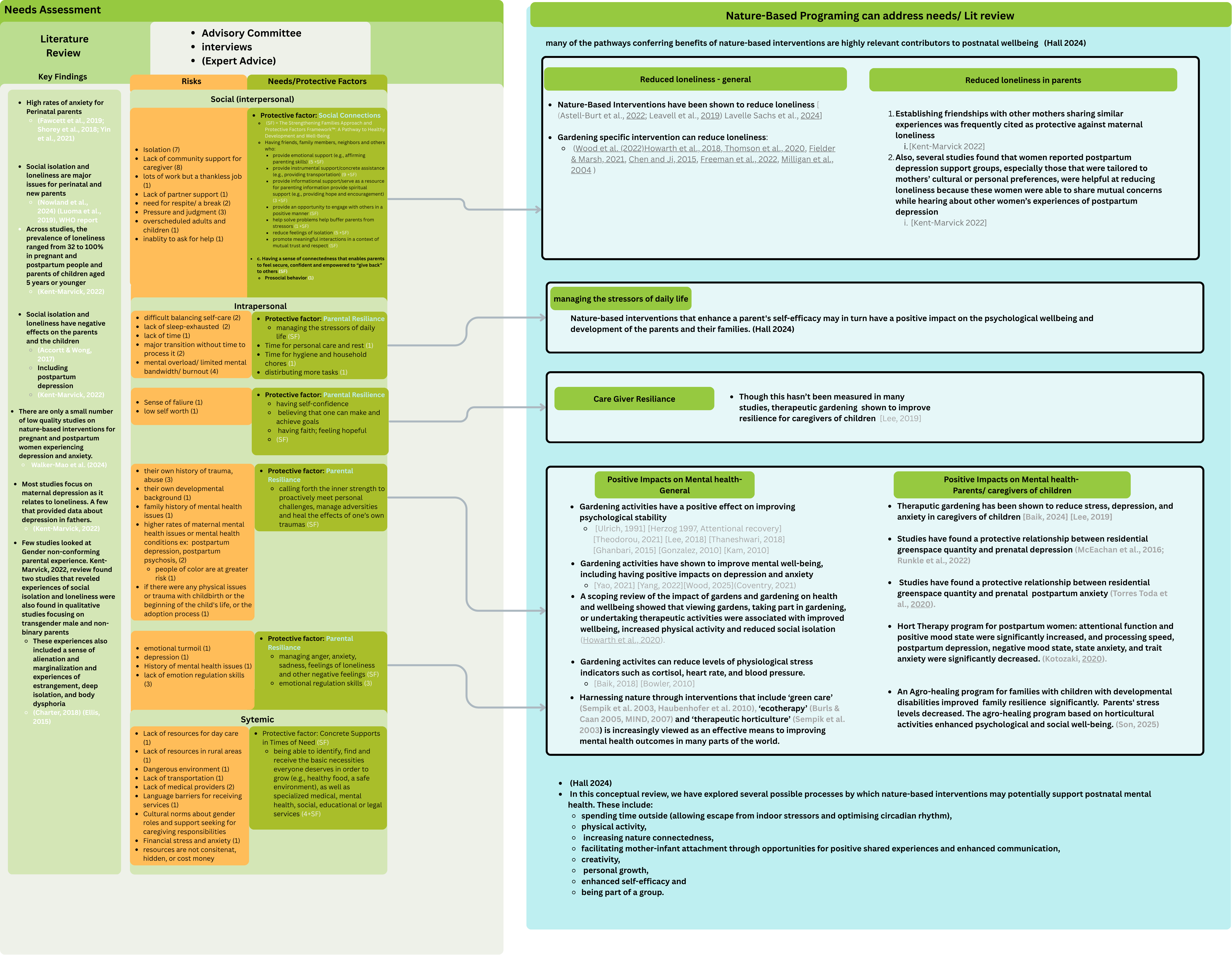
I would like to see your spreadsheet and check box method. i think having different visual trackers can be really helpful in trying to organize thoughts. If you make one and want to share it I would find that interesting. I shared a picture of how I have been organizing some concepts visually as well. Though it more the validation of some themes behind my objectives than the objectives themselves.
En respuesta a Jeremy Kraus

Re: 3. DISCUSS: How will you put these ideas to work?

por Daniela Vergara -
Jeremy, the spreadsheet with checkboxes sounds like exactly the kind of grounding tool I need — I tend to keep too much in my head. The volunteer
engagement piece sounds tricky; hopefully as the project takes shape the scope becomes clearer for everyone involved and commitment follows naturally.
En respuesta a Jeremy Kraus

Re: 3. DISCUSS: How will you put these ideas to work?

por Heather Kase -
A spreadsheet with check boxes is such a good idea! I should try that as well. The documentation point you make is what I am experiencing too - it's all in my head and needs to be written down somewhere and justified!
En respuesta a Primera publicación

Re: 3. DISCUSS: How will you put these ideas to work?

por Celeste Carmichael -
My own project - is less about PoW (and content) and more about staff development. I'm creating resources for staff around AI and Extension Programming work.

It has helped me to begin to set time aside for drafting materials and considering how to get those materials used. Putting words on paper makes it more likely to come to fruition for me. And setting the timer to engage in the action to get words on paper is what makes it happen.

What gets in the way is the steady flow of e-mail that comes in the door. Earlier this month I realized that I was feeling over the top ovewhelmed by "all of the projects". This is not the first time that I've felt that way in my career. It did take me feeling the feels though to right-size how I was spending my time (shutting down incoming e-mail for work blocks, setting the timer for work chunks)....beginning to feel better about my project (and all of the various projects that I'm working on). Amazing how things can begin to spin if we are not intentional.
En respuesta a Celeste Carmichael

Re: 3. DISCUSS: How will you put these ideas to work?

por Jeremy Kraus -
I appreciate the feedback Celeste. It is nice to know I am not the only one to write things out to help organize concepts and thoughts. I need to remember to go in and update my drive docs to keep them current on my thought process.

As for the emails, I am fortunate to not have a fire hose hooked up to that as far as the volume of folks reaching out. I definitely inquire more than I get inquired upon :D
En respuesta a Celeste Carmichael

Re: 3. DISCUSS: How will you put these ideas to work?

por Sarah Bentley Garfinkel -
Yes to setting aside time! In the last several years I've started adding almost everything to my Outlook calendar - including focus time or generic follow-up/catch-up blocks. It helps to make sure that time doesn't get filled (mostly ;)). I appreciate the PDLC blocks of time for this reason.
En respuesta a Sarah Bentley Garfinkel

Re: 3. DISCUSS: How will you put these ideas to work?

por adam Bullock -
I appreciate my calendar for being my to-do list and organizing my time. I color code types of activities, like meetings, programs, or planning time. I often move things around, and I tend to put things off when feeling overwhelmed - or go to the easiest tasks. I am intending to be in attendance with our zoom meetings now that I am done traveling for awhile.
En respuesta a Primera publicación

Re: 3. DISCUSS: How will you put these ideas to work?

por Jane Rothschild -
So far I am feeling more confident in identifying objectives based partly on the State Wide Plan of Work, but mostly on findings from my literature review and interviews with experts and potentially advisory committee members. It seems like from what info I have gathered, some very clear needs have emerged. I have been organizing it all visually using a "white-board" in Canva. And then I summarized it by key themes, which are the objectives. It was good to do this so early in the project because a novel need and new objective emerged because obvious from the lit review and interviews, and I am glad we are early enough that we can include it as a key objective.

I feel like having the objectives clarified now also make me feel more clear about how to find mechanisms and modles to base our methodology on for the program.

I still want to do a focus group or two later in the summer to check my objectives and methods with the target community

Example of my Canva whiteboard that I am using to visualize how things are connected to make my objectives


En respuesta a Jane Rothschild

Re: 3. DISCUSS: How will you put these ideas to work?

por Sarah Bentley Garfinkel -
This visual is fantastic! I can imagine a tool like this not only clarifies the project pieces but also could help communicate with colleagues, engage partners, etc. along the way - even before a plan is finalized.
En respuesta a Jane Rothschild

Re: 3. DISCUSS: How will you put these ideas to work?

por Daniela Vergara -
Jane, the Canva whiteboard idea is genius and beautiful! I might steal that! I find that once I get out of documents and into something more visual, connections between ideas become much clearer. Did you find that having the objectives nailed down early also helped when you went back to talk to your focus
groups?
En respuesta a Jane Rothschild

Re: 3. DISCUSS: How will you put these ideas to work?

por Heather Kase -
The digital white board is such a great idea! Maybe I should do that as well. I love how this look and how the information flows.
En respuesta a Primera publicación

Re: 3. DISCUSS: How will you put these ideas to work?

por Sarah Bentley Garfinkel -
Reviewing - and simply being introduced to - the statewide plans of work and associated resources is helping to clarify and shape the project. My project is best aligned with the Health and Wellbeing - Social Determinants of Health plan of work, and seeing those outcomes related to partnership offered a great reminder to be specific about the value of partners throughout - inputs, outputs, and outcomes/objectives.
I've struggled a bit with how to best address and communicate the intended impacts of direct education (i.e. participant behavior change) along with systems change initiatives (i.e. resilient/sustainable partnerships and as appropriate, relevant practice or policy adoption). My experience is primarily in systems change initiatives but both aspects are critical to this project.
The objectives added to my program plan doc will benefit from cleaning up - soon!
En respuesta a Sarah Bentley Garfinkel

Re: 3. DISCUSS: How will you put these ideas to work?

por Eric Antrim -
Hi Sarah, I also found reviewing the statewide POW helpful in molding the project. Defining and relaying how a project will improve direct education and systems changes to producers is complex. I look forward to learning more about your project.
En respuesta a Sarah Bentley Garfinkel

Re: 3. DISCUSS: How will you put these ideas to work?

por adam Bullock -
Sarah, I agree that both are important, and I appreciated our PE workgroup meeting today which was helpful in thinking more through the plan of work. I struggled for awhile to understand the Health and Wellbeing plan of work. I saw a large focus on coalition work and systems change through teaching partners how to administer programs or evaluations, which makes the direct Ed (physical education) seem much less significant to our Extension work. Of course that is how I interpreted the POW - I have more experience with direct ed and teaching folks tips and tricks to making life easier (which is the part I love), and less (successful) experience with influencing larger changes. The discouraging part of PSE work I have engaged in is folks getting trained and pivoting away from the work to be done, or systems are set-up and then not utilized and forgotten. I am working to value a volunteer system for acting as a community workgroup, which can help to achieve those systemic goals.
En respuesta a Primera publicación

Re: 3. DISCUSS: How will you put these ideas to work?

por Eric Antrim -
I was able to schedule an initial meeting with the person I will be collaborating with to discuss the goals, requirements, and deliverables a successful version of the project could offer. It gave me a better understanding of what resources are available through the University and identified some of the gaps that could potentially be filled at the local level. This helped elevate some (not all ;)) of the skepticism I am having about pursuing the grant proposal and encouraged me to buckle down and move forward with the idea. Reviewing the statewide plans of work was beneficial to help recognize the more feasible outcomes to reach as well as those that are beyond the scope of this project. Moving forward I need to dedicate more structured time to researching similar projects that have been awarded and successfully implemented at other land grant institutions across the county, aiming to emulate the structure of their development in a regional context. This spring already seems busier than last year so the best thing I can do is to block out few reoccurring hours each week to focus on the project. It is still feeling extremely preliminary but is slowly starting to come together.
En respuesta a Eric Antrim

Re: 3. DISCUSS: How will you put these ideas to work?

por Erik Smith -
Every year, more and more things fill your plate! I agree that setting time aside for certain tasks can be very helpful. I usually use Fridays as my "catch-up with desk work" days... if field work allows, of course.
En respuesta a Primera publicación

Re: 3. DISCUSS: How will you put these ideas to work?

por Daniela Vergara -
Honestly, what has helped the most is just doing it and seeing what breaks. Working through a real soil test with Deborah in real time told me more
about what the tool was missing than any amount of planning would have. The September 11 launch date also helps a lot — having a fixed point keeps me
from endlessly tweaking and actually pushes me to prioritize.

What gets in the way? Scope, mostly. I'm an evolutionary biologist trying to build a soil assessment tool, an economics calculator, and a compliance
resource all at once. It's a lot of territory outside my comfort zone, and getting expert input takes time — everyone is busy, including me.

What's helping me clarify direction is actually this process — writing things down, talking to colleagues, and realizing that I don't need to solve
everything before launch. The needs assessment after September 11 will tell me what to focus on next. I'm trying to embrace "good enough to be useful"
rather than waiting for perfect.

Curious how others are managing scope — are you finding it hard to draw a line around what your project is vs. what it could be?
En respuesta a Daniela Vergara

Re: 3. DISCUSS: How will you put these ideas to work?

por Erik Smith -
two thoughts - totally agree that giving yourself a deadline can be a great way to give you the nudge you need to make a plan. And sometimes I also struggle to decide the scope of a project. Am I going to hold a field day for this idea or a 1-hr workshop? Sometimes I find that the more I sit down and plan a project, the more overgrown it can become. Maybe being more formulaic in the planning process could help prevent that.
En respuesta a Primera publicación

Re: 3. DISCUSS: How will you put these ideas to work?

por Amanda Cappadona -
Because I am already in a data space I know a great deal about the needs of my county and the population I serve already. That being said, I want to get different perspectives from Master Gardener Volunteers and our Master Gardener Educator, as well as local CBOs that have gardens that they use for produce distribution. These will be two very different populations, but I think input from both is very much needed. That will help clarify how to proceed.
What gets in the way is time. A lot of these folks are really busy, and it's tough for them to find time to sit down and talk with me. This is what's keeping me "held up" at this point.

I plan to reach out to those folks again and since health fair season has wound down I will also have more time/energy to dedicate to PDLC.
En respuesta a Primera publicación

Re: 3. DISCUSS: How will you put these ideas to work?

por Raevyn Saunders -
As I have continued developing my “Ag Leases 101” project, the biggest thing helping clarify the direction of the program has been the ongoing conversations I have with farmers, landowners, and other educators. I regularly receive calls with questions like: “What should I be charging for rent?”, “Do you have resources on how to write a lease agreement?”, “What should I do with my land?”, and “How do I market my land to farmers who want to lease it?” Hearing many of the same questions repeatedly has helped confirm that there is a real educational need for this topic.

From these conversations, I have also started developing the idea of creating a regional custom rates survey. Many farmers and landowners are looking for guidance on what others are charging for services such as equipment work, haying, land rental etc. I think this could become a valuable resource that complements the Ag Leases 101 program by helping provide better information for lease discussions and agricultural services.

One thing that I need to be aware of when discussing lease agreements is the legal aspect, since leases are legally binding documents. It is important to stay within Extension’s educational role and avoid giving direct legal advice. I am still working through the best way to navigate that while still providing helpful resources and information.
En respuesta a Primera publicación

Re: 3. DISCUSS: How will you put these ideas to work?

por adam Bullock -
I have been gathering thoughts for, having conversations, and developing my project long before PDLC, and appreciate PDLC for reinforcing greater depth to the project, helping me to better understand the dynamins. A few folks who are passionate about Physical Education for Older Adults initiated a statewide workgroup for collaboration which has also been tremendous in developing my project and a shared project statewide. I have a logic model developed & I am working on a local plan of work, which our county does not have.

I want to teach folks how to exercise, structure PA, move safely, self-nurture confidence, identify and adopt supports, and find a sense of mattering in community. Organically that develops a big picture change that we all want, well-being.

Yet it must be justified, even though intuitive. being rejected by potential funders & having management who do not see strength in the connection to CCE's mission is discouraging.
En respuesta a Primera publicación

Re: 3. DISCUSS: How will you put these ideas to work?

por Erik Smith -
I typically use OneNote to sketch out and organize my ideas for various projects. For me, any new program begins with listening to my producers and my regional team's advisory board. Most often, it's the result of repeated statements/questions from producers on a given topic - which I will then bring to my adv board for their input. Two things usually get in the way: not fully knowing whether or not I'm in a bubble (do a lot of people want to learn about this or have the only five people interested already reached out and given me this idea?), and devoting the time required to plan the program in a way that does it justice (did I promote this enough? Or, Why didn't I think of [insert thing I wish I'd included] earlier?). I appreciate how the PDLC program has helped me better realize that a great program requires dedication to carving out time/space/effort to the planning process so details don't get overlooked. I feel like I've traditionally done a good job of this, but applying a framework to my planning process is something I'll be much more intentional about in the future.
En respuesta a Erik Smith

Re: 3. DISCUSS: How will you put these ideas to work?

por Raevyn Saunders -
I'm also a fan of OneNote. I use it to organize almost all of my projects and ideas. I have tabs for things like ag attorneys, ag insurance resources, grant progress, program ideas, and notes from producer calls. I find it really helpful because many program ideas start from conversations with producers, and having those notes in one place makes it easier to identify recurring questions and themes. I also relate to that am I in a bubble question. Asking myself is this a reoccurring theme or just at the top of my mind?
En respuesta a Primera publicación

Re: 3. DISCUSS: How will you put these ideas to work?

por Amanda Cappadona -
I was able to meet with the Master Garden educator today to map out logistics/ideas for my program. Since I already deliver nutrition education in the community and have established partners that are happy to have me back, I know I have an audience to some degree. The main issue I'm grappling with right now is the cadence of education (how many sessions? how far apart? How much nutr ed, how much gardening?) and the curriculum. The MG Educator and I came up with some ideas and she will follow up with resources, but since gardening is not *currently* in my wheelhouse, I tend to have a lot of questions for her! I plan to reach out to my pantry partners who have gardens as well to see if they have ideas and if my concept would be feasible for them.
En respuesta a Amanda Cappadona

Re: 3. DISCUSS: How will you put these ideas to work?

por Raevyn Saunders -
I can also relate to the challenge of determining the right cadence and amount of content. Sometimes figuring out how much information participants can realistically absorb and apply between sessions can be just as challenging as developing the content itself. I often find myself wondering things like: How many sessions are too many? How much time should participants have between sessions to practice or apply what they've learned? Finding that balance between keeping participants engaged and avoiding program fatigue can be difficult.