Week 2 Assignment

Number of replies: 56

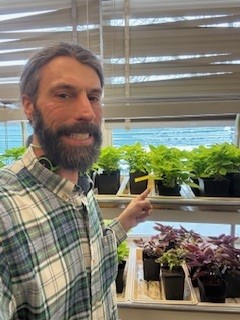
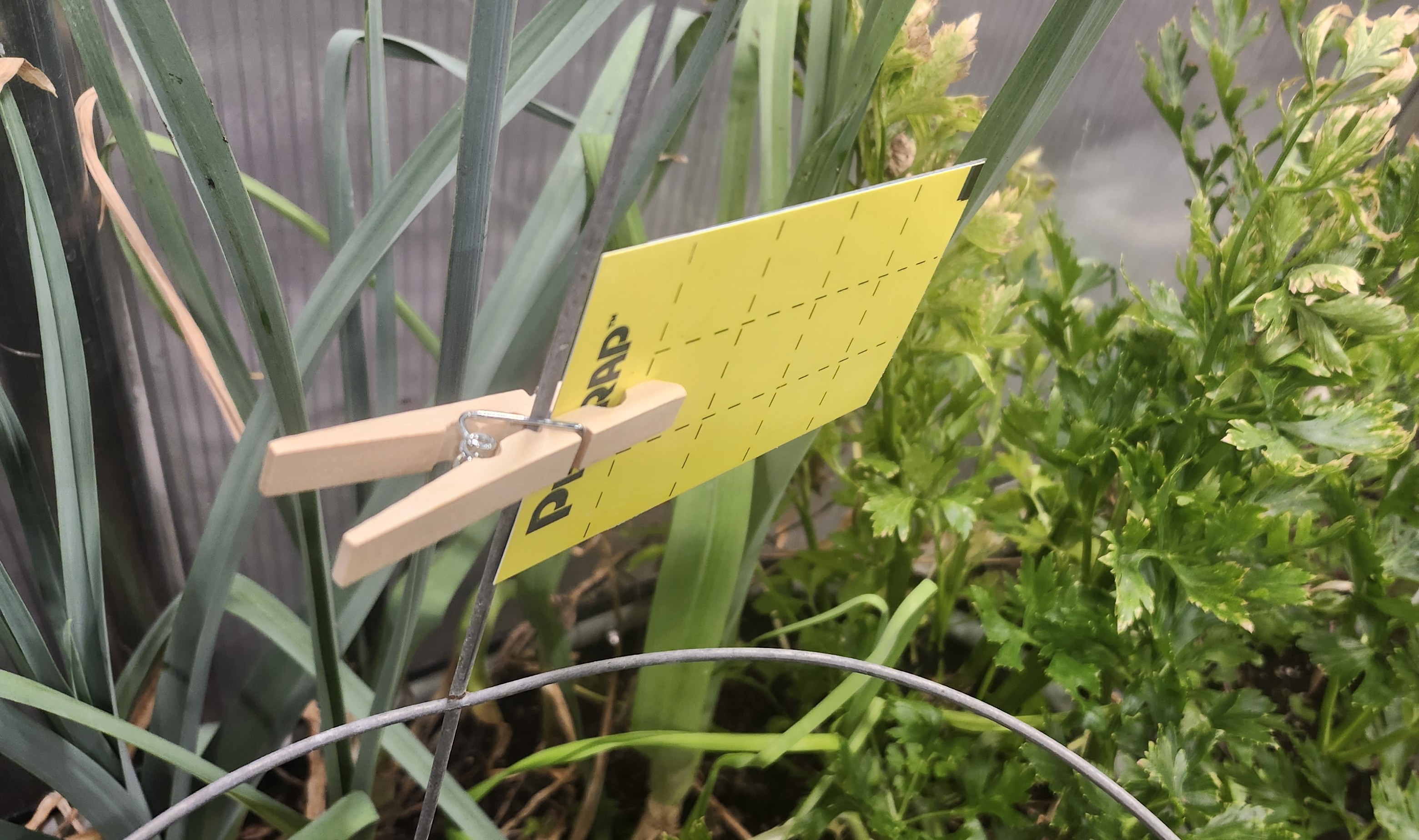
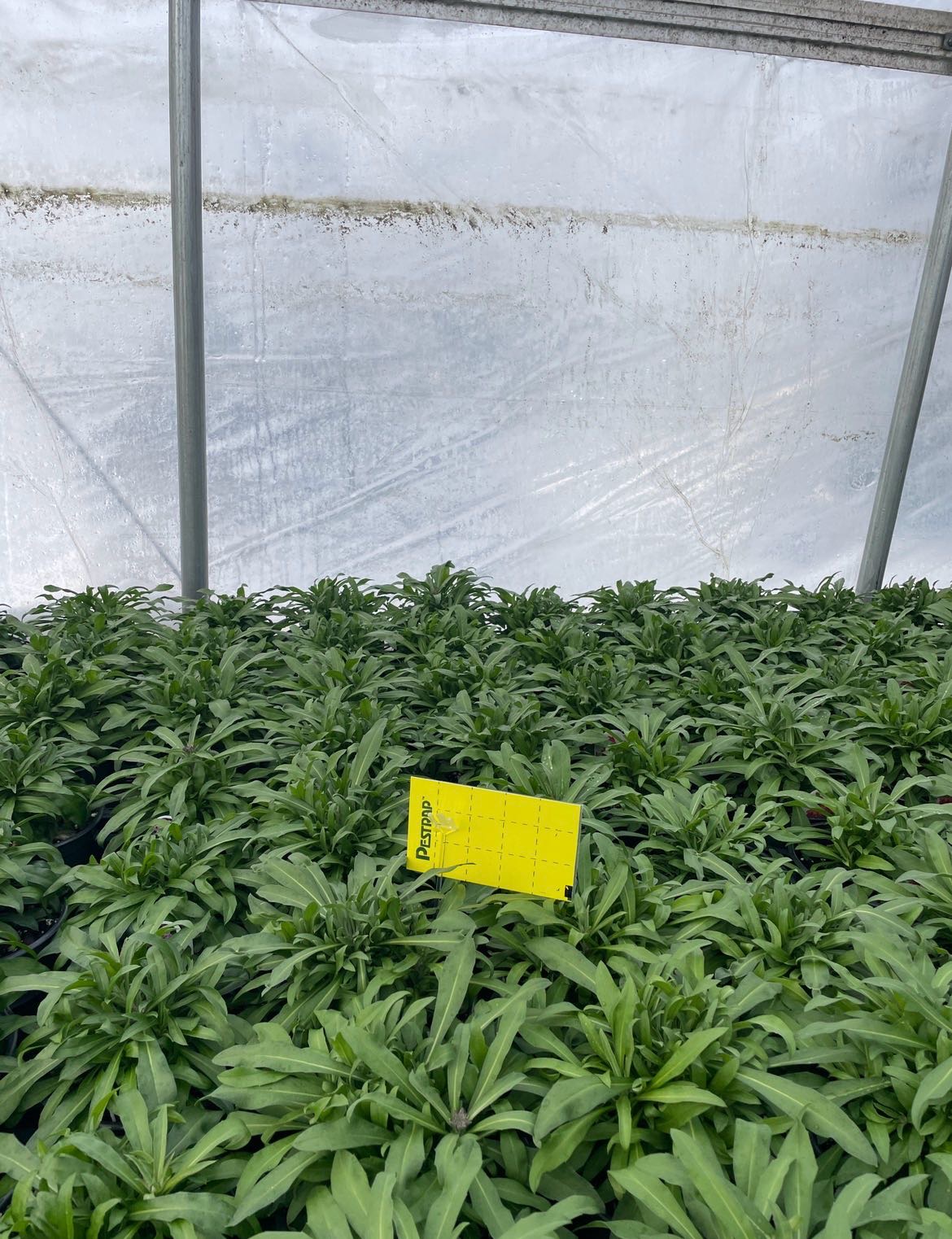
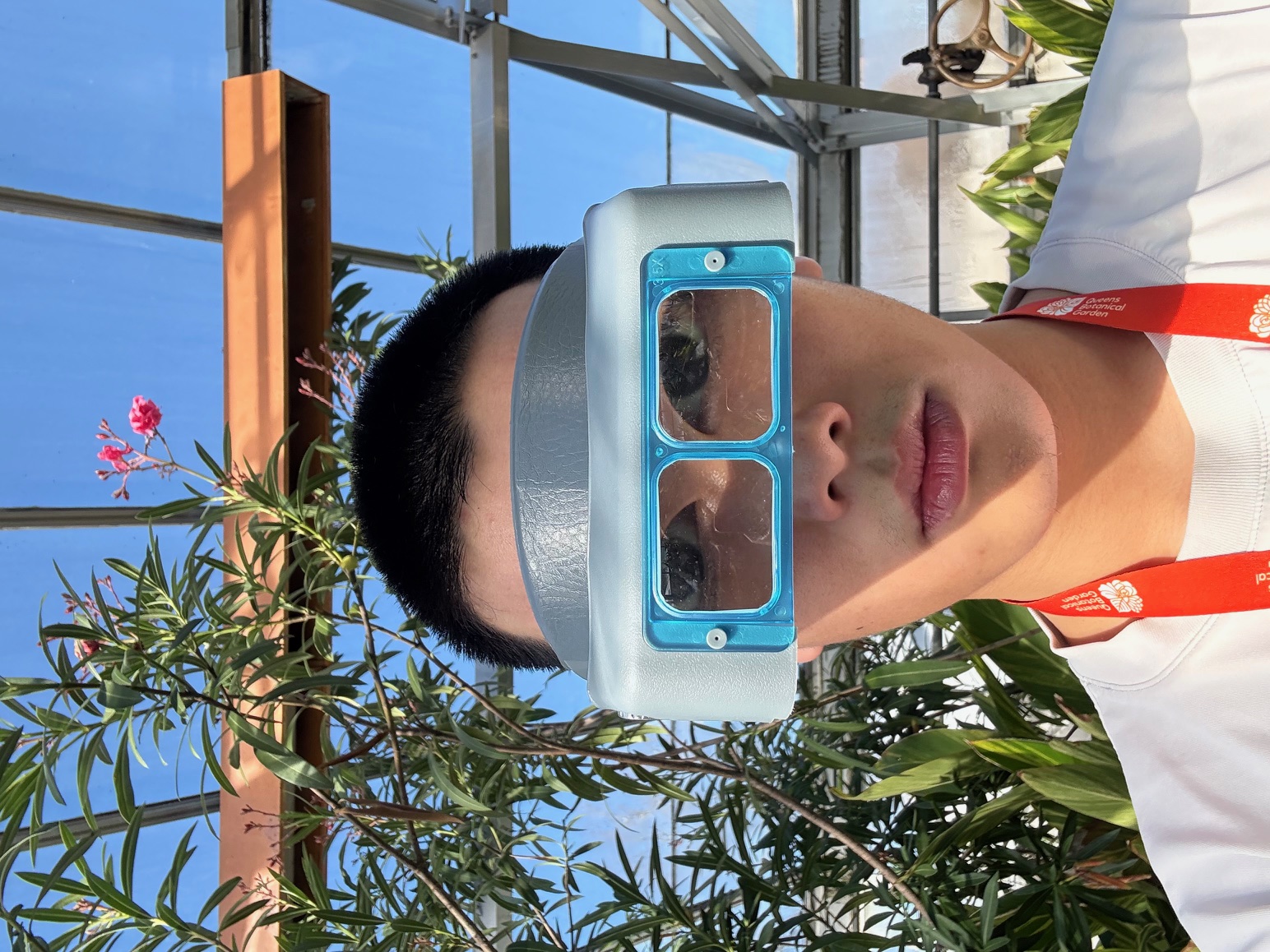
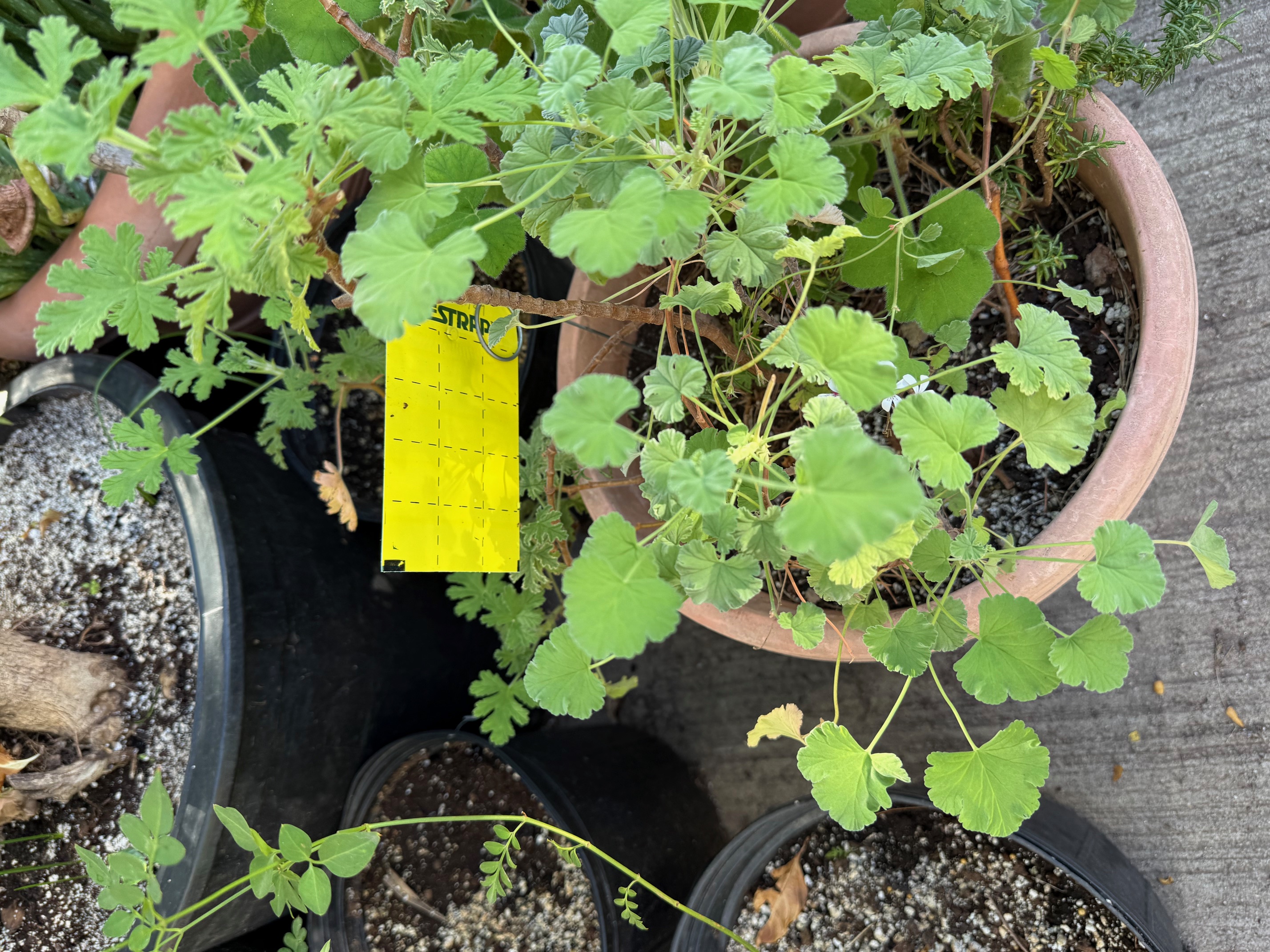
1. This week, you will get to start practicing your skills as a greenhouse scout. Please visit the greenhouse you will be scouting and place several sticky cards there. You can either uncover both sides or leave one side of the card covered to use the next week. This might be a good week to use the blue/yellow card and see if you get differences in what you catch! Remember to place them close to the foliage where they insects are most likely to be – and mark the plants so you can find them again. And don't forget to put a date on them! Send us a picture in Moodle of your cards in place! We also like to get selfies of you in the greenhouse scouting!

2. We would also like you to practice a technique for monitoring fungus gnat larvae in the greenhouse. You’ll need a potato for this activity. Cut a ¼” wedge or slice out of your potato. Insert the potato in the growing media of a pot in the greenhouse so that at least one cut surface is in contact with the soil. Mark the plants so you can find them again. Here are two  links with more information about this: 

https://bioworksinc.com/wp-content/uploads/products/nemashield/protocol-for-evaluating-efficay.pdf

 https://lgpress.clemson.edu/publication/integrated-pest-management-strategies-for-fungus-gnats-in-ornamental-plant-propagation/

 You can check the potato after a few days as you might see larvae quickly if there are fungus gnats in the greenhouse. it may depend on how moist the soil surface is.

3. Use your various magnification devices plus a phone camera or other way to document what you see. Take pictures of something you find in the greenhouse with 1) the phone (or camera) alone and no magnification, 2) whatever magnification the camera has, 3) the handlens, 4) the Optivisor plus phone (if you can) and 5) the handheld microscope.  It doesn't have to be an insect or disease symptom, although something with some variation in height like a not completely flat leaf and some small characteristic to look at is best.  Which one gives you the clearest and closest view?  How difficult is it to get a good closeup?  Even though the magnification systems are for you to see whatever you find, it is handy to have a good way to take clear and close up pictures if you need to send them in for identification. Post your comparison pictures and comments.

4. Inspect the plants in your greenhouse – including roots if you can.  Do you see any symptoms or evidence of disease or insect pests? Post photos of them even if you don't know the cause.  Mark those plants to return to next week.  These can be considered indicator plants for population development and evaluating pest management.

To Post Your Reply: 

  1. Click on Reply and type your response in the text box. 
  2. To post an image click on the Advanced link and then click on the image icon in the tool bar at the top of the text box. 
  3. To post an attachment, click on the Advanced link and drag and drop your file in the attachment box. 
  4. Click on Post to forum to submit your reply.

In reply to First post

Re: Week 2 Assignment

by John Miller -

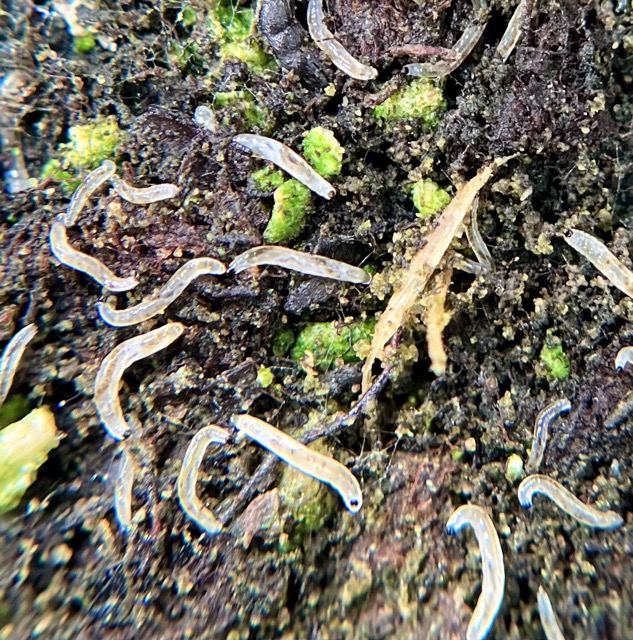
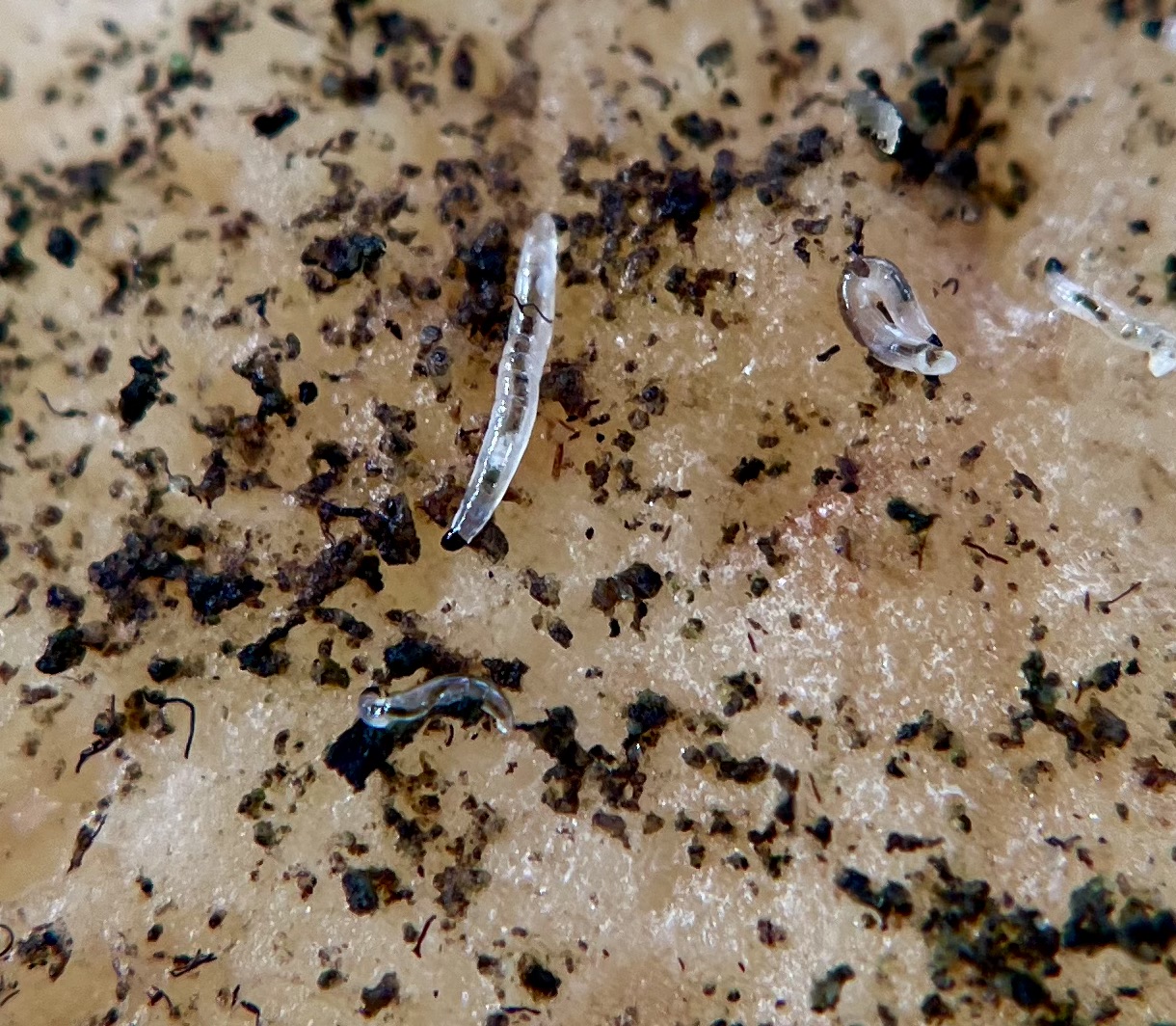
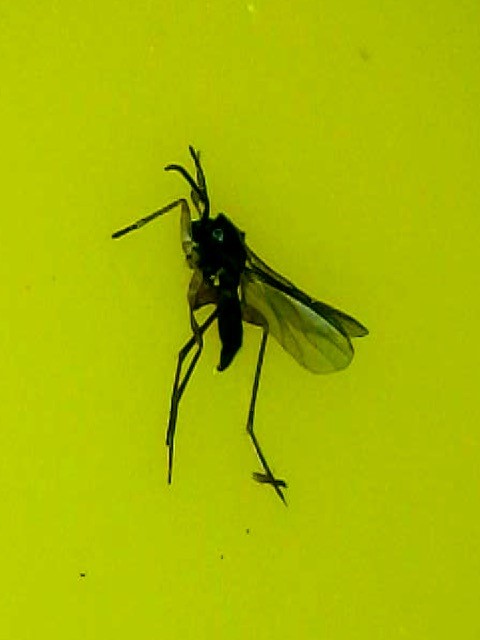
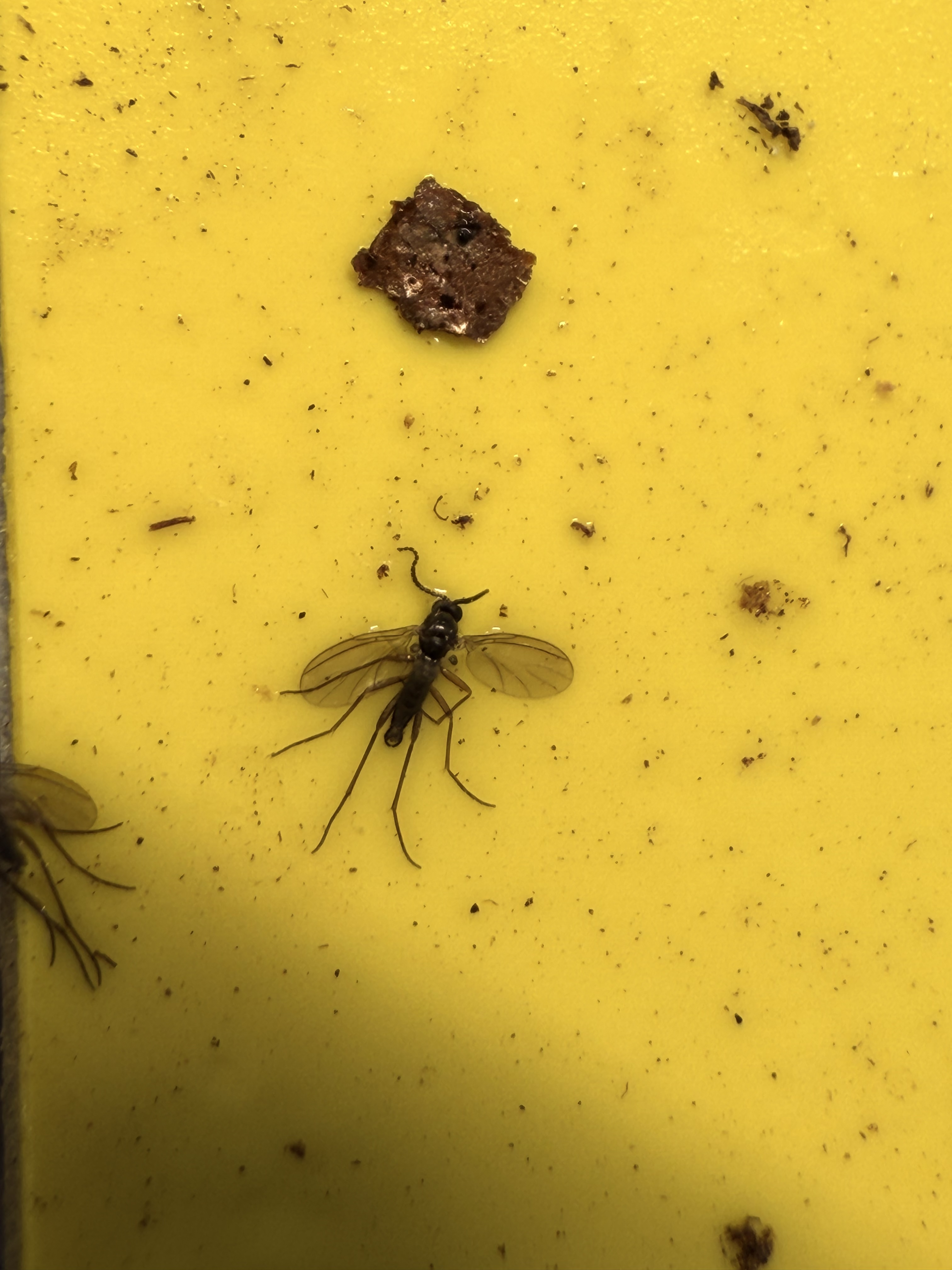
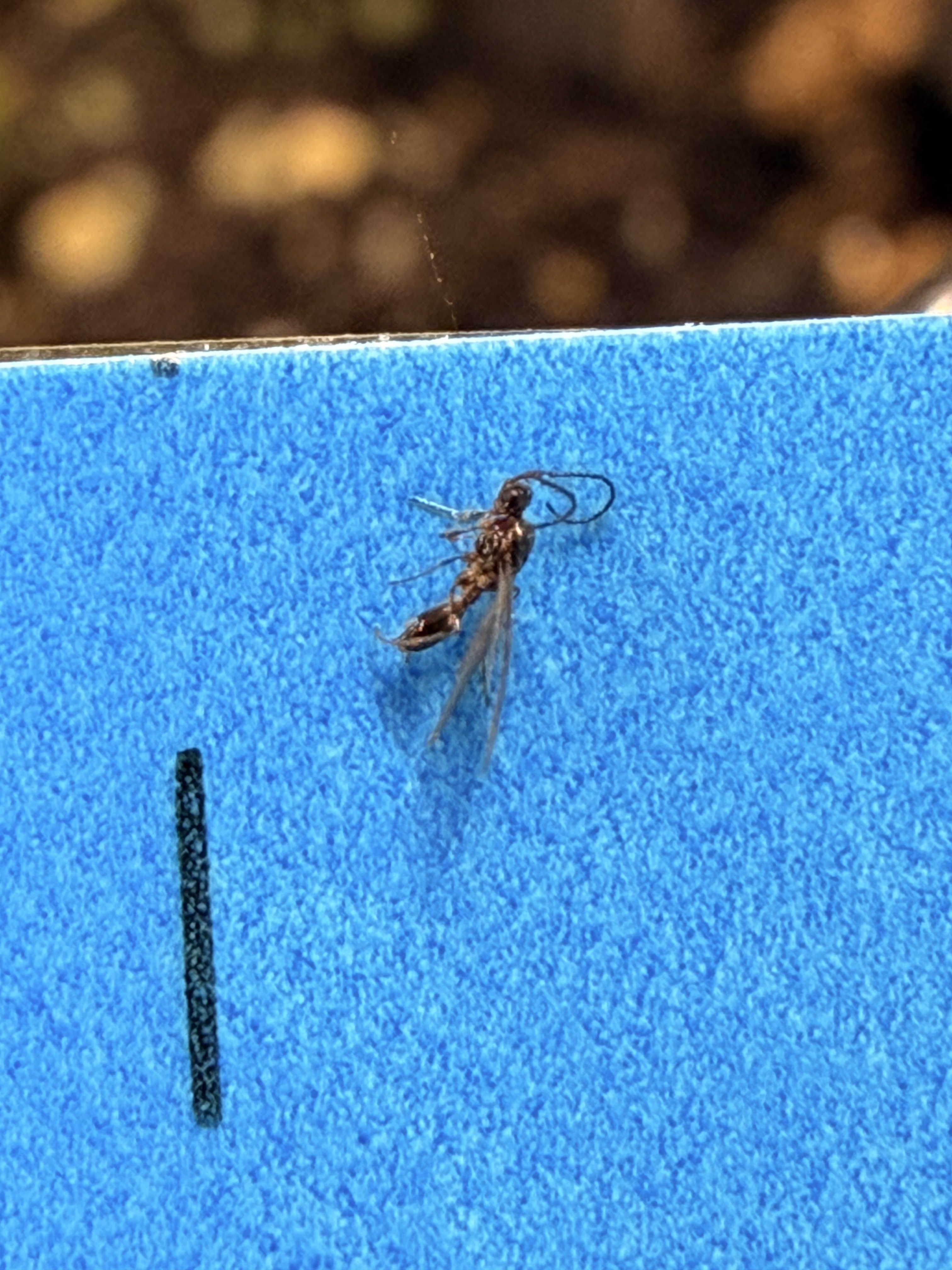
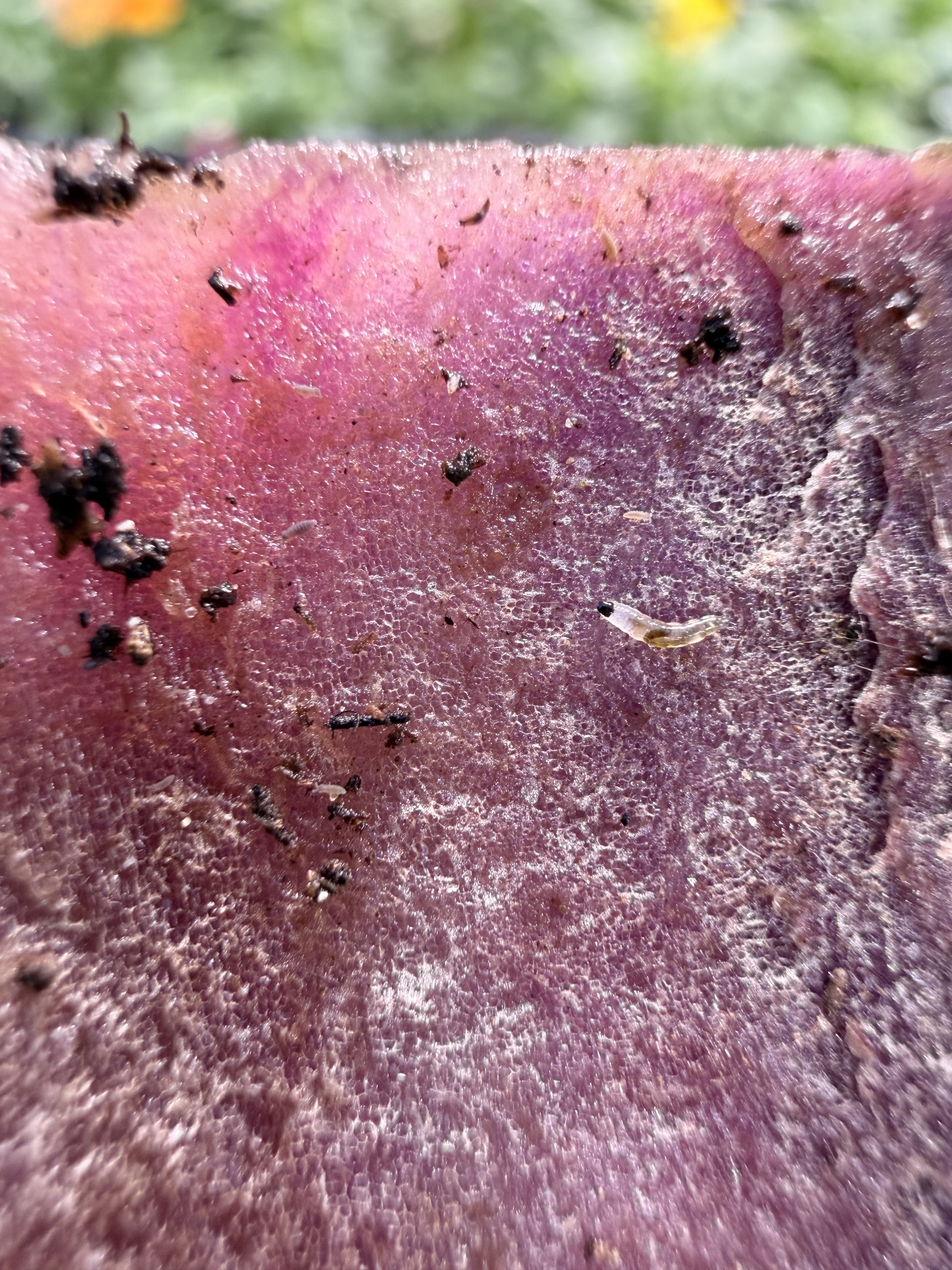
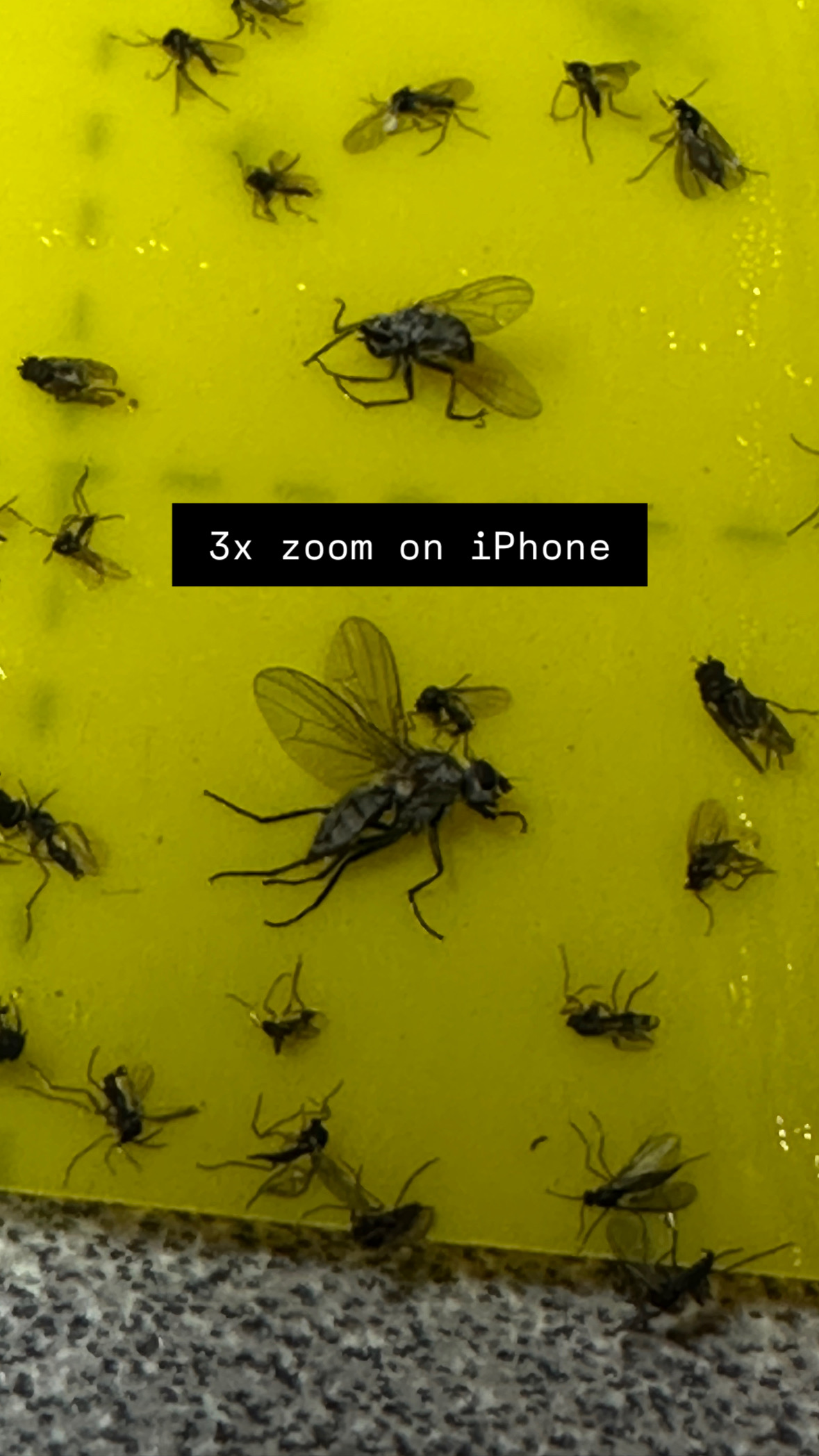
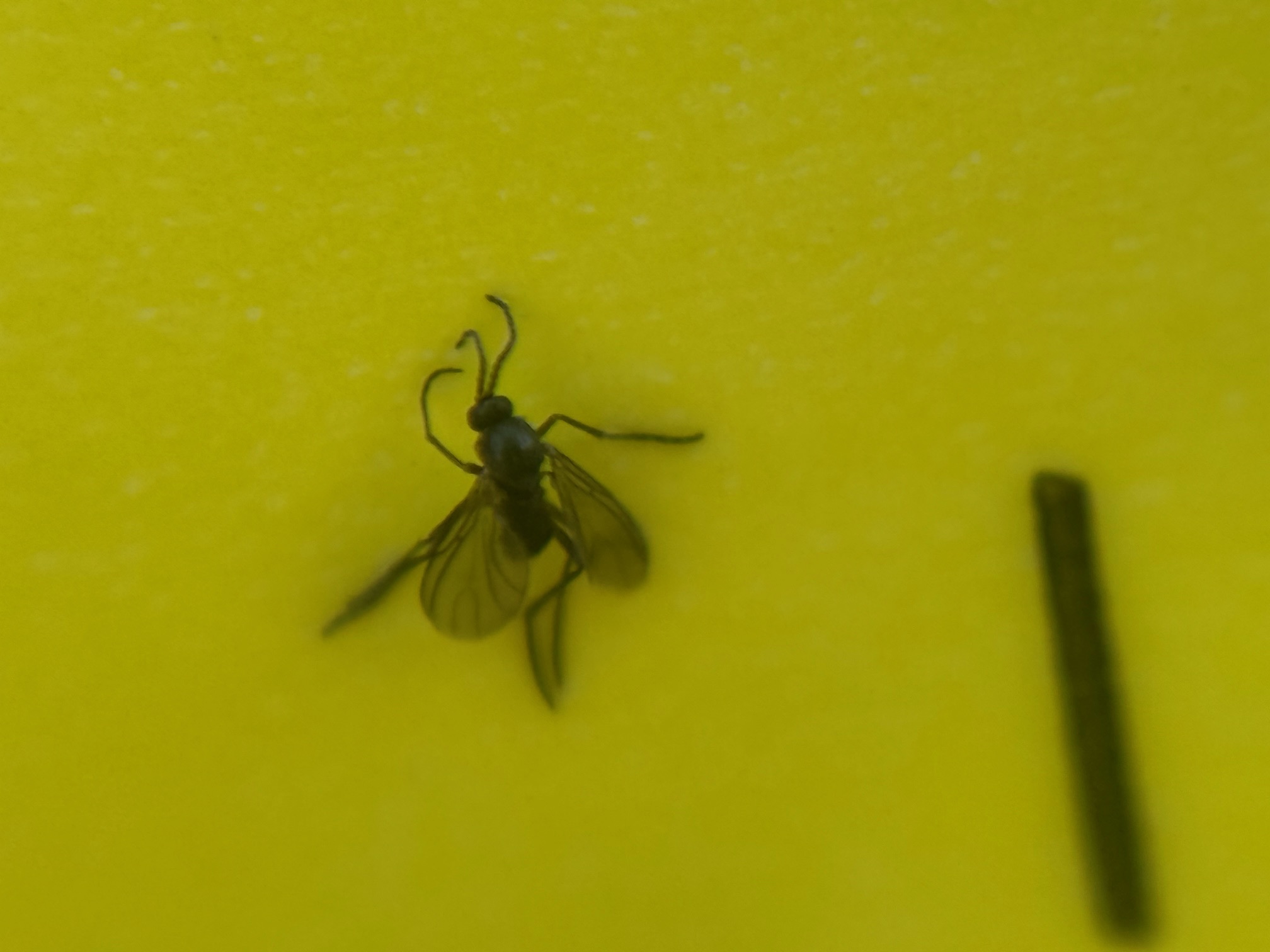
Fungus gnats on a yellow card and under a potato.

Attachment IMG_3782.jpg
Attachment IMG_3795 Medium.jpeg
Attachment IMG_3796 2.jpeg
In reply to John Miller

Re: Week 2 Assignment

by Elise Schillo-Lobdell -
Fantastic photos!, please tell us what you used to take them. Also, how many days did it take for the fungus gnat larvae to show up on your potato chunk?
In reply to Elise Schillo-Lobdell

Re: Week 2 Assignment

by Elizabeth Lamb -
And John, consider if you are keeping your plants too wet. It looks like algae on the soil surface which suggests you are. Or your media holds a lot of water. Let the surfaces dry out more or add a layer of something that drains well like sand or perlite. Also, consider nematodes to control the populations you have.
In reply to Elise Schillo-Lobdell

Re: Week 2 Assignment

by John Miller -
I used a macro lens on my iphone. 
In reply to John Miller

Re: Week 2 Assignment

by Elise Schillo-Lobdell -
Thank you for that link, I’m really impressed with the quality of your photos. {and hope you get some nematodes soon}
In reply to Elise Schillo-Lobdell

Re: Week 2 Assignment

by John Sanderson -
If you do decide to use nematodes, it's easy to use them incorrectly, but they're easy to use once you know the mistakes to avoid. Please check the resources for information on using nematodes, or search online for information. Betsy, can you post a link to the webinar we did on using nematodes?
In reply to First post

Re: Week 2 Assignment

by Shawn Jenkins -
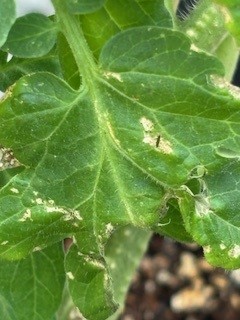
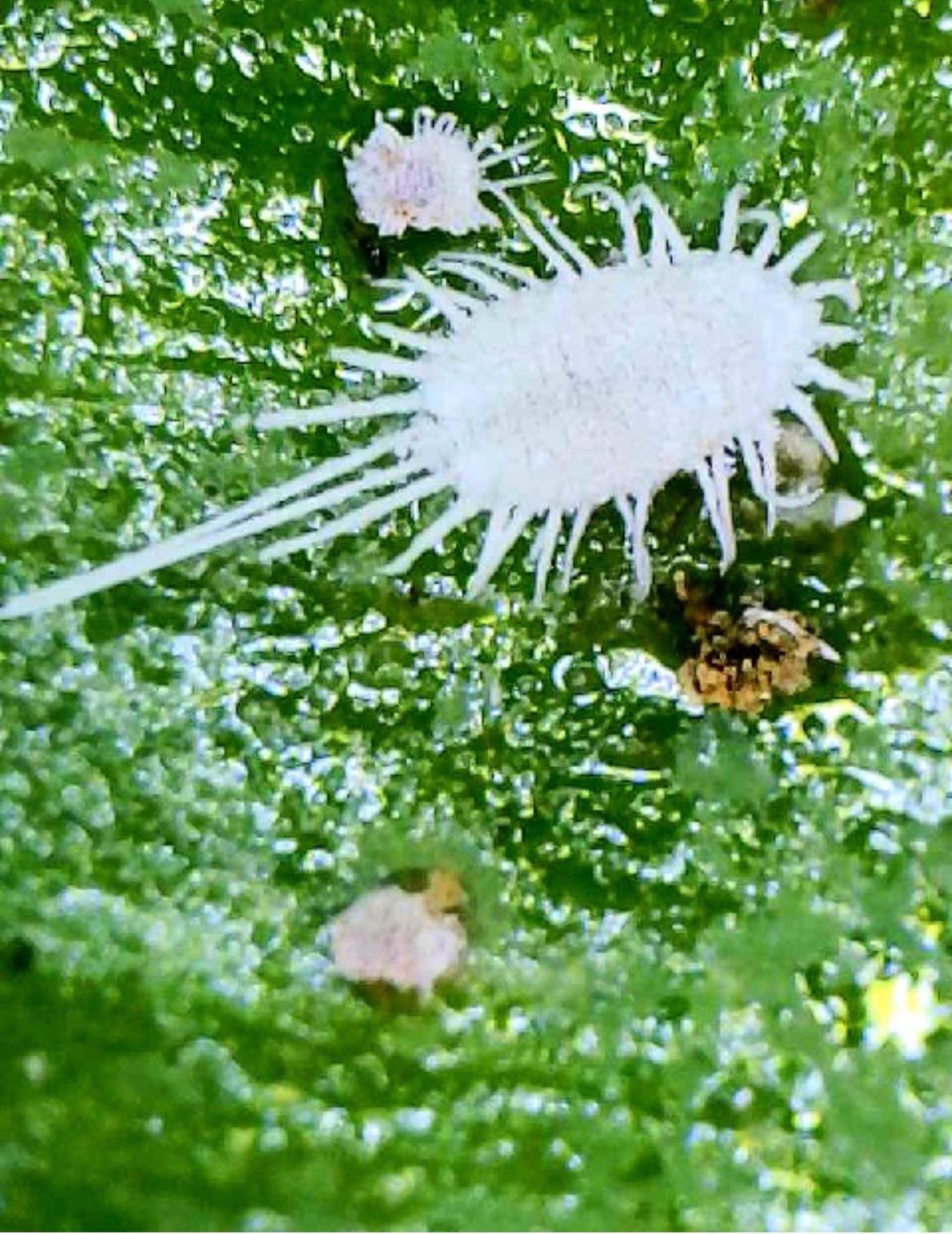
I've got many a pest in these greenhouses. Our coleas cutiings have root rot and fungus gnats due to poor planting and watering practices last semester. i have treated them for both as well as a few other that like to visit areas. I believe I have the thrips under control, the damage in picture is on tomatoe plants prior to pesticide treatment.  the other pests are being managed the best possible but I do not have ny beneficials to work with right now.  We have 3 greenhouses, assorted plants and cuttings in labs so I have been enjoying the new equiptment, particularly the camera, for some great photos to share. Enjoy?
Attachment insect on sticky card.jpg
Attachment me three.jpg
Attachment me too.jpg
Attachment mealybug.jpg
Attachment old thrip damage.jpg
Attachment po ta toe.jpg
Attachment root rot and fungus gnat damage.jpg
Attachment scale.jpg
In reply to Shawn Jenkins

Re: Week 2 Assignment

by Elizabeth Lamb -
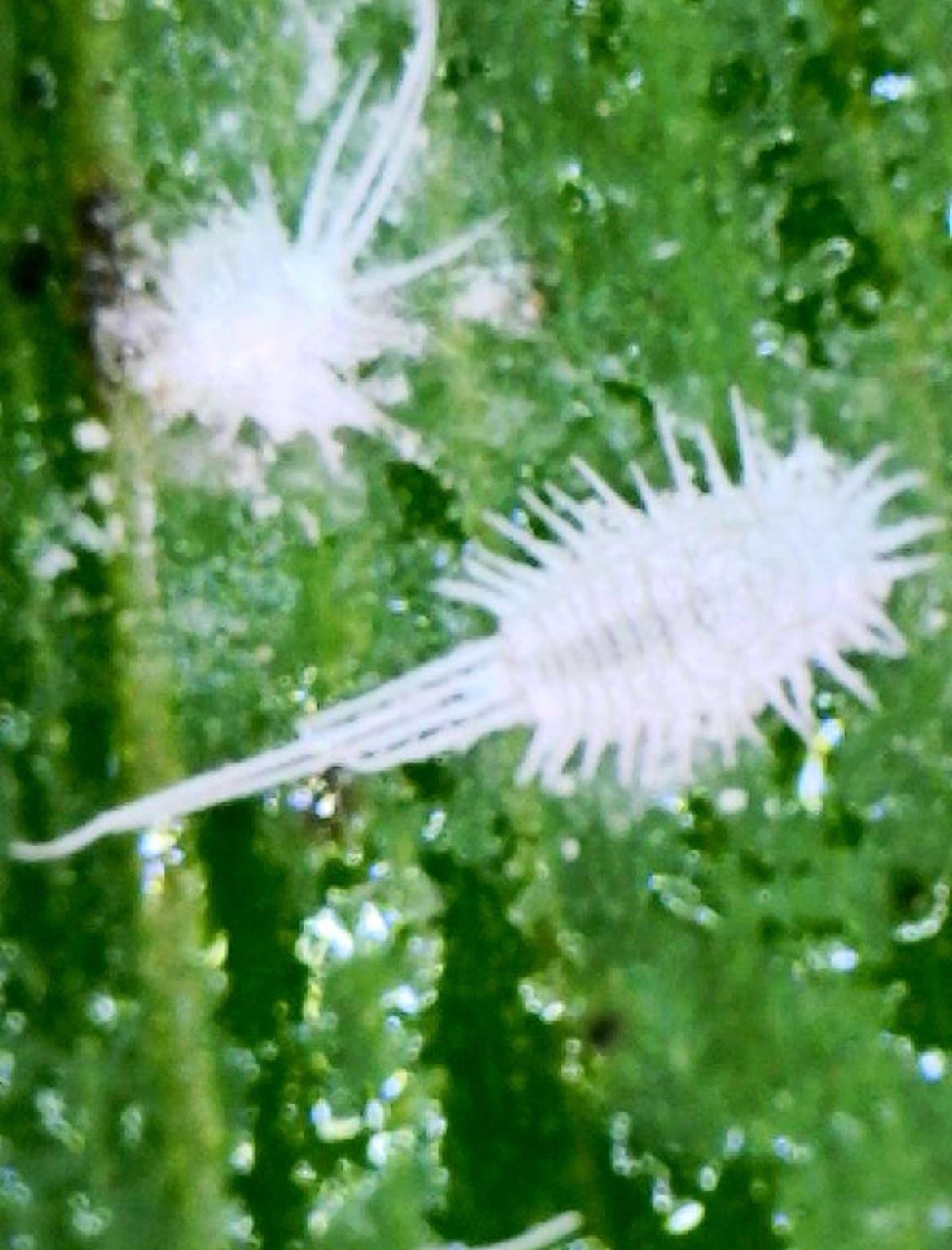
NIce(?) mealybug! Now squash it! That's the last photo - not sure which photo is the scale. Looks like you are trialling color and orientation of your sticky cards. Let us know what you find!
In reply to Elizabeth Lamb

Re: Week 2 Assignment

by Shawn Jenkins -
Ha, I thought the mealybug WAS scale. Now I know. I did the squish!
In reply to Shawn Jenkins

Re: Week 2 Assignment

by John Sanderson -
We'll eventually be covering mealybugs and scale, but unfortunately not until Week 6 (Feb. 26).
In reply to Shawn Jenkins

Re: Week 2 Assignment

by Elise Schillo-Lobdell -
Shawn - are you sure the damage on the tomato plant was pest related?, some of that just looks like physical damage to me - just the normal wear & tear we show with age. Often the plants along the aisles will look rather raggity, a combination of them drying out more and people & carts bonking them.
In reply to Shawn Jenkins

Re: Week 2 Assignment

by Elise Schillo-Lobdell -
There are two mealies in that photo - I hope you got them both!
In reply to Elise Schillo-Lobdell

Re: Week 2 Assignment

by Elizabeth Lamb -
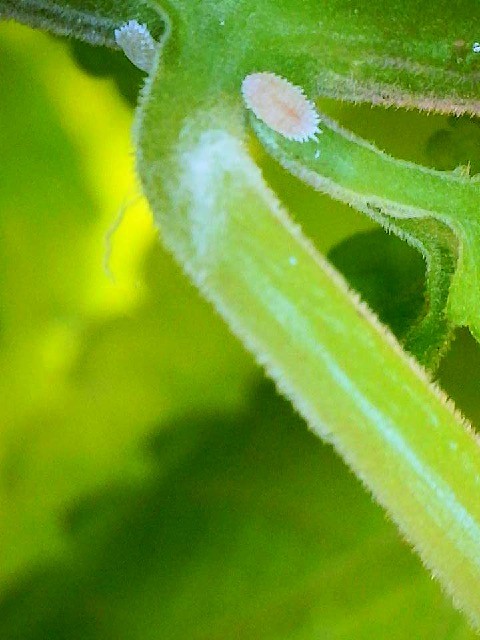
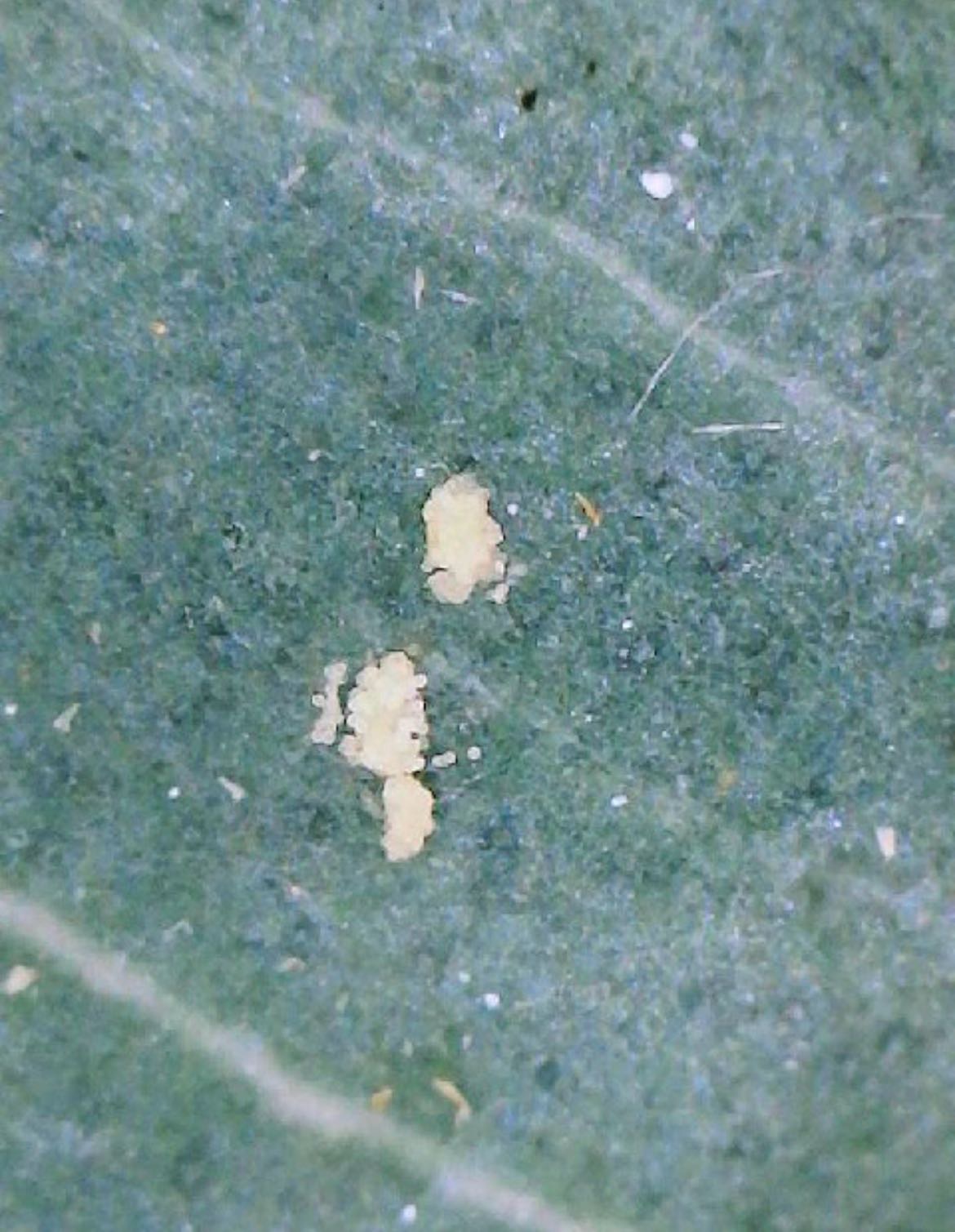
I'm practicing putting images in for Elise. This is a brown soft scale - has a hard cover you can flick off with a pin. Might be eggs or crawlers under there. (Colorado State University)
In reply to Shawn Jenkins

Re: Week 2 Assignment

by Amy Howansky -
Hi Shawn,

In class you mentioned that you liked the handheld scope camera. I tried using it through my computer so I can click the button to take the picture from the computer touch screen, and then I tried it from my phone and took the photo from the clicker there. I also tried using the clicker button on the handheld device itself. When I clicked the button on the device, I found it made me shake the device and change the viewing area, so I prefered using the phone or computer button. Did you have a preference?

Thanks.
Amy
In reply to First post

Re: Week 2 Assignment

by Tiffany Donaldson -
This week I started to practice using the materials supplied by this course.

I did not have much luck taking photos with the hand lens or optivisor. However, I think my favorite tool to use is the hand lens. I think the handheld microscope will be a great tool to use in the field to take a quick photo of a pest up close and visit it later. I also used a dissecting microscope to get an even closer look at these pests.
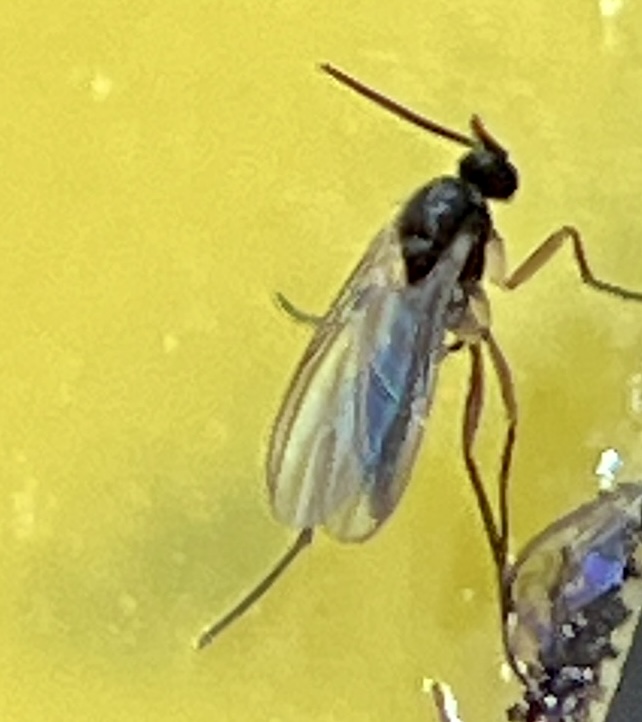
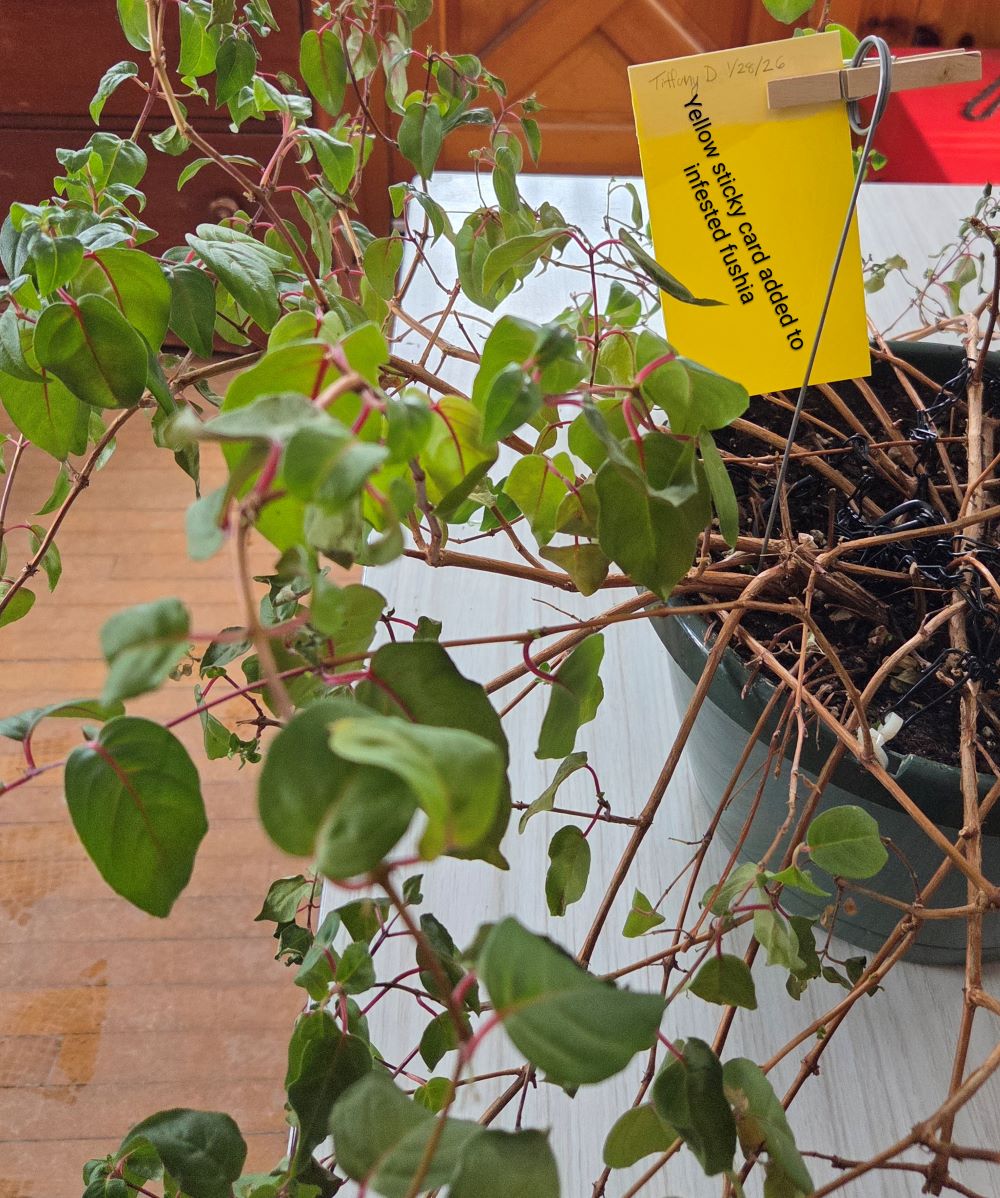
I used the handheld microscope to take photos of what I think are whiteflies on one of the fuchsia plants. I posted these photos in a thread in week 1’s homework, as we were on the topic already.

I placed 2 sticky cards (1 Blue and yellow and 1 yellow) in 2 different coleus plants. These plants have been known to have fungus gnats since I started to overwinter them indoors. As of now, I have very small yellow sticky cards. I used the cards I already had in place to see which plants had the largest infestation and placed the larger sticky cards in their place. Potato wedges were added to the soil on these plants, as well as a few others. This was done 1/28/2026.
I also placed a yellow sticky trap on the fuchsia that has the known infestation of whiteflies and aphids.

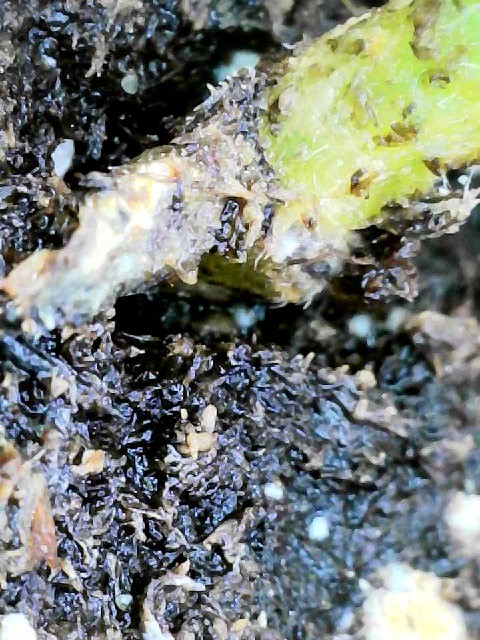
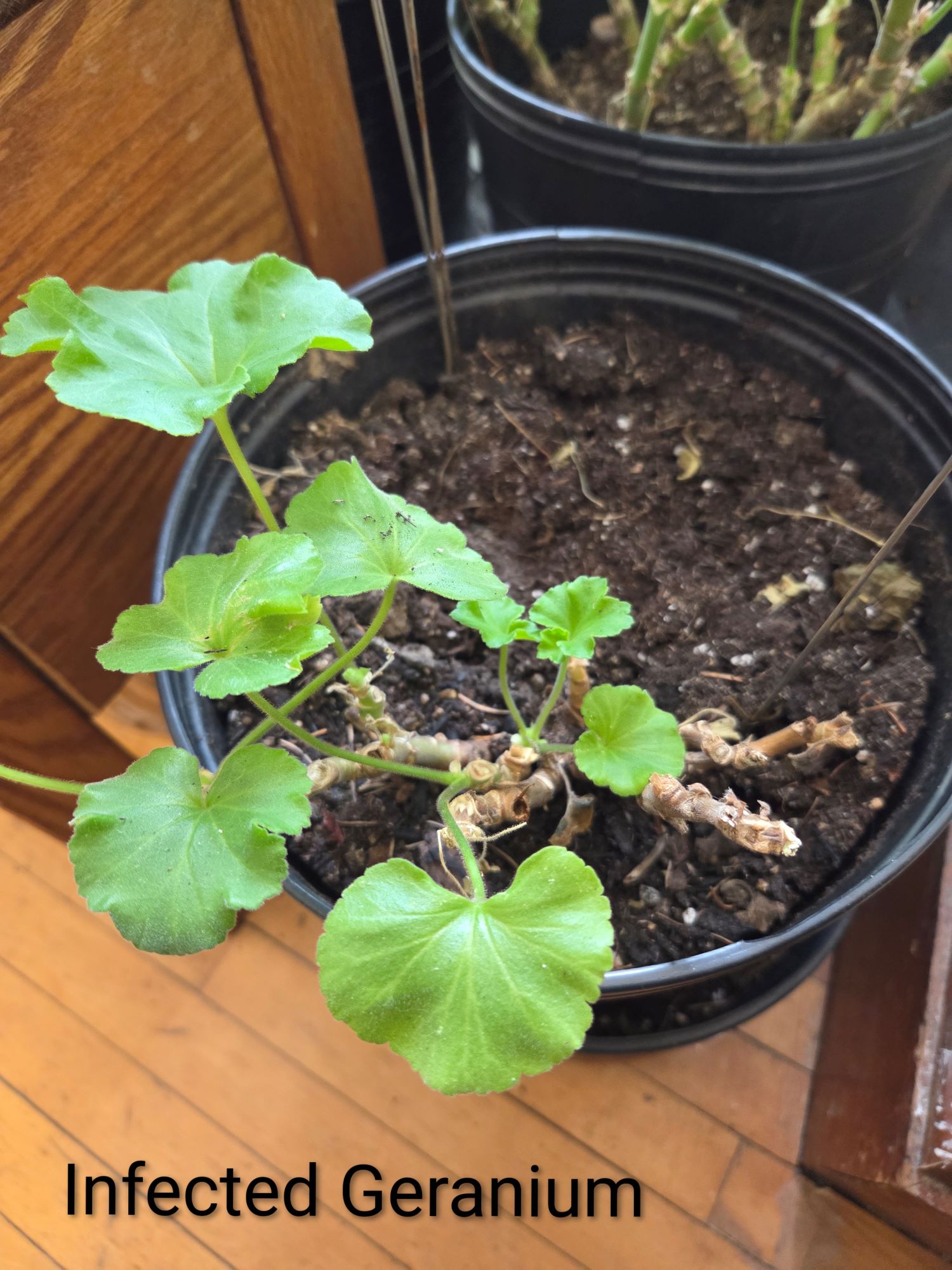
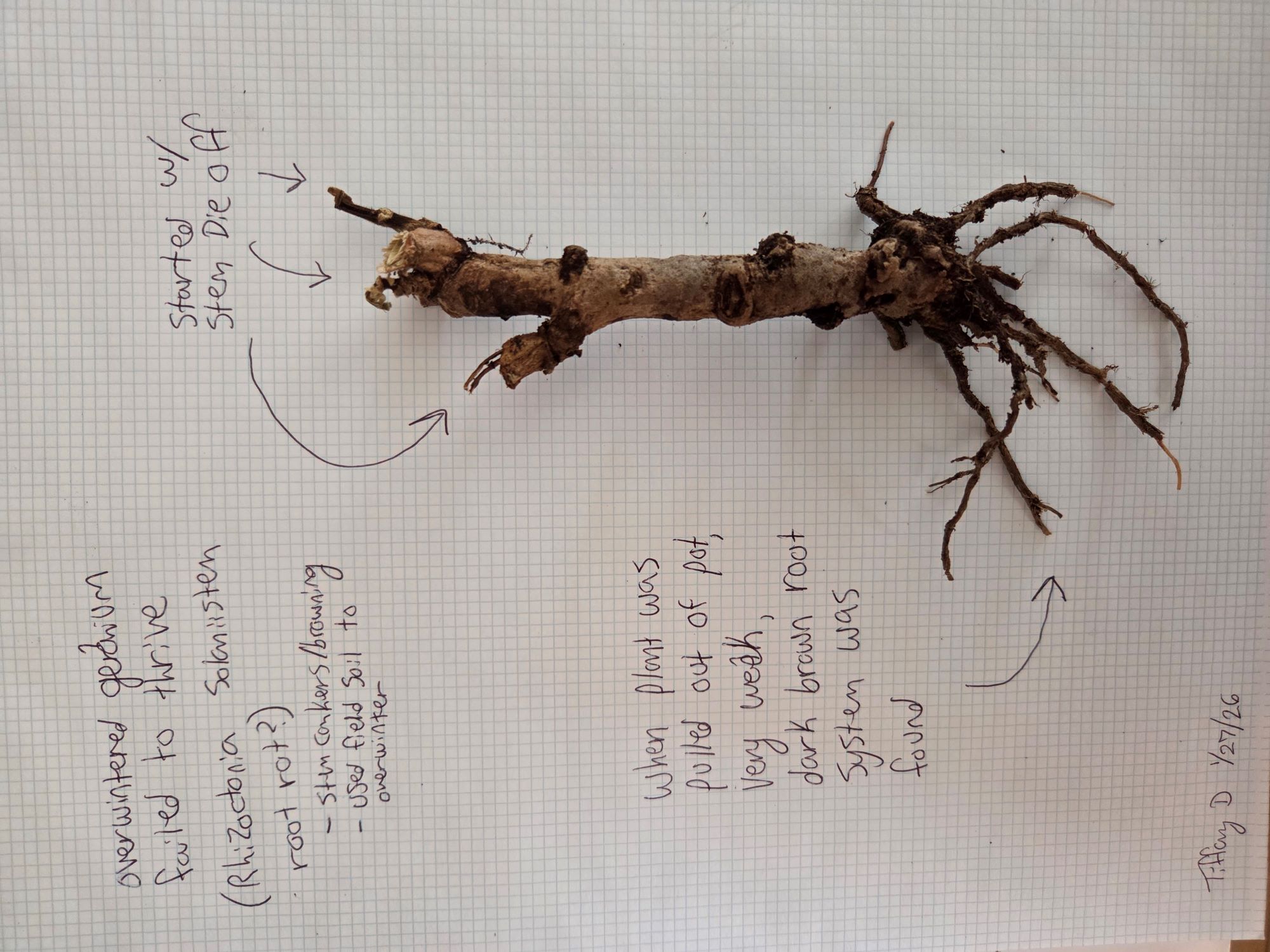
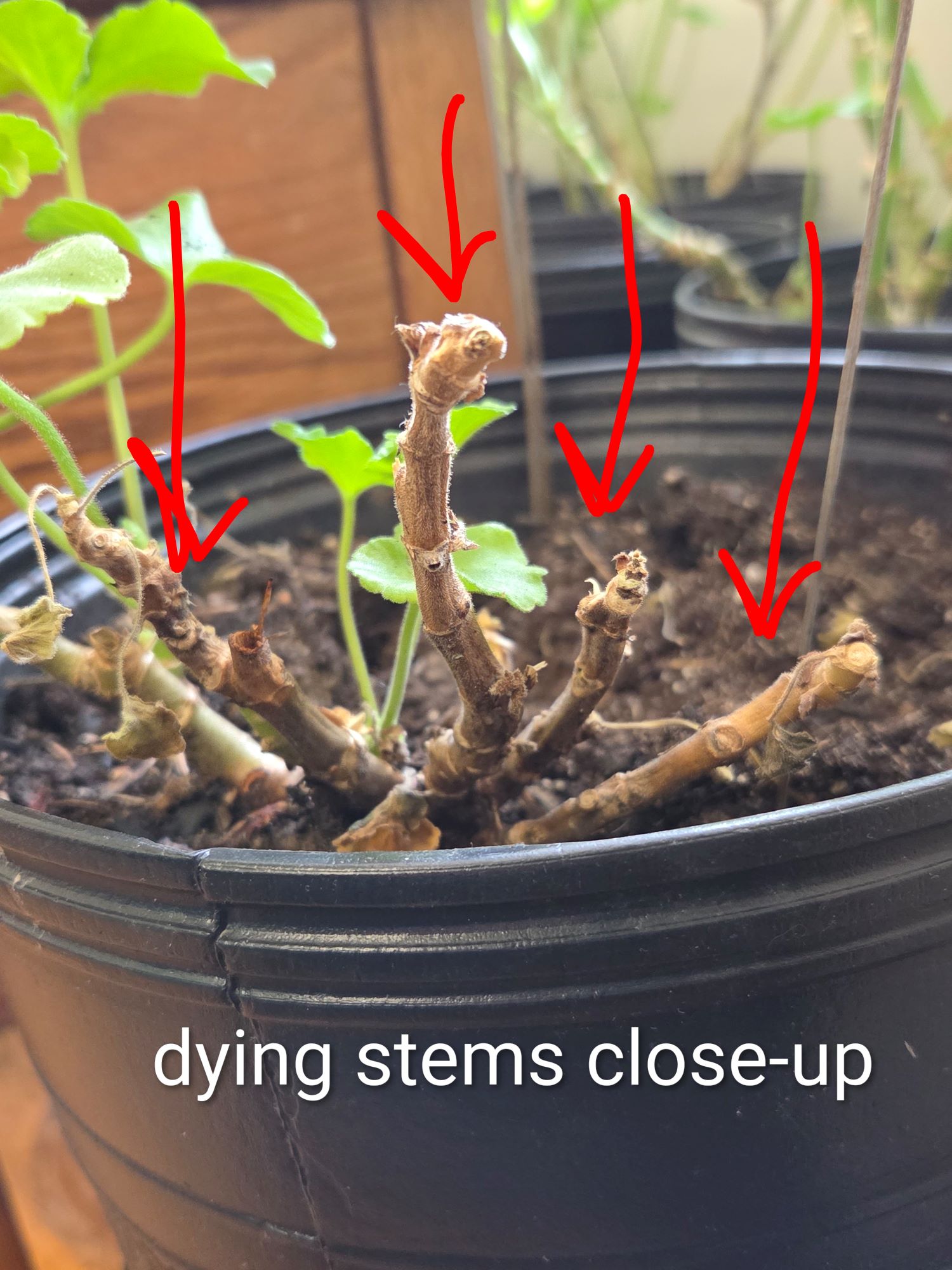
To begin inspecting roots, I started with a geranium that had died. This plant started to decline with dying stems. When I pruned these off, the insides of the stems were soft and brown. When this plant was pulled out of the soil, I noticed a very shallow root system, possibly indicating a root rot. I did use field soil to overwinter this plant, so I am suspecting it may be Rhizoctonia solani.
Some of my other geraniums are showing the similar signs of the stem die off with soft brown stems. I also potted these with field soil. What is the best way to approach this? Should I be cutting off the dead stems, or does this further spread the disease? Would repotting the plants in a smaller pot with more sterile medium be beneficial or is the bacteria already in the plant? Thank you for your guidance with this!
Attachment fuschia1.jpg
Attachment RootRot.jpg
Attachment RootRot2.jpg
Attachment RootRotGeranium.jpg
In reply to First post

Re: Week 2 Assignment

by Brian Eckert -
Hello all! Between a new order of houseplants coming in, and some existing pruned pepper plants stuck in a corner, I had a couple relevant finds. Below are links to pictures (I can’t get the file size low enough to post as an attachment) of some aphids, and what appears to be gray mold. I also found some fungus gnat larvae, and an unidentified larva… let me know if you can ID it! I have had a sticky card up for a week or so, and it collected quite a few things, so I put a new one (blue/yellow one) up this morning and I’ll check back tomorrow.

Picture links:


I have to miss the zoom call tonight, but I did have a couple of questions with the sticky cards. 1. What is everyone’s typical time interval on checking the cards? 2. What is the threshold for taking action?

Thanks all!
Brian
In reply to Brian Eckert

Re: Week 2 Assignment

by Elise Schillo-Lobdell -

Hi Brian, I’m sorry you have to miss tonight because John & Cheryl will be talking about aphids and they’ll probably want to comment on your photo.  It’s a great photo.  Did they come in on the new shipment?, what plants did you find them on? 

 As for how frequently to check the sticky cards - peek at them as often as you can to catch any new problems as early as possible - but as for taking a complete count of all the pests on the cards we encourage people to do it once a week on the same day every week.  That will be the easiest way to track trends and to know if your treatments were effective or if additional treatments are needed.

As for thresholds - there are not set thresholds for any floriculture type crops for greenhouses.  There might be thresholds for certain pests for greenhouse vegetable or strawberry production, and there are certainly established thresholds for outdoor crops - but there are just too many variables to have thresholds for spring bedding plants, florist plants and foliage plants.

In reply to Elise Schillo-Lobdell

Re: Week 2 Assignment

by Brian Eckert -
The aphids were on some container habanero plants that I cut back and put at the far end of one of our greenhouses that we keep around 60° through the winter. I can post another picture later, but some small leaves are starting to grow on it and the aphids just went straight for them!

Thanks for the info on the sticky cards!
In reply to Brian Eckert

Re: Week 2 Assignment

by Elizabeth Lamb -
I think they look like potato aphids with the dark stripe down their backs. Any other comments from my compatriots?
In reply to Elizabeth Lamb

Re: Week 2 Assignment

by Elise Schillo-Lobdell -
I agree, but there was only one where I could see the dark stripes, so it would be good to find a few more to confirm.
In reply to Brian Eckert

Re: Week 2 Assignment

by Amy Howansky -
Brian,
What did you use to get the larva picture? I was lucky to have a nice, dry workbench area in a hallway outside the greenhouse so I could set up the handheld scope, but I was thinking that other people may have more issues with a lack of workspace or dry areas for putting out their paperwork if they are in a more traditional commercial greehouse setting.
Amy
In reply to Amy Howansky

Re: Week 2 Assignment

by Brian Eckert -
Hi Amy, sorry for the late reply! I just used my phone with a hand lens. It was tricky, and I think I took about 1000 pictures lol.
In reply to Brian Eckert

Re: Week 2 Assignment

by John Sanderson -
Brian, your unidentified larva might be a moth fly larva, but I'm not sure. The coloration isn't quite right. How large was this larva? About the same size as a fungus gnat larva?
In reply to First post

Re: Week 2 Assignment

by Amy Howansky -
Hi all,
Here is a link to my homework assignment including: Selfie, sticky note pics, magnifying comparisons pics, magnifying tool comments, potato pic, updated map with sticky cards and potatoes indicated., and pics of plant and soil issues I found. (This program would not let me upload my large file.)

I had to make some compromises when setting out sticky cards and potatoes because this is an active retail greenhouse, and the owner wanted to make sure that the cards were discreet because when his customers see a "bug," they say, "A bug is a bug." He did not want to draw attention to the cards or my green tape tags.

Everyone at the greenhouse LOVED the handheld scope and the IT manager wants to get one.

Thanks,
Amy
  
https://docs.google.com/document/d/1APu0Ojf4G6pDG3ts4atGHgUDDKj8VTlkz2h1Ak1NaAM/edit?tab=t.0
In reply to Amy Howansky

Re: Week 2 Assignment

by Elise Schillo-Lobdell -
Hi Amy, You have already encountered a major obstacle to scouting a retail space, conservatory or botanical garden - the owners do not want the customers to be thinking about bugs. Then there is the whole problem of the customers moving or buying the plant you have the sticky card in, people touching the cards, etc. Some places take the opposite attitude and try to educate their customers with signage along the lines of “Please don’t touch, we are monitoring pests so we can use fewer pesticides”.
In reply to First post

Re: Week 2 Assignment

by Ryan O'Connor -
Hi All,
I was able to get some fungus gnats and shore flies on my sticky cards and also a larvae on my potato. Also looks like I caught a good guy on my blue sticky card. The photo quality is poor (I've got to get one of those macro lenses!) but maybe I got a springtail on the potato? I honestly think my phone gets some of the best quality images compared to the digital microscope. 


In reply to Ryan O'Connor

Re: Week 2 Assignment

by John Sanderson -
Ryan, I'm curious about the insect on the blue card. I can't quite see enough detail to be sure, but have any Aphidoletes midges been released for aphid biocontrol where you're scouting? That insect somewhat resembles a female Aphidoletes. But it could also be some sort of parasitoid.
In reply to John Sanderson

Re: Week 2 Assignment

by Ryan O'Connor -
Since I've been working on the farm we haven't released any Aphidoletes. I've personally only released Colemani.
In reply to First post

Re: Week 2 Assignment

by Joseph Moreno -

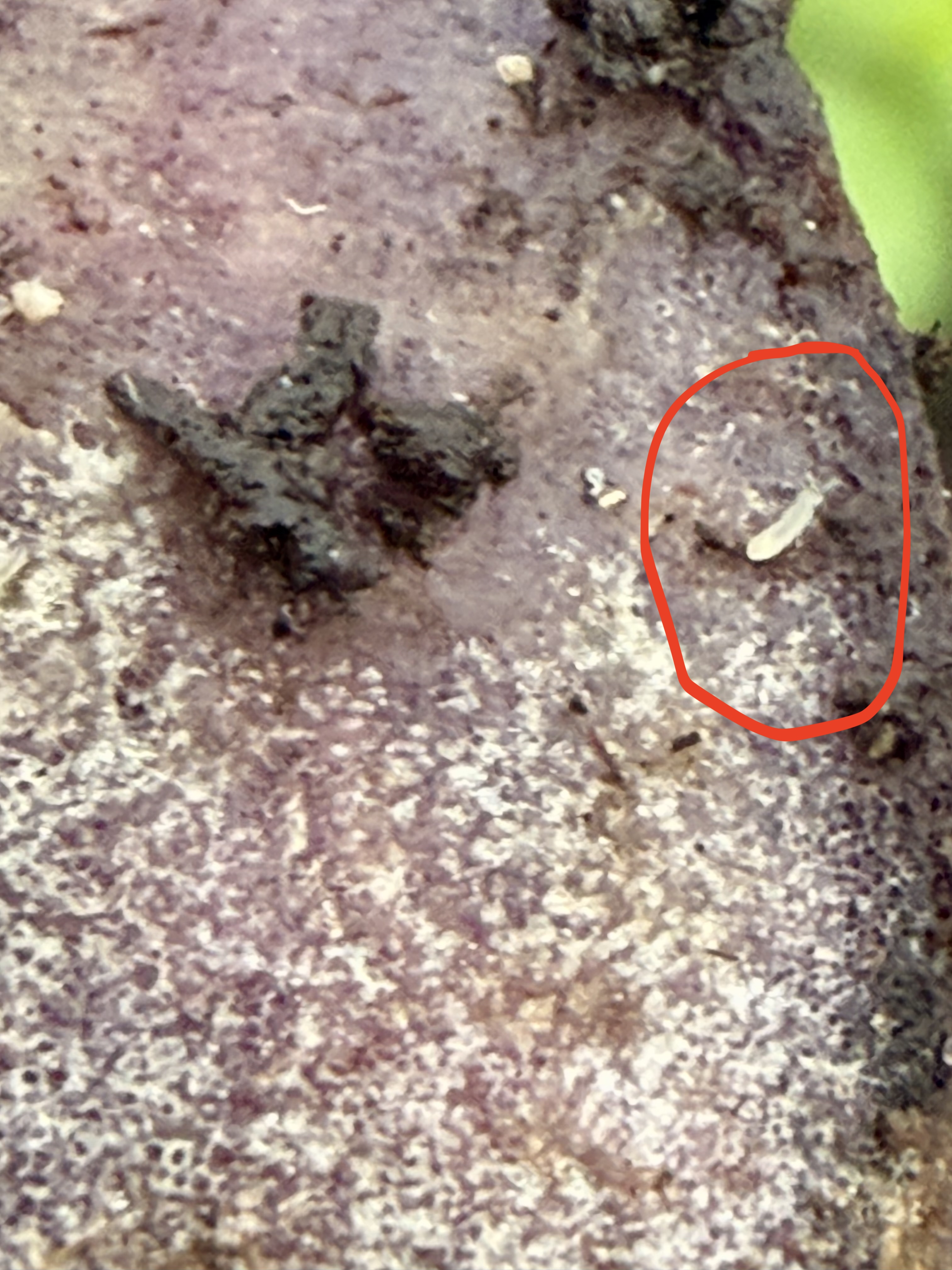
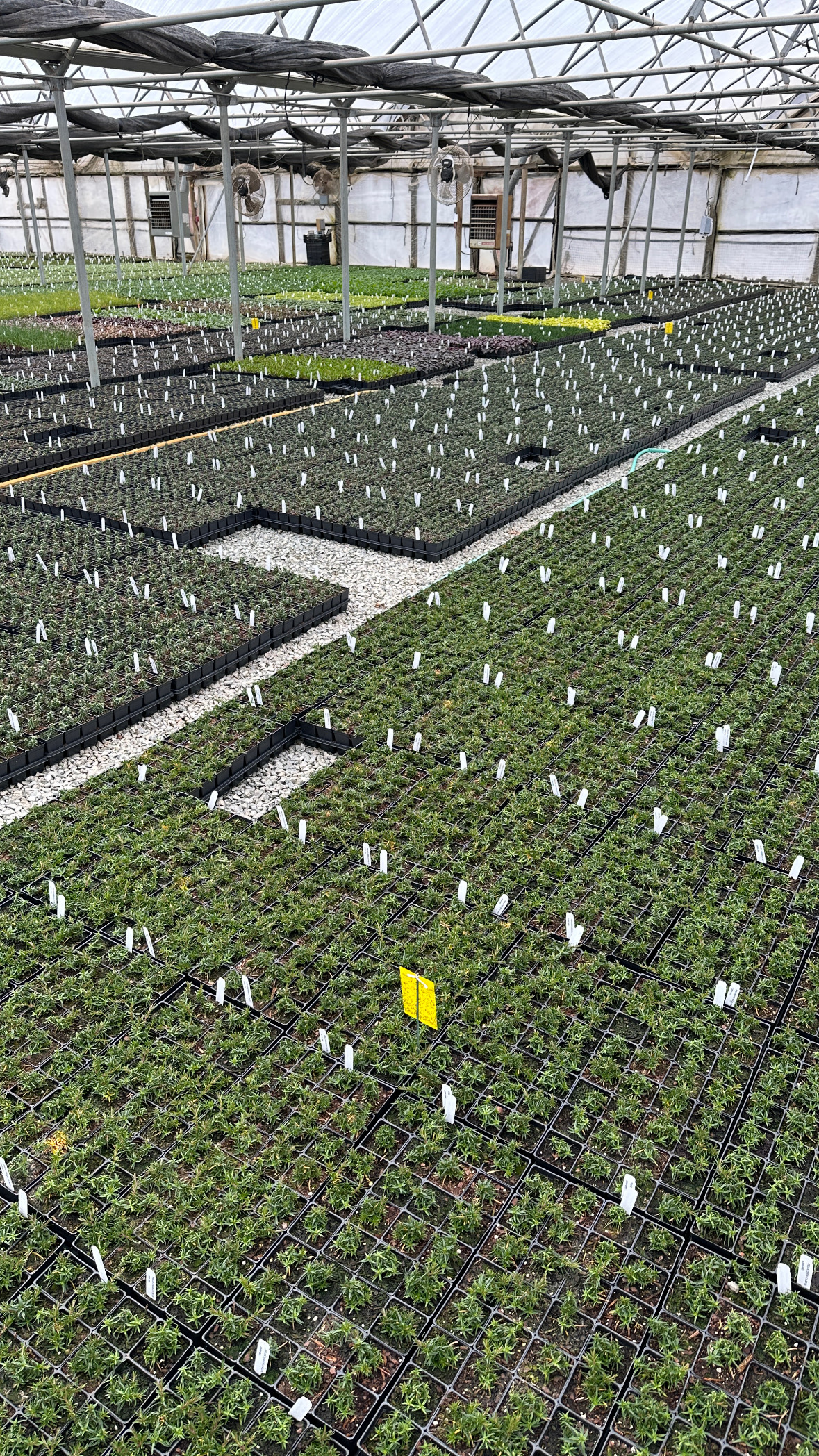
This is the view of the greenhouse where I placed the sticky cards. The card I used for this assignment was placed in a pot of Phlox subulata where I have seen fungus gnats and shore flies. 


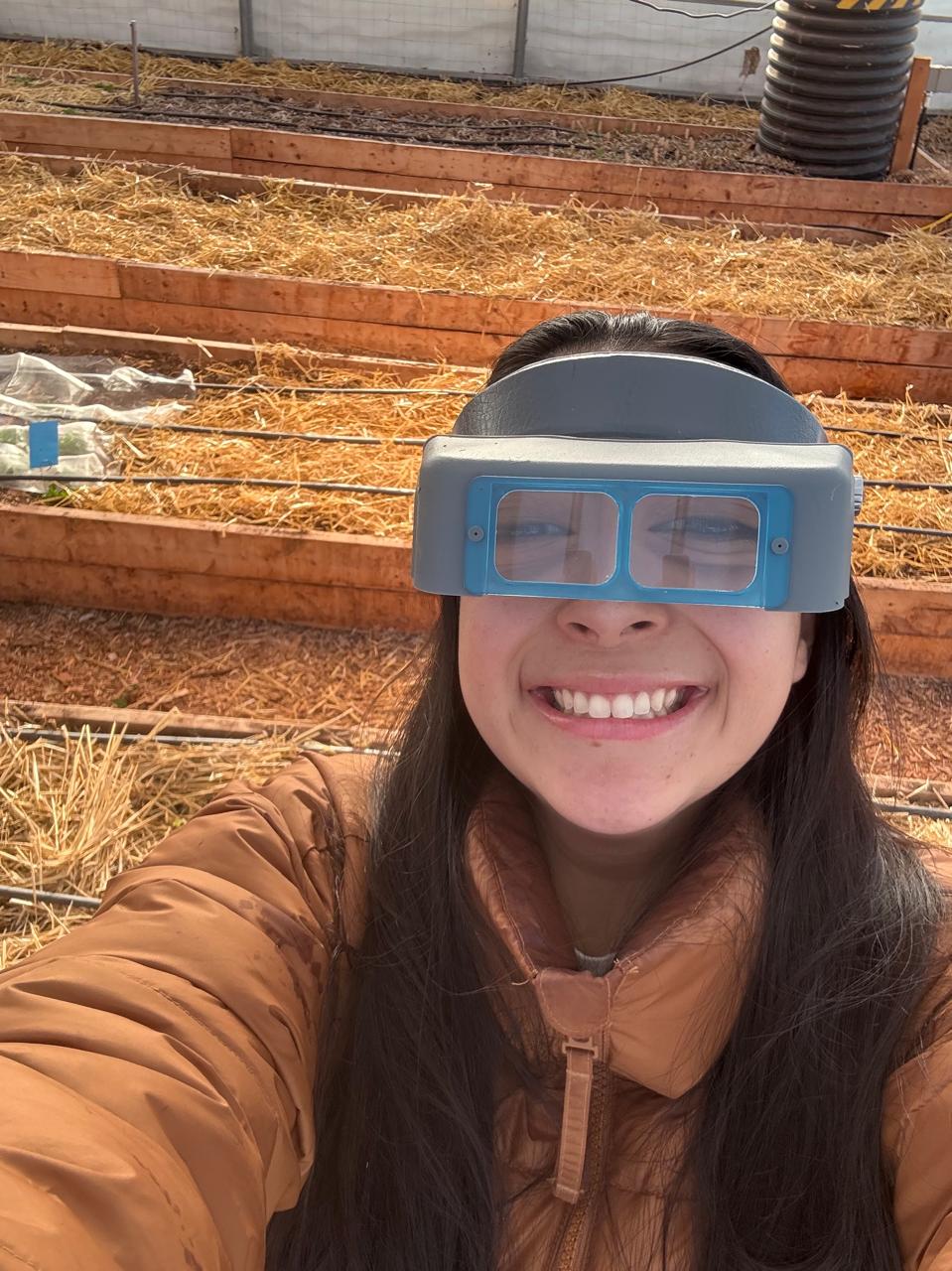
Selfie of me using the optivisor headband magnifier. I have really enjoyed using this tool. I find it very useful and I like that if frees up my hands when I'm scouting. 


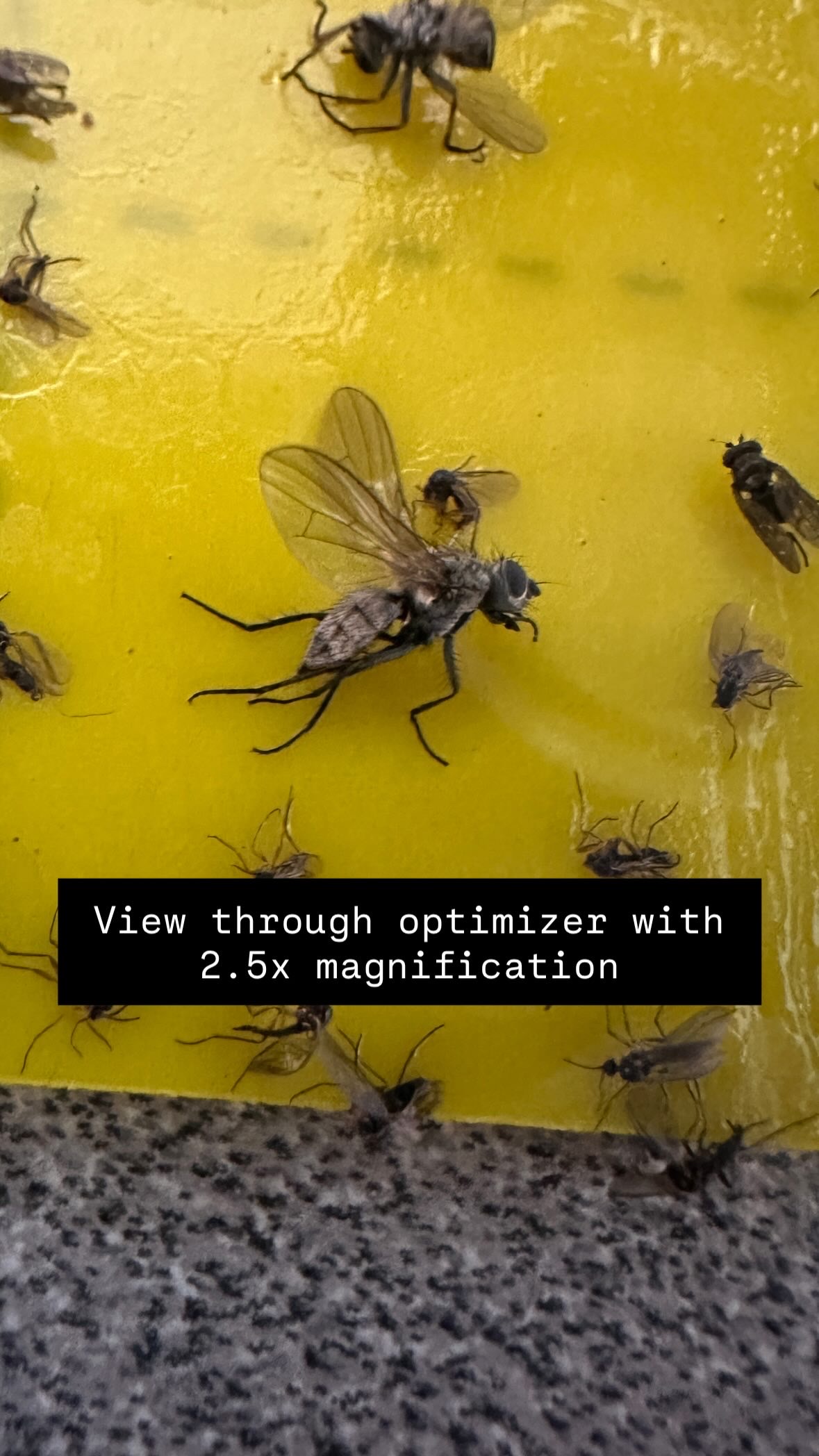
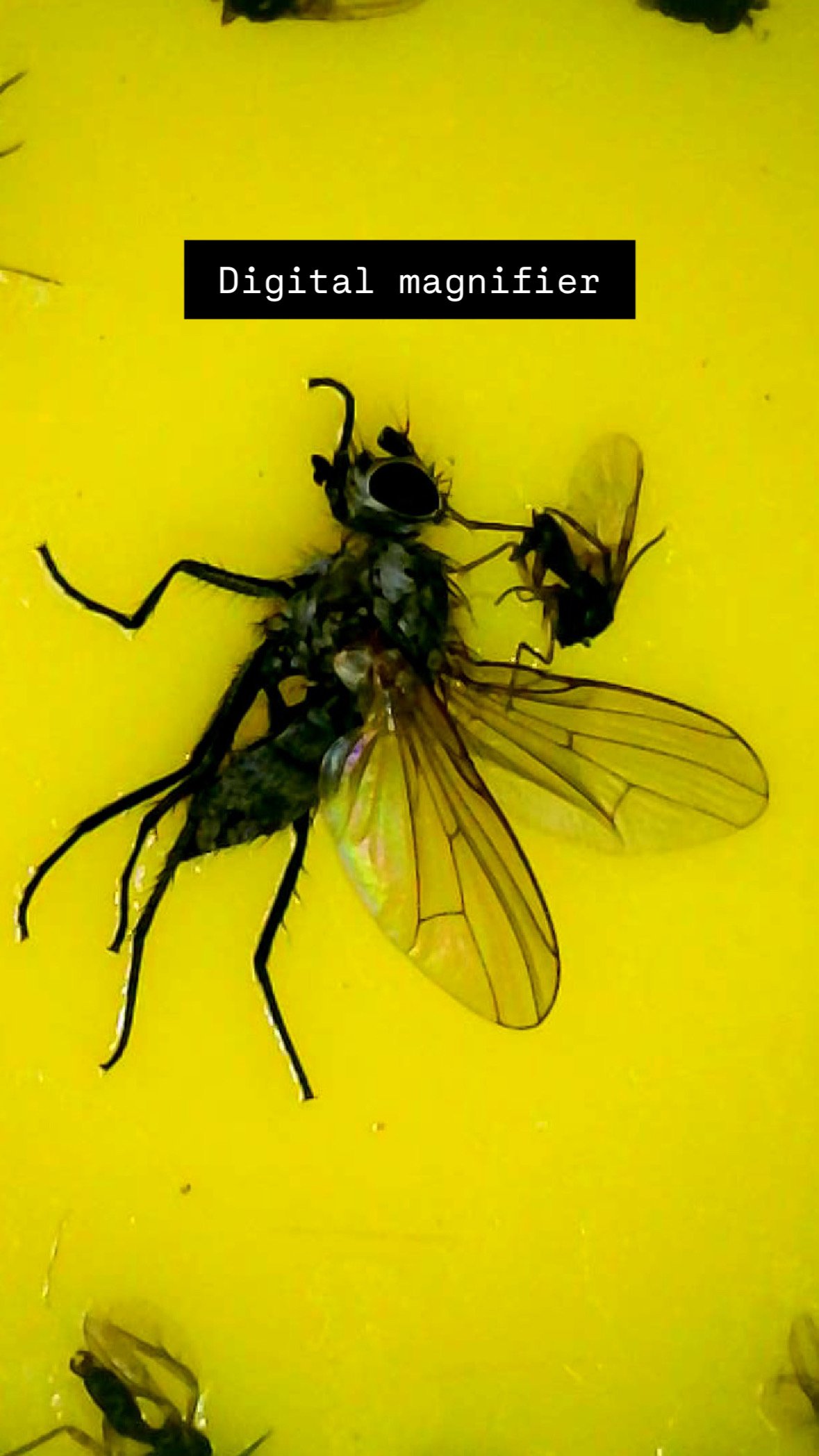
These images show views of the same shore fly caught on the sticky card using the various magnification tools. My favorite has to be the optimizer headband. It's just very effective and easy to use in my opinion. 

Unfortunately, I have not been able to use the potato method to check for fungus larvae or scout some roots yet. Our nursery has been closed since 1/23 due to unsafe road conditions caused by the ice storm and following nor'easter. I was finally able to come in to work yesterday. As soon as we get caught up (and if I can remember to bring a potato to the nursery, HAHA) I will try to upload my findings!

Have a great week!

In reply to Joseph Moreno

Re: Week 2 Assignment

by John Sanderson -
Joseph, the largest fly in your first and third photos looks like a hunter fly! It looks like there's a mixture of fungus gnats and shore flies, and maybe some other types of flies, surrounding it. If it is a hunter fly, you've got some helpers in your greenhouse for free! As Cheryl explained during Week 1, hunter flies are predaceous as both adults and larvae, with the larvae killing and eating fungus gnat larvae in the soil, and adults catching adult fungus gnats and shore flies (and sometimes each other!) as they fly off perches in your greenhouse.
In reply to First post

Re: Week 2 Assignment

by Grace Harper -
At the moment this greenhouse doesn't have that many pests. As it is starting to fill up with plants we are starting to see an influx in pests and deases though. For the most part all that was on the sticky traps was fungus gnats and shore flies. The potatoes were clean. We have been having a fungus gnat problem on our strawberries in another greenhouse though. I put a potato slice in one of the 4 inch cups and in 2 days had 5 larvae on the slice.
It was difficult to get good pictures on my phone, but using the microscope worked very well. I really enjoyed using the microscope. I was able to get really good pictures of the fungus gnat larvae.
When looking at the plants roots they all seemed to be looking really good. The only one I saw that was starting to brown was the wedding train coleous. The plants seemed to be stunted and the spot there in doesn't get great air circulation. Also there is one petunia that has yellow edges on the leaves with very little green. I have the picture attached. It's the only one in the bunch doing it and the roots look good.
In reply to Grace Harper

Re: Week 2 Assignment

by Elizabeth Lamb -
Grace, Send pictures! It sounds like you are finding interesting things!
In reply to Grace Harper

Re: Week 2 Assignment

by Elise Schillo-Lobdell -
Grace, as you have found, areas with poor air circulation can stay too wet, leading to root issues & fungus gnats, and if it leads to algae (either on the floor or on the soil surface) you can also get shore flies. Poor air circulation with hot, dry conditions is a recipe for spider mites.
In reply to First post

Week 2 Assignment

by Mary Taylor -

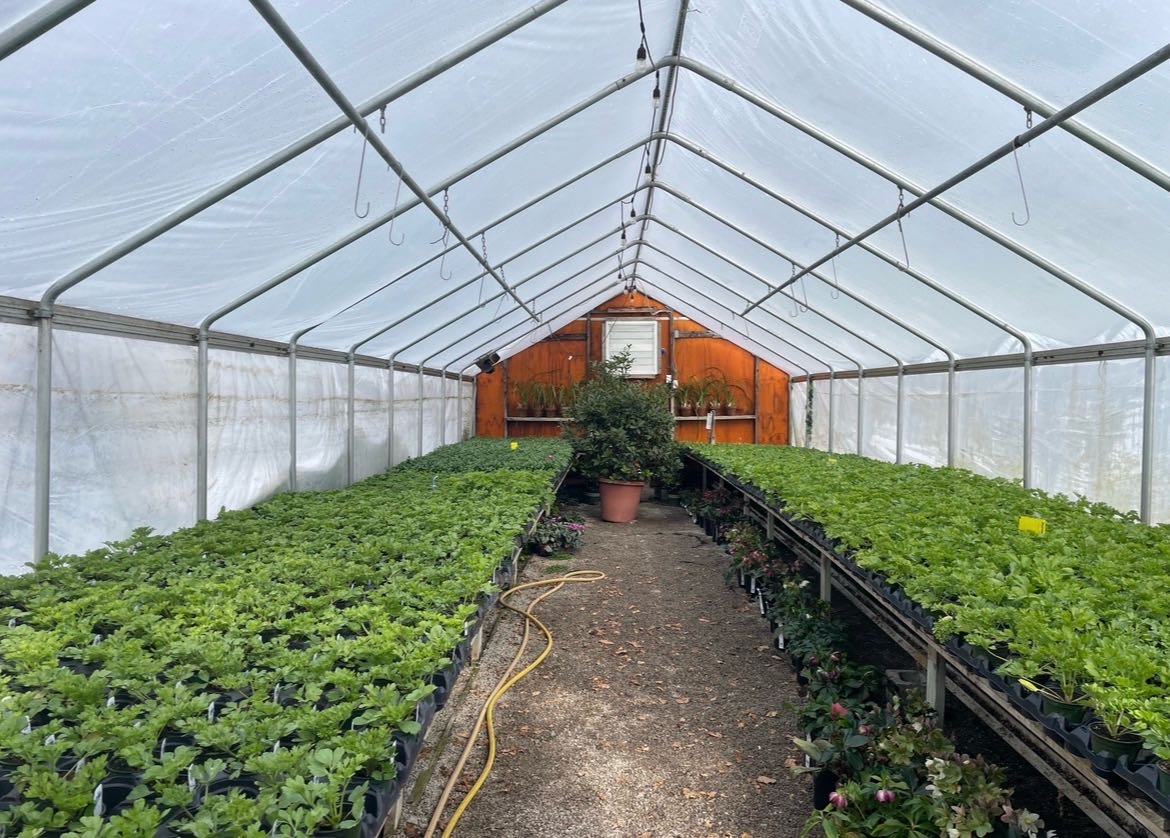
I placed my cards in what we call D house purple. This house is currently growing parsley, hellebore, primrose, erysimum, and cyclamen. I placed the cards in a zigzag patten. I forgot to write dates on the sticky cards. When I do so should I write directly on the sticky or squish it on the end bit? Have other people found a best method? I will also need to update again once I have gone grocery shopping to pick up a potato. 

I have had a very fun time using the microscope to discern long-tailed mealybug on a horribly infested fern. I also found some small eggs on my own ficus at home and promptly gave it a bath.

Attachment cdv_photo_1770317226_20260205134706.jpg
Attachment cdv_photo_1770317230_20260205134710.jpg
Attachment cdv_photo_1770317236_20260205134716.jpg
Attachment cdv_photo_1770317316_20260205134836.jpg
Attachment cdv_photo_1770317322_20260205134842.jpg
In reply to Mary Taylor

Re: Week 2 Assignment

by Elise Schillo-Lobdell -

Mary, I try to fit whatever I want to write on a sticky card right in that non-sticky margin.  I number my sticky cards with a Sharpie (you can also number the clothespins if you like).  In my notes for the grower I might say “there were some winged aphids on card 3 in house two but I haven’t found the source yet”, or “there is a whitefly hot spot right around card 1 in house five” - and the grower knows how I number the cards so it isn’t hard for them to find the spot I’m referring to.

In reply to First post

Re: Week 2 Assignment

by River Waterman -
Hello all!

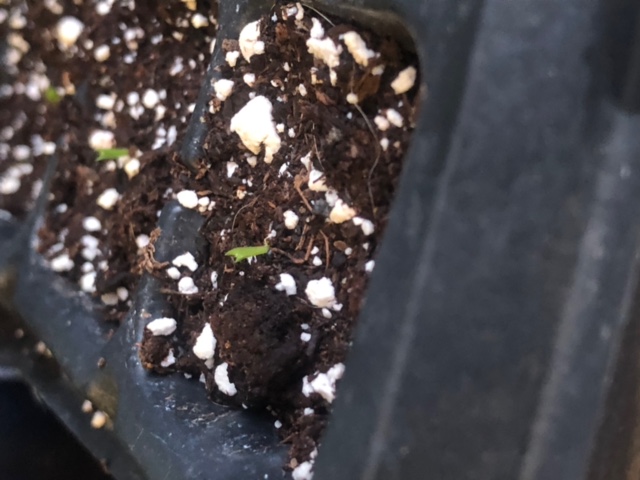
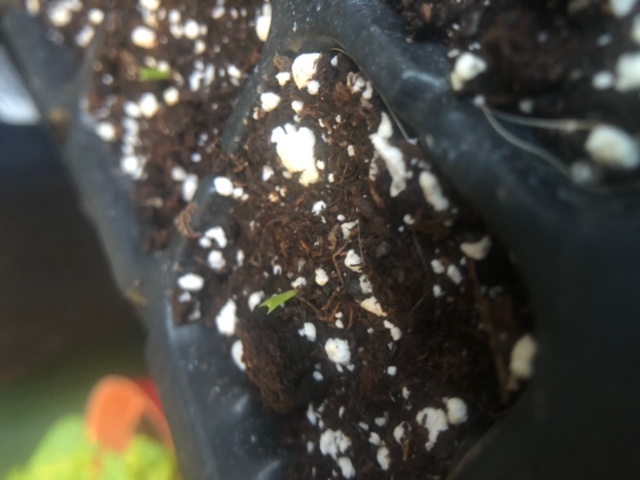
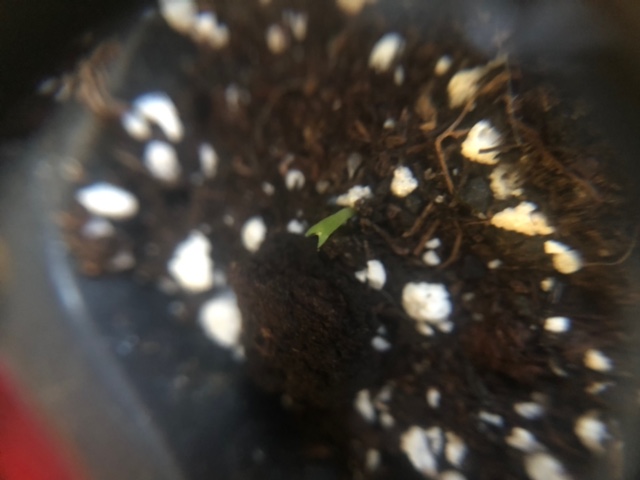
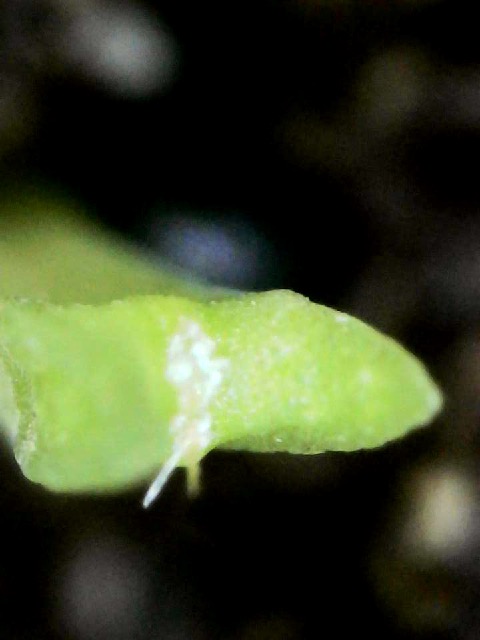
This week I tried the sticky card with both blue and yellow sides active. I placed it near a Ficus that was my most recent thrips victim, but so far have yet to catch anything (it has only been out since the evening of the 2nd). I placed two potato wedges as well, one did not attract any critters but the other appeared to have some sort of mite. To test out the optivisor, microscope, and loupe I looked at some christmas cacti seedlings I germinated. My phone camera did not do a great job capturing it, but I found both the loupe and optivisor very helpful. The microscope was a bit more tricky and better suited to a flat surface.

In order the pictures are just phone camera, optivisor at 3.5X, loupe, micrscope
christmas cactus
christmas cactus
christmas cactus
chritmas cactus
In reply to First post

Re: Week 2 Assignment

by Melissa Lazcano Prieto -
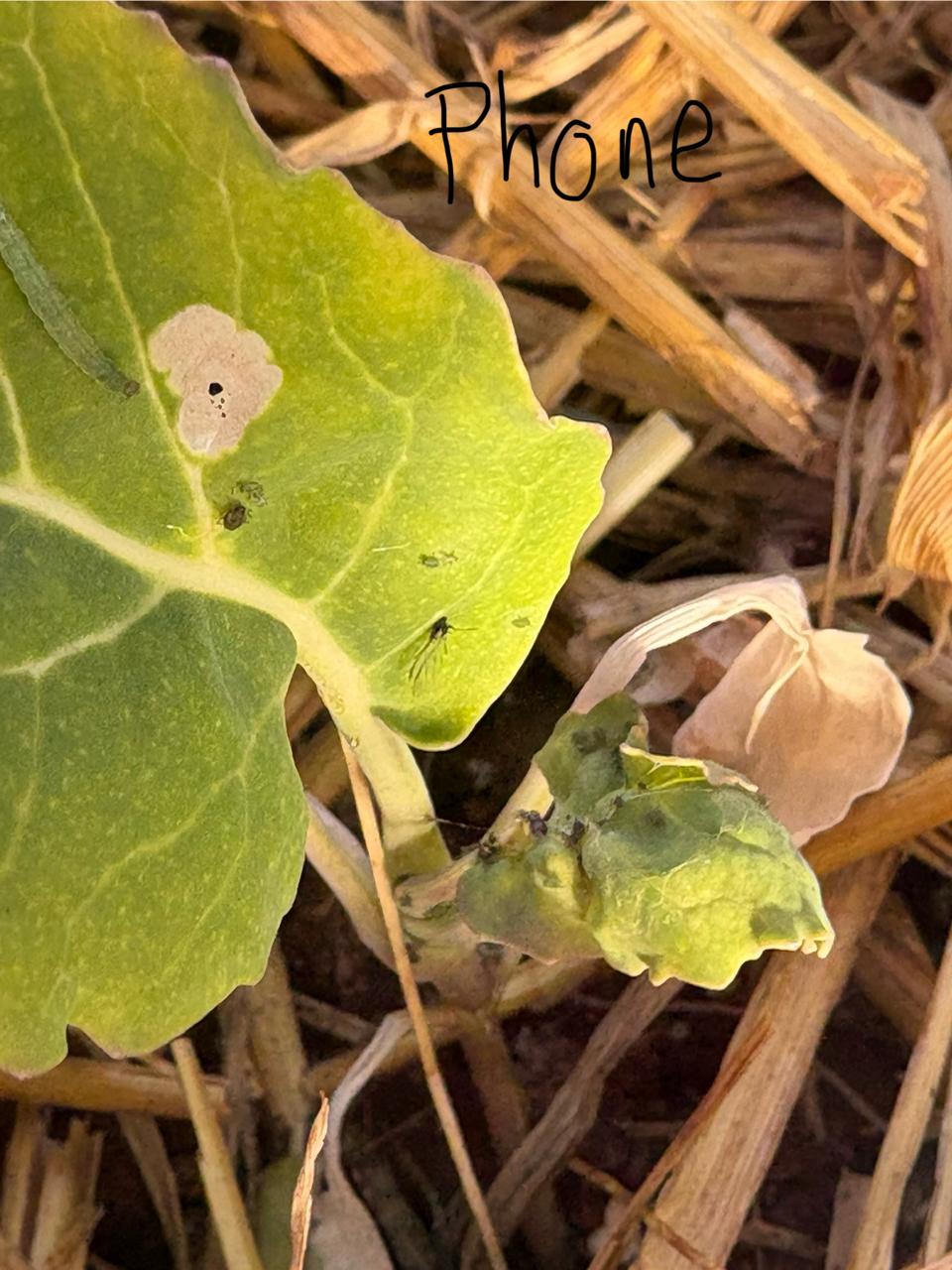
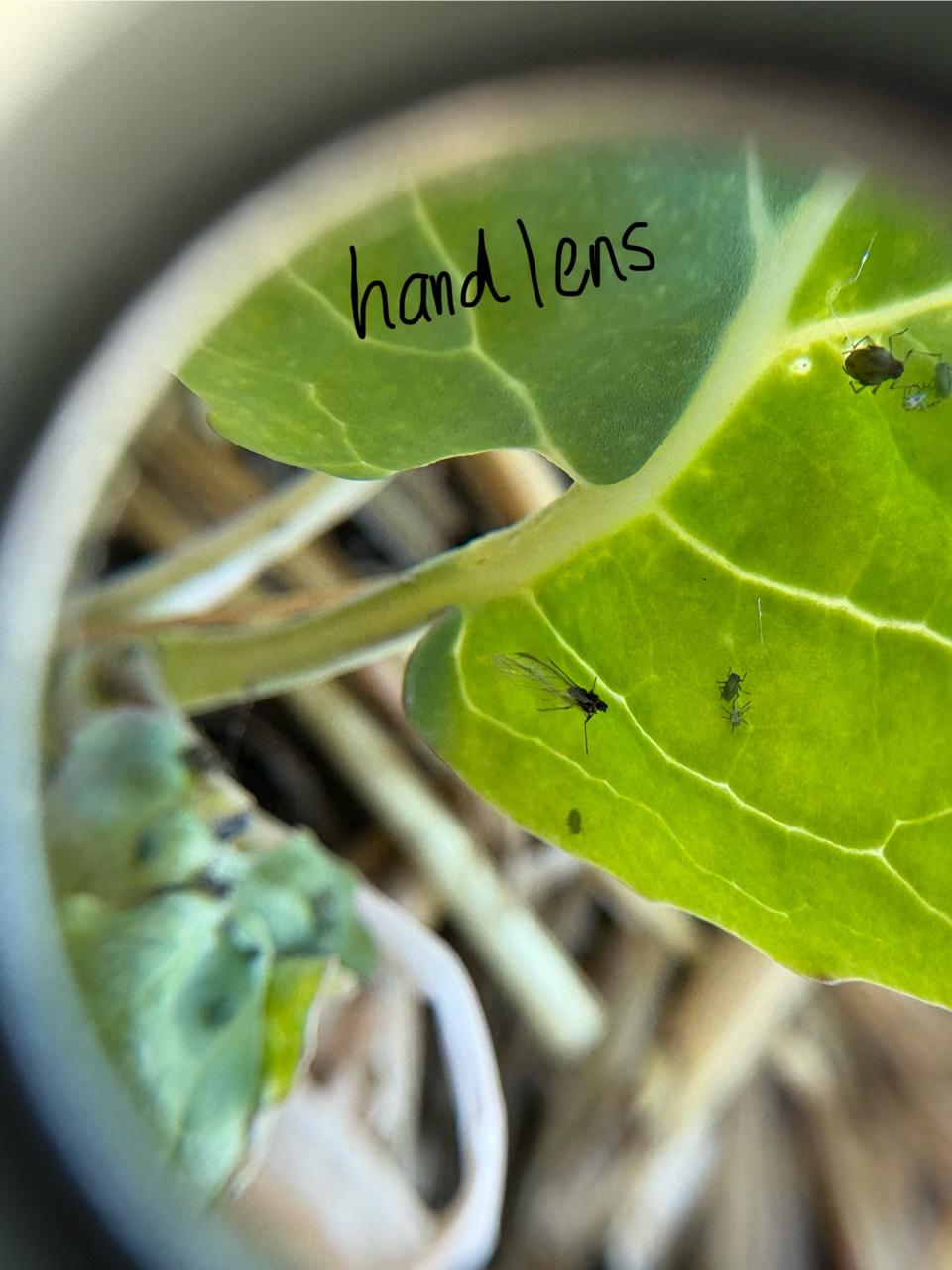
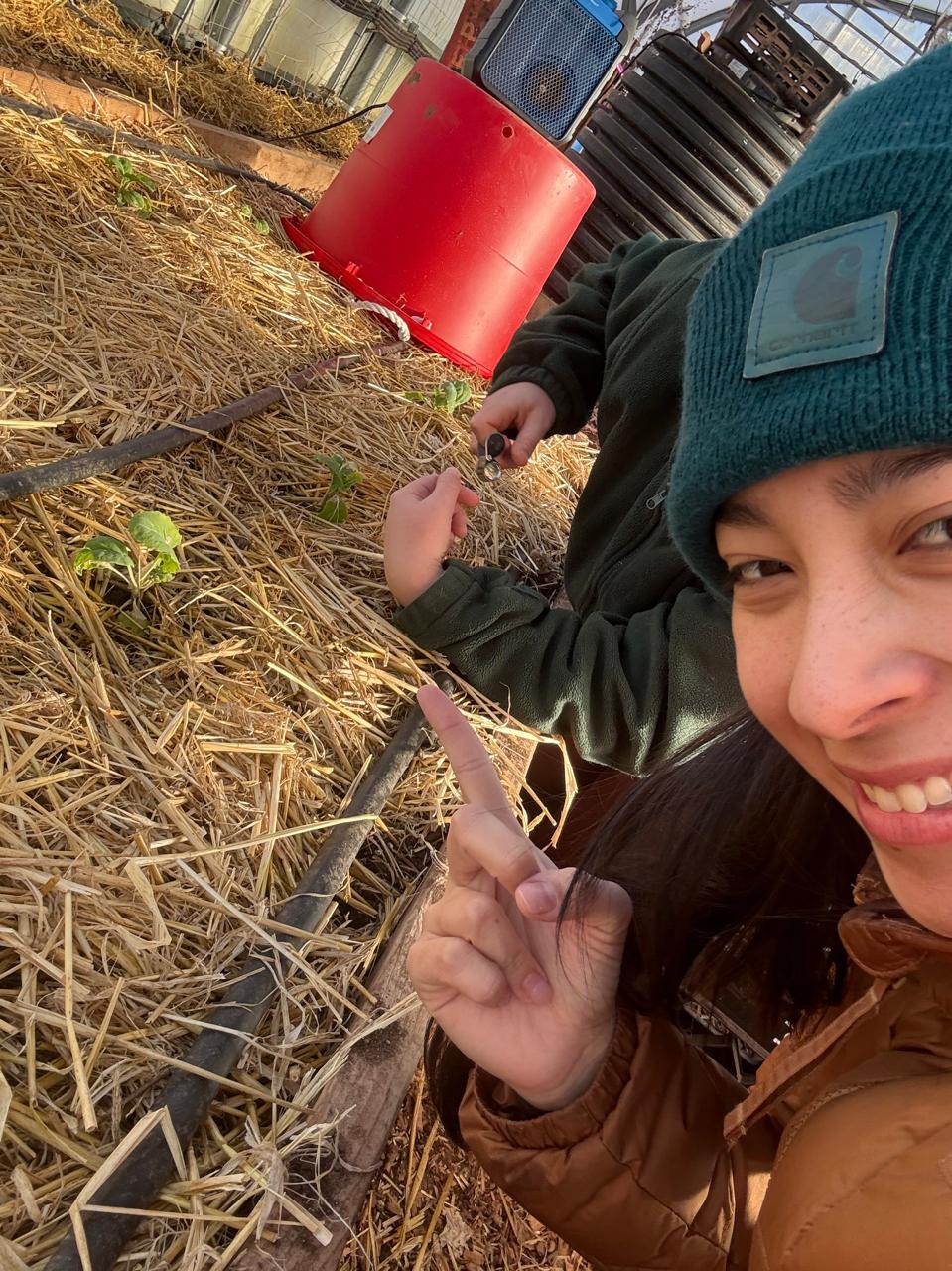
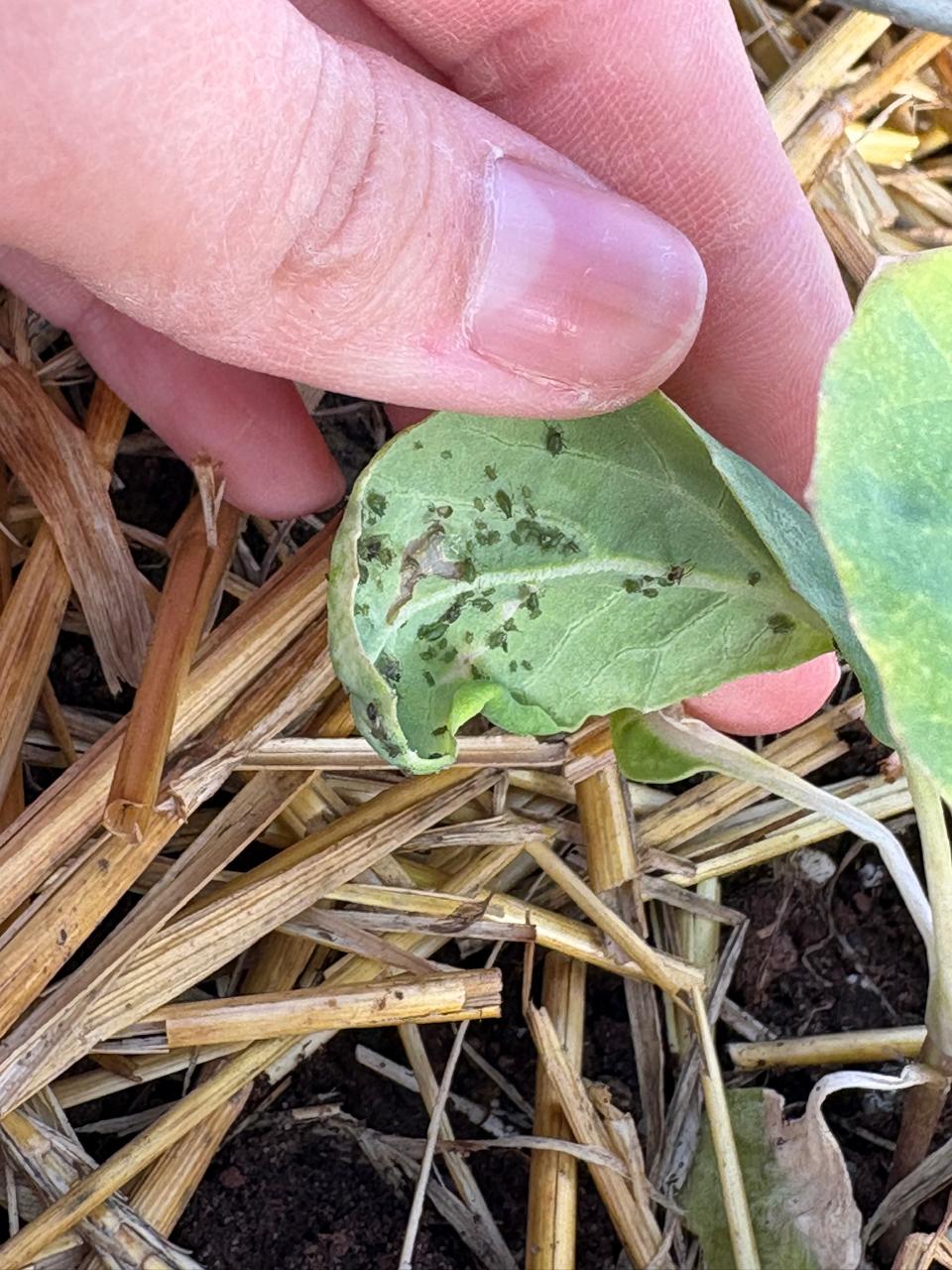
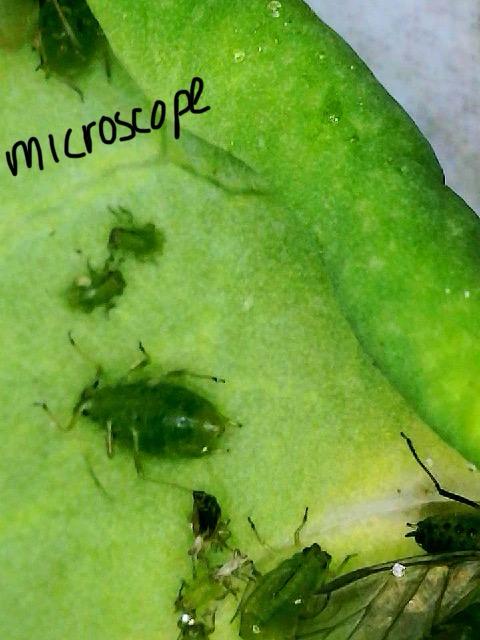
A few days ago, I set up my sticky cards in the greenhouse and was so excited to see what they might catch. To my surprise, there was only one tiny visitor. While checking the cauliflower plants, River and I noticed a lot of aphids, not great for the plants, but it got us pretty excited 😅.

For scouting, I think the easiest tool for me to use would be the hand lens. It’s convenient to carry around and provides just the right amount of magnification. The handheld microscope gave a much closer, clearer view, but for some reason, mine only works while it’s plugged in. I tried charging it overnight, unplugging it, and plugging it back in during the day. Still nothing. I can only turn it on while it’s plugged in, so it's a little complicated to bring it to the greenhouse with me.

Forgot to mentioned, nothing on the potato wedges yet.

Here are some pictures of what we found. Hope you enjoy them!
Attachment WhatsApp Image 2026-02-06 at 19.20.55.jpeg
Attachment WhatsApp Image 2026-02-06 at 19.20.56 (1).jpeg
Attachment WhatsApp Image 2026-02-06 at 19.20.56 (2).jpeg
Attachment WhatsApp Image 2026-02-06 at 19.20.56 (4).jpeg
Attachment WhatsApp Image 2026-02-06 at 19.20.56 (5).jpeg
Attachment WhatsApp Image 2026-02-06 at 19.20.56.jpeg
Attachment WhatsApp Image 2026-02-06 at 19.21.40.jpeg
Attachment WhatsApp Image 2026-02-06 at 19.23.07.jpeg
In reply to Melissa Lazcano Prieto

Re: Week 2 Assignment

by Elizabeth Lamb -
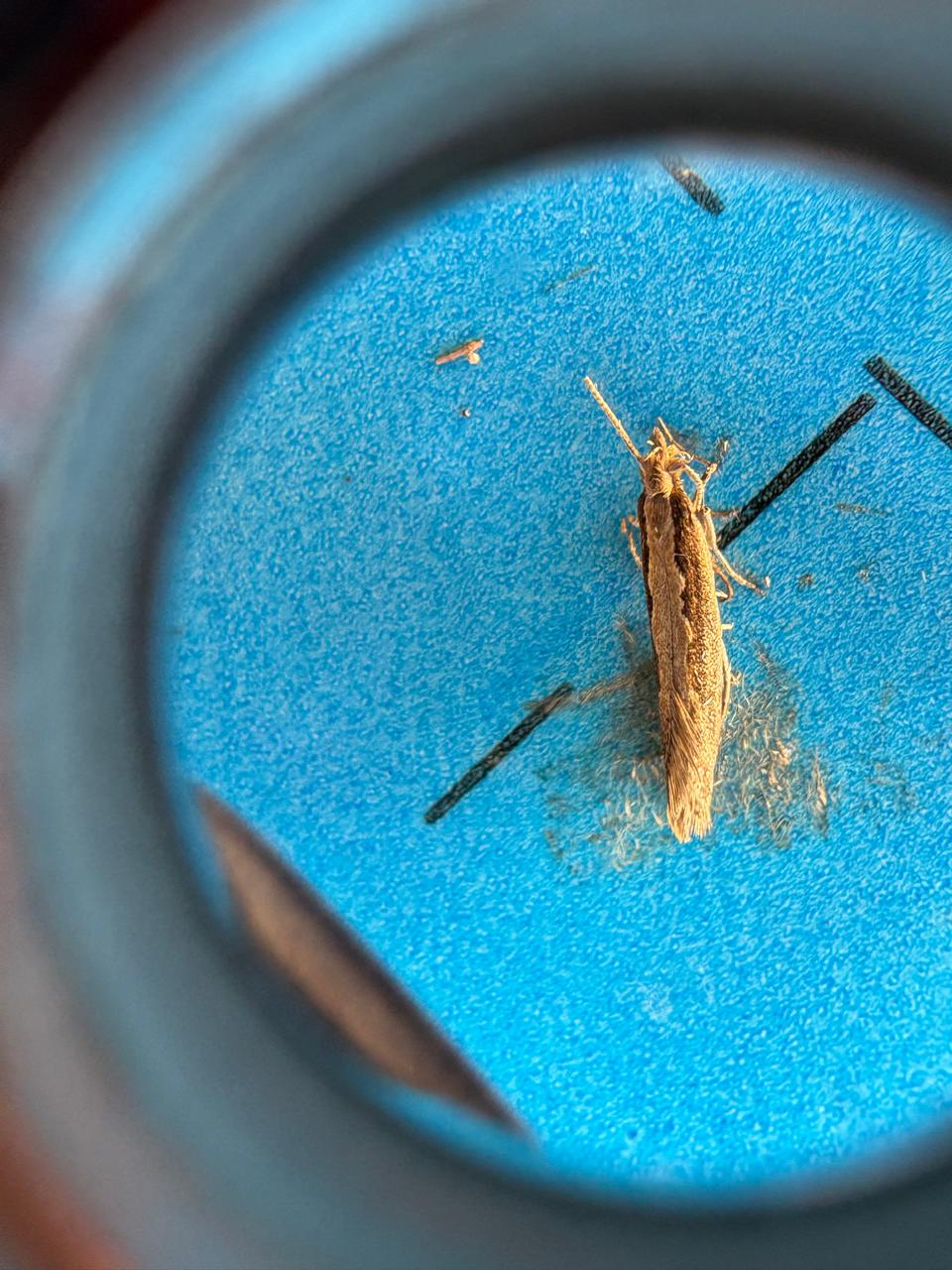
Cool - you can see the moth scales coming off on the card! And fantastic optivisor photos :) Remember to get your eye close to that handlens!

You have something with bigger mouthparts than aphids or thrips on your plants.  that windowpane look means something is chewing off the leaf tissue leaving only the epidermis.  I might suspect caterpillars although i don't see any.
In reply to Elizabeth Lamb

Re: Week 2 Assignment

by Elise Schillo-Lobdell -
Betsy - look on the left side of the 2nd photo - there is a green caterpillar there - maybe some type of cabbage moth?
In reply to Elise Schillo-Lobdell

Re: Week 2 Assignment

by John Sanderson -
Pretty sure that that is a diamondback moth caterpillar.
In reply to John Sanderson

Re: Week 2 Assignment

by John Sanderson -
That is an adult diamondback moth in the last photo, captured on a blue sticky trap. Not attracted to that trap. Probably just randomly landed on it and got stuck.
In reply to Melissa Lazcano Prieto

Re: Week 2 Assignment

by Elise Schillo-Lobdell -
Melissa, because you have winged aphids they have likely spread throughout the greenhouse and with that straw mulch there is lots of protection for the immature aphids on those small plants. If it was my greenhouse I would want to get lots of aphid bio-controls in there soon.
In reply to Elise Schillo-Lobdell

Re: Week 2 Assignment

by John Sanderson -
The aphids are almost certainly cabbage aphids, but they could also be black bean aphids.
In reply to First post

Re: Week 2 Assignment

by Chester Lam -

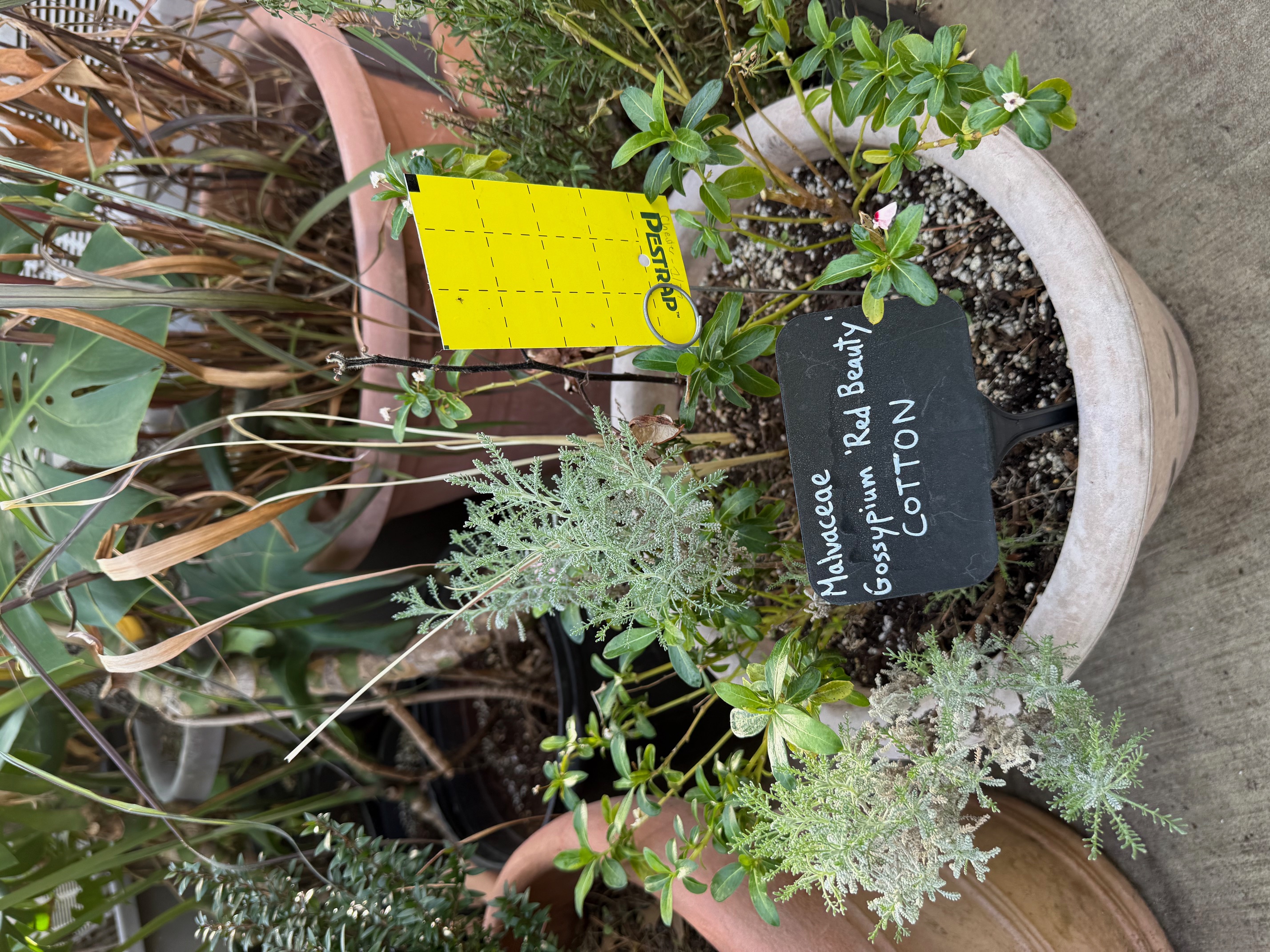
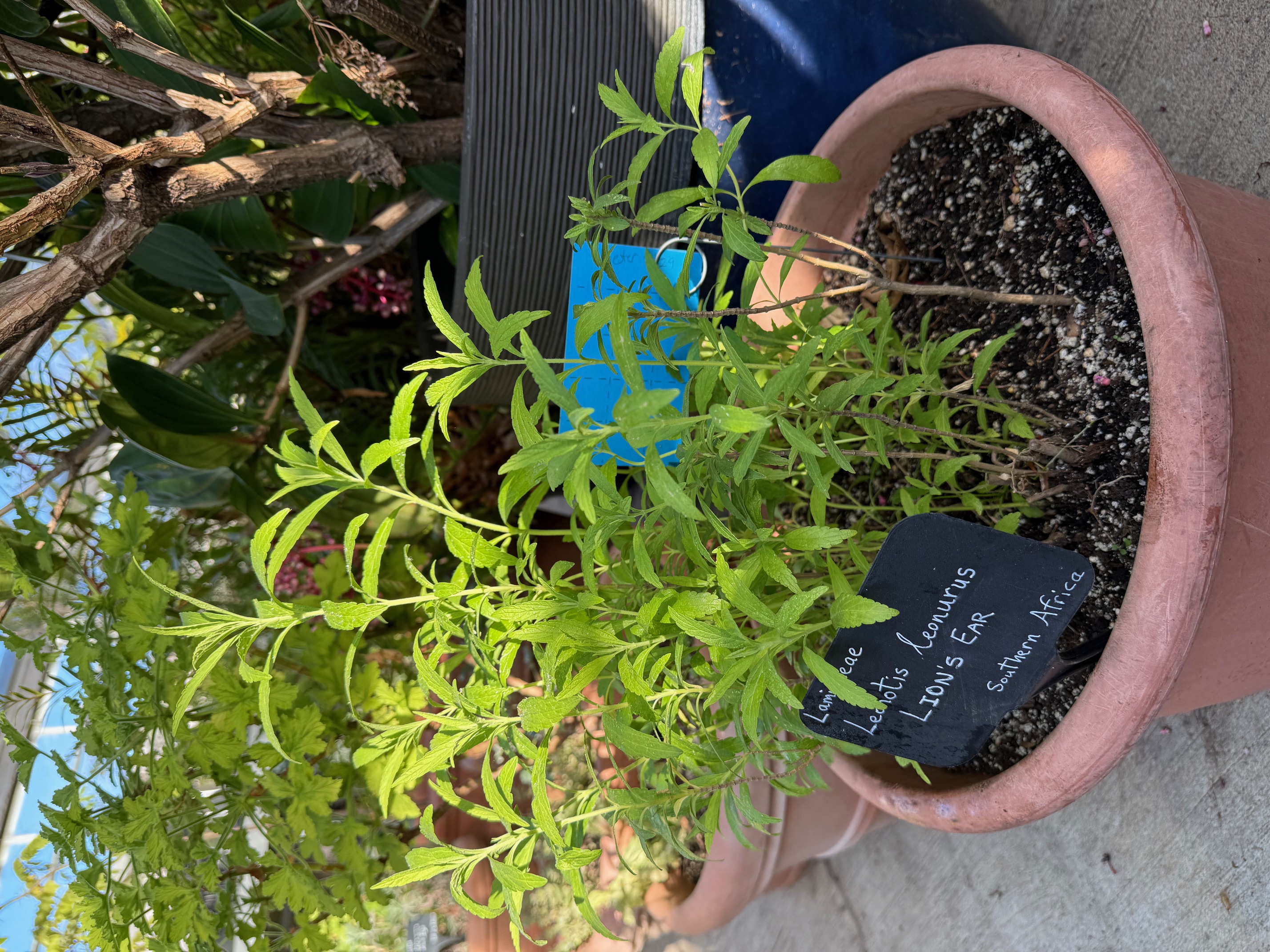
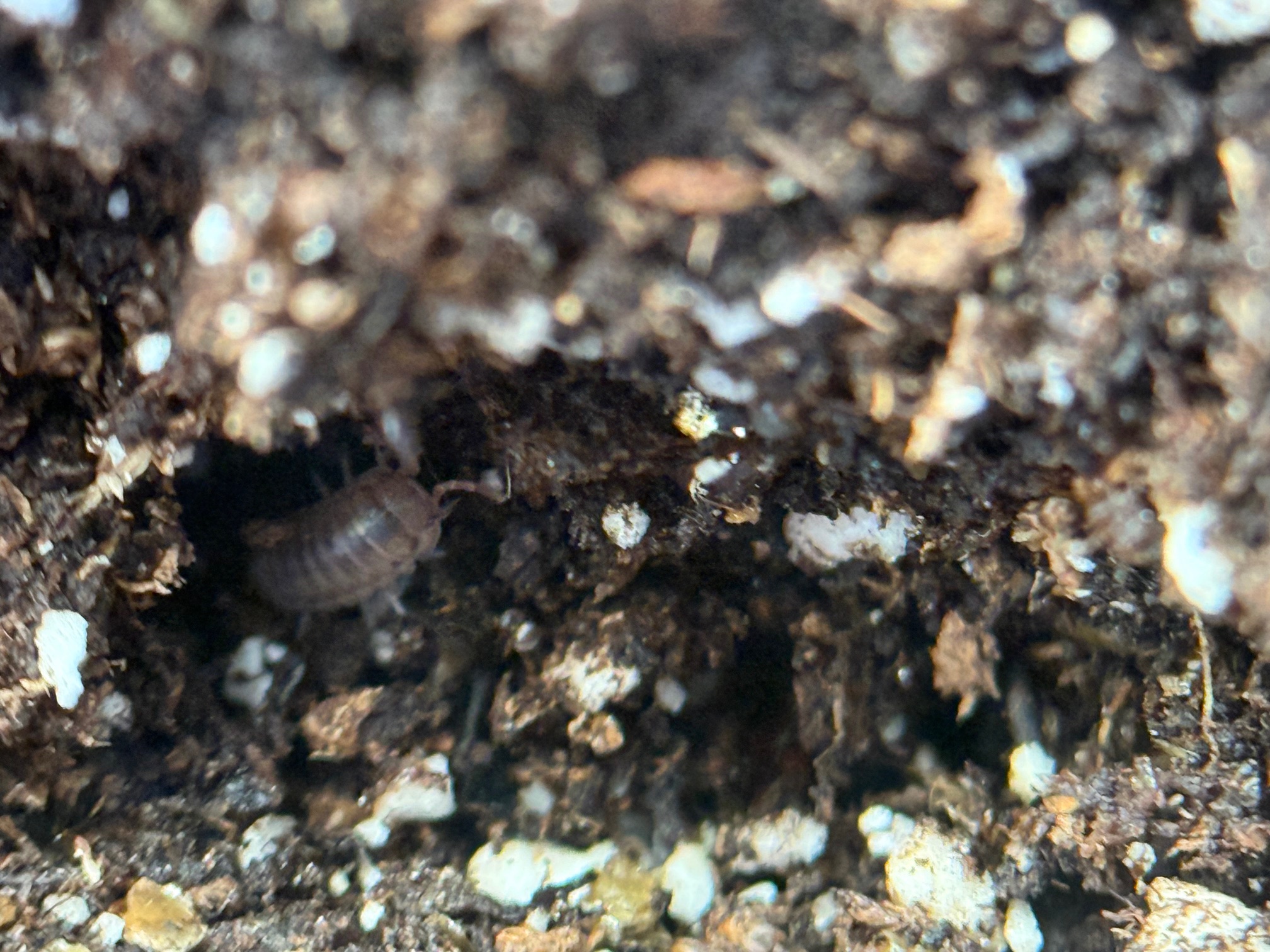
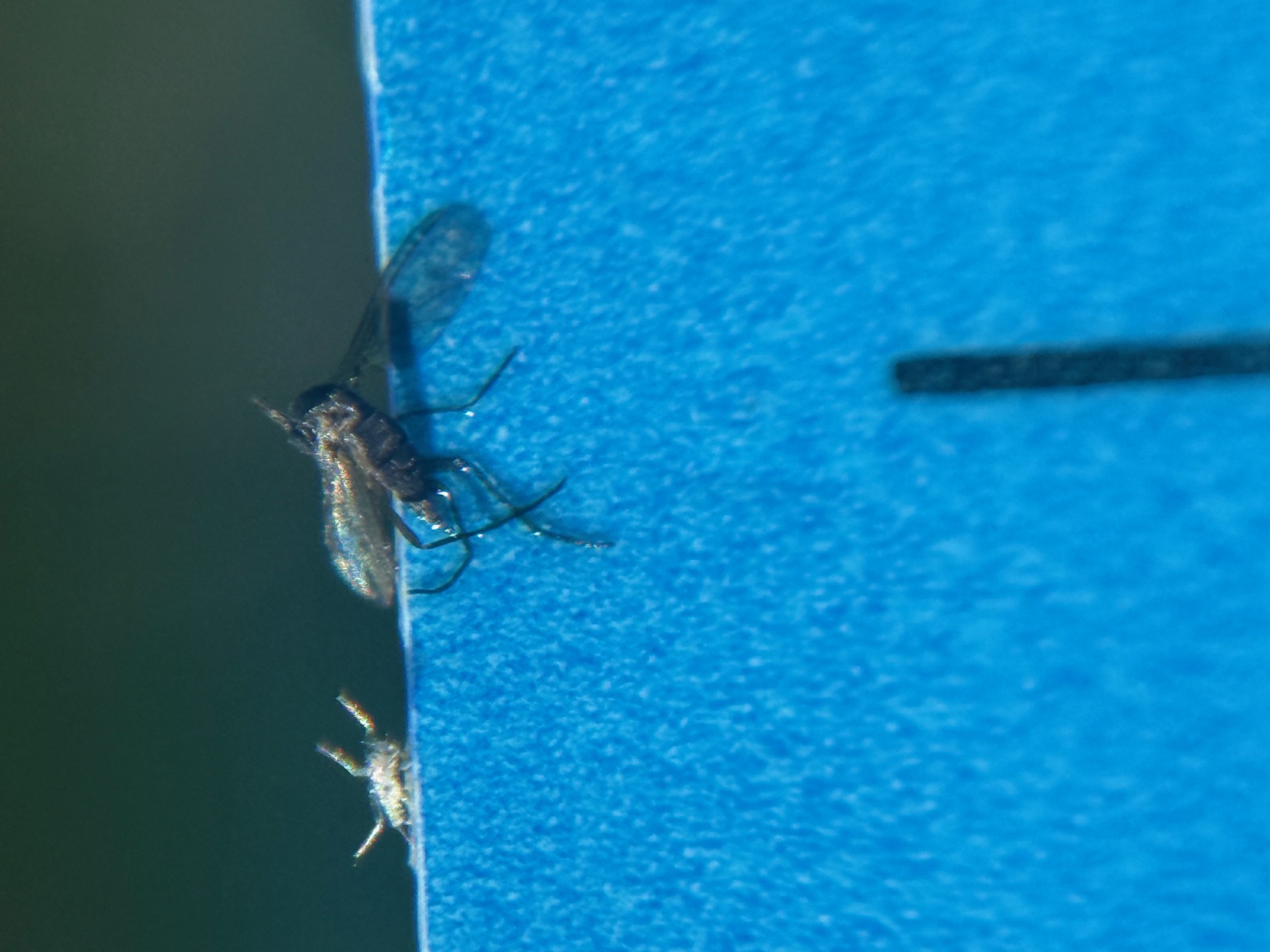
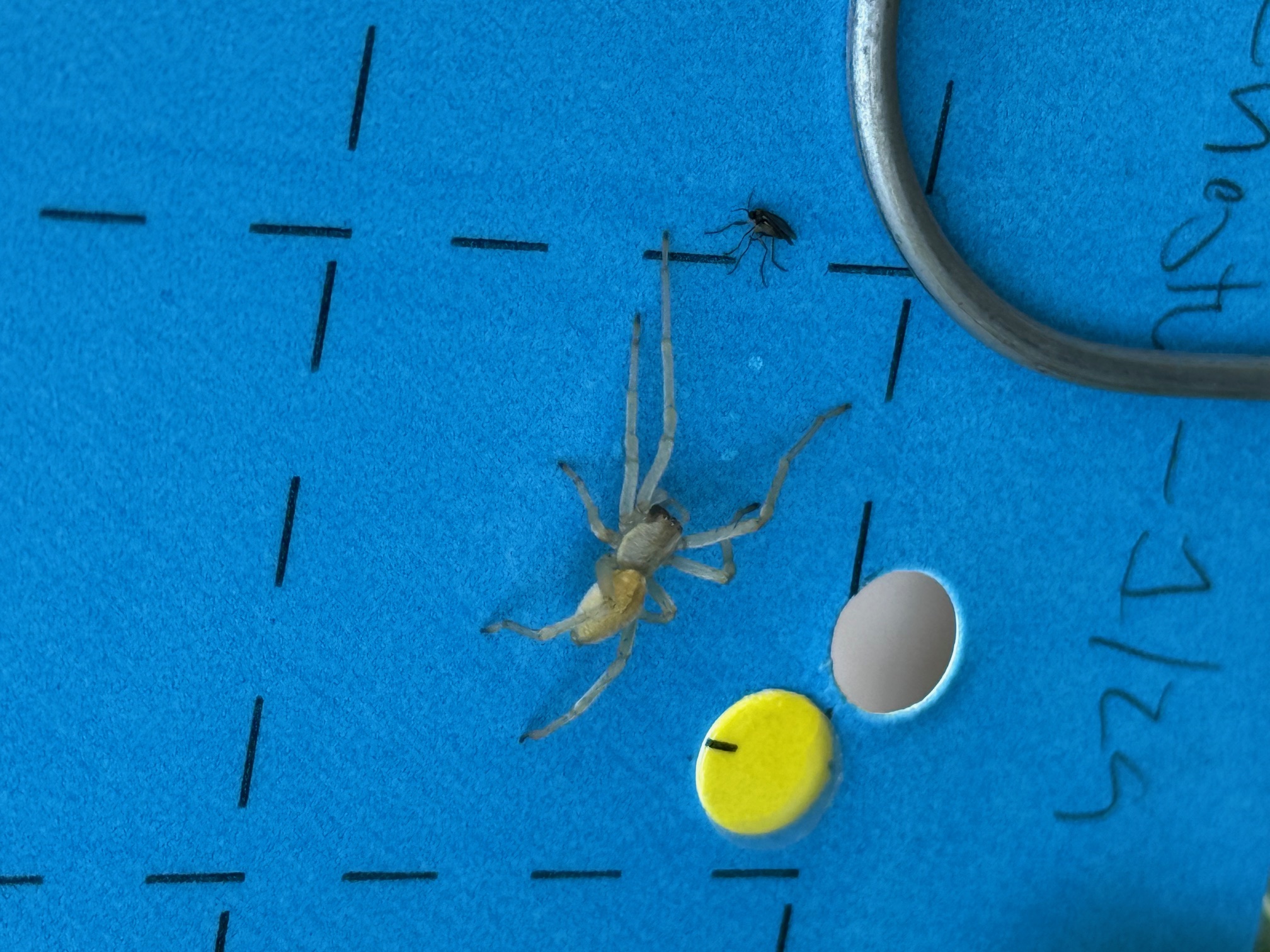
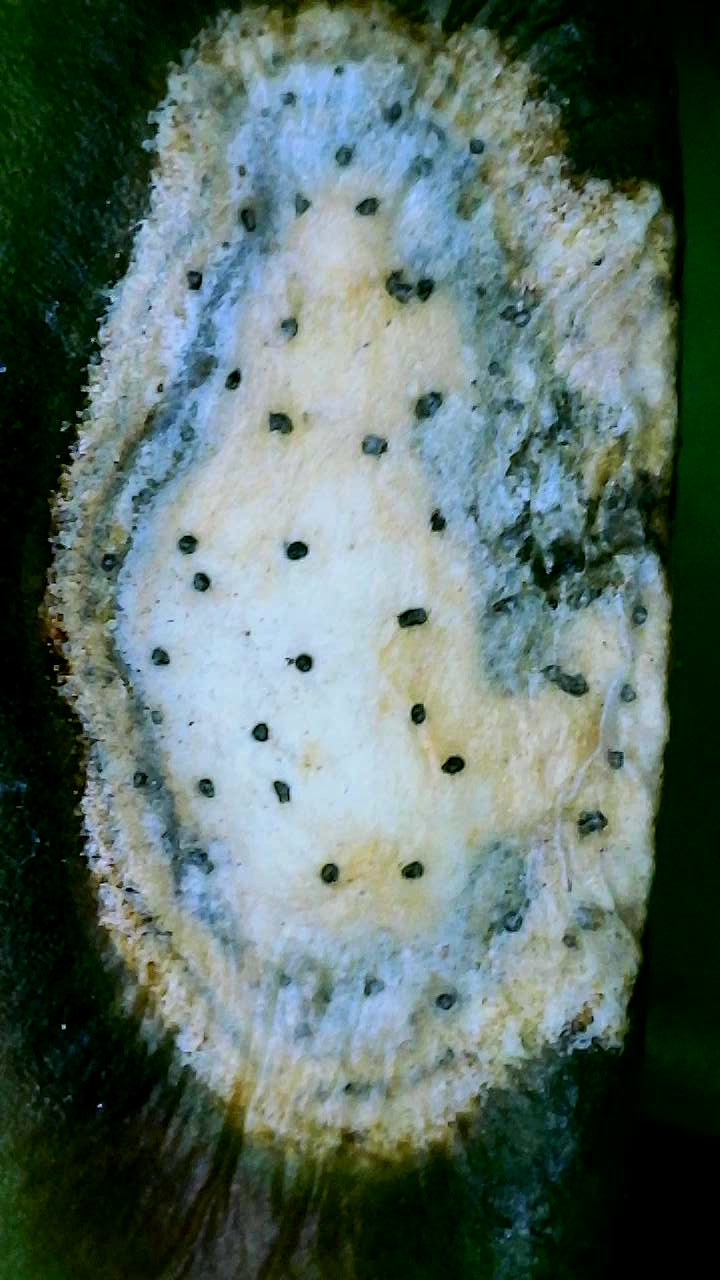
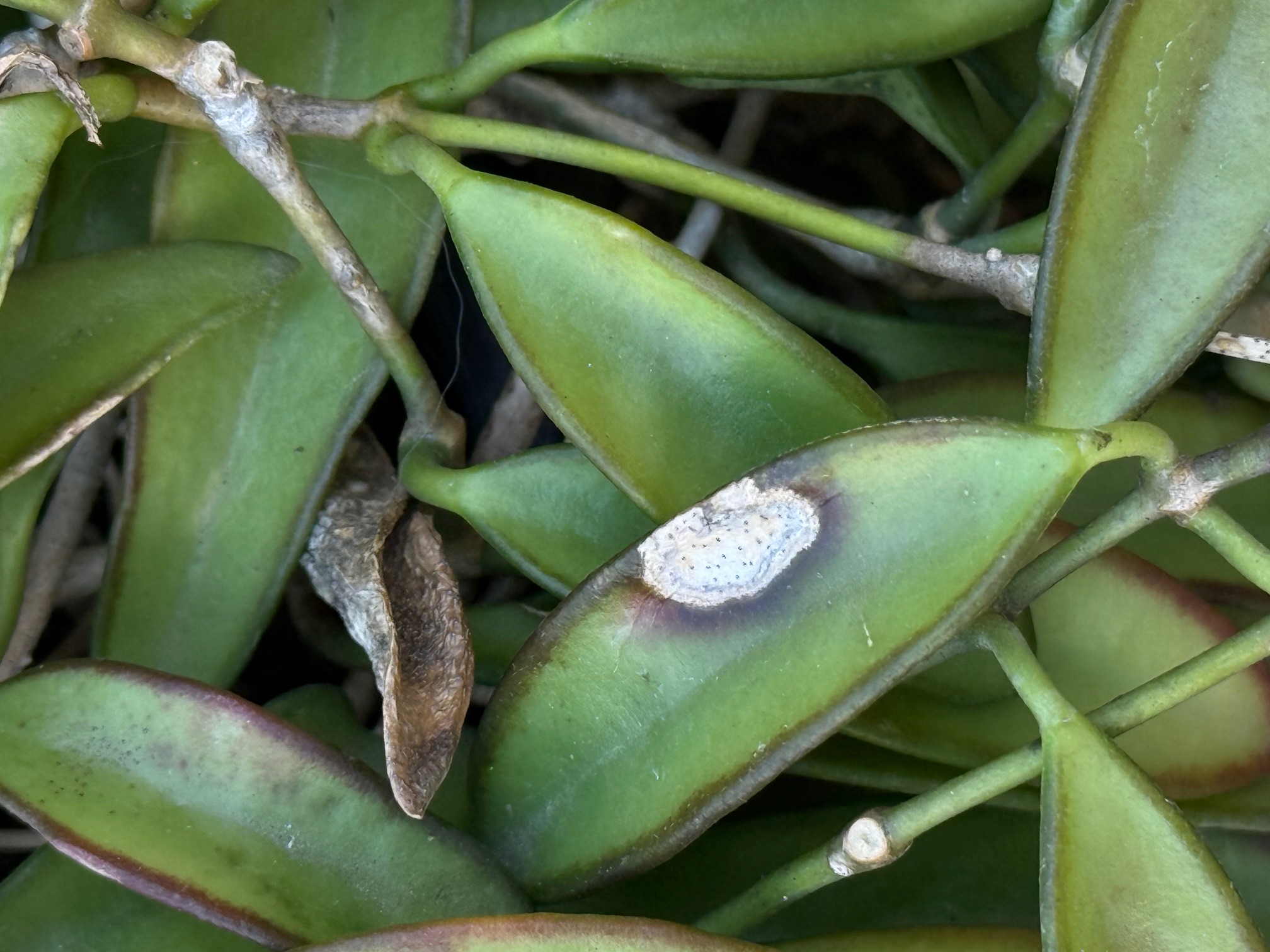
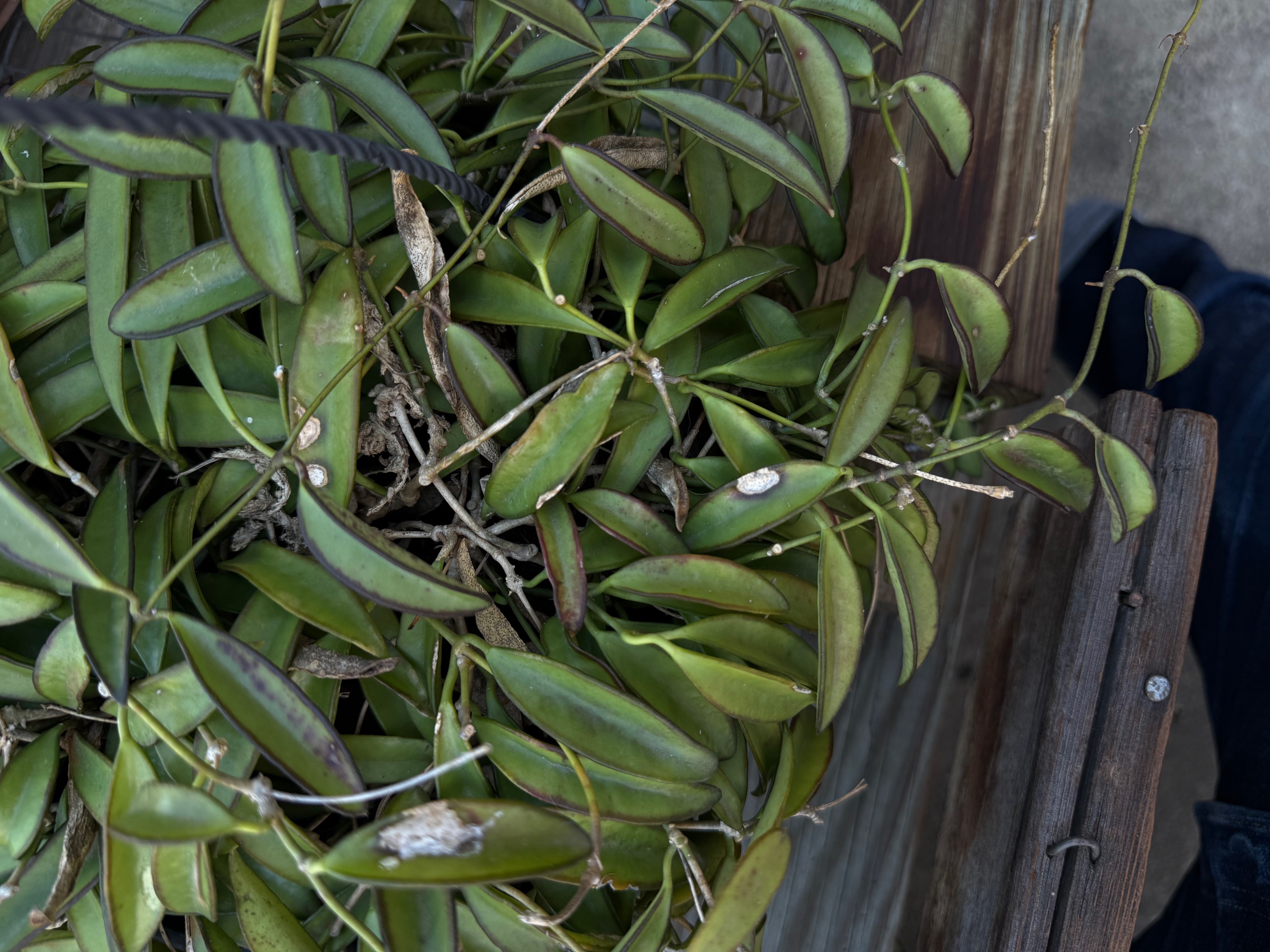
Sorry I'm posting this so late! I just found the time to get these up, even though they’ve been sitting in my camera roll for a bit. These cards were dated 1/29, and I checked them on 2/2, so this represents about 3 days of activity. I found a bunch of what I'm pretty certain are fungus gnats and white aphids on the sticky cards (please let me know if I'm wrong), but on one card set in a cotton plant pot, a spider actually got trapped too. It looked like it was trying to go after a gnat. One of the gardeners decided to euthanize it to put it out of its misery. I also found this nasty-looking disease on an orchid leaf in the greenhouse—does anyone have an idea what that might be? For the potatoes, I didn't see much out of the ordinary, just some roly-polys and the fated fungus gnat larvae. Heres a Google Drive link to the remainder of the photos from that day: https://drive.google.com/drive/folders/1rJlM5xnZgG3X5kQ7LUsk7ruNUkm0vGvN?usp=drive_link megeraniumcotton plantlions earroly polywhite aphid n fungas gnatfungas gnat on yellow sticky card sisdespider v fungas gnatclose up spider

In reply to Chester Lam

Re: Week 2 Assignment

by Elise Schillo-Lobdell -
Hi Chester, in the 4th photo, the Lion’s Ear, did you look for aphids up at the tips?, it looks like there are a lot of cast aphid skins up there, and probably honey dew. If it’s not aphids then check for mealy bugs. If the 2nd photo down is a scented geranium I would put the card in a different plant, scented geraniums tend to repel insects. I didn’t see an orchid leaf.
In reply to Elise Schillo-Lobdell

Re: Week 2 Assignment

by Chester Lam -
I hadn't looked at the tips yet, so I'll try to inspect those and snap some photos when I'm back in the greenhouse this coming Tuesday. I have noticed honeydew on other plants in the greenhouse and one of the gardeners even mentioned how it gets in her hair when she's watering so I wouldn't be surprised. Thanks for the tip on the scented geraniums. I have since removed those cards but ironically, I just placed a new one in a pot of White Ivy which I believe is a scented geranium😭 (please correct me if im wrong). I specifically selected it because I saw some tiny white insects in the canopy, though I haven't identified them yet. And yes thats because I forget to upload the orchid photo to the post. Sorry about that! I have it attached here and the different magnifications should be in the Google Drive link. Thank you for the reply, Ms. Elise!orchid photomore zoomzoom out
In reply to Chester Lam

Re: Week 2 Assignment

by Elizabeth Lamb -
I can't find a cultivar of geranium called White Ivy. It could be a white flowered ivy leafed geranium - so not scented - or a variegated ivy. Rub a leaf and smell :)
In reply to Chester Lam

Re: Week 2 Assignment

by Elise Schillo-Lobdell -
Hi Chester, This looks like a Hoya to me, not an orchid. Margery can address whether she thinks this is a disease but I’m thinking it could just be sun and/or spray damage. Those leaves could have had water or spray on them when the sun came out and it just scorched them. I would just remove those few damaged leaves (the whole plant looks like it could use a good pruning) and watch to see if anything else develops. I’m thinking those black dots could just be dead cells, but if they are some disease you want them out of there.
In reply to Chester Lam

Re: Week 2 Assignment

by Elizabeth Lamb -
Elise is GOOD! Can everyone find those cast skins? Chester, the insects with the patterned wings i think are leafhoppers. I can't tell if it is this one, but look at its head shape - very indicative - https://www.pubs.ext.vt.edu/ENTO/ENTO-412/ENTO-412.html. On the ferny leafed plant in the Cotton pot - nothing in there looks like cotton so perhaps it is the dead stems - check for powdery mildew. And there are springtails in your pictures - you have a video of one. John can perhaps answer on the white aphid and Margery on the orchid! Great photos!