Week 6 Q & A

Week 6 Q & A

Week 6 Q & A

Número de respuestas: 26

Do you have questions about this week's content? Post them here to get the answers! 

To Post Your Question:

Click on Reply and type your response in the text box. To post an image click on the Advanced link and then click on the image icon in the tool bar at the top of the text box. To post an attachment, click on the Advanced link and drag and drop your file in the attachment box. Click on Post to forum to submit your question or reply.

En respuesta a Primera publicación

Re: Week 6 Q & A

por Amy Howansky -
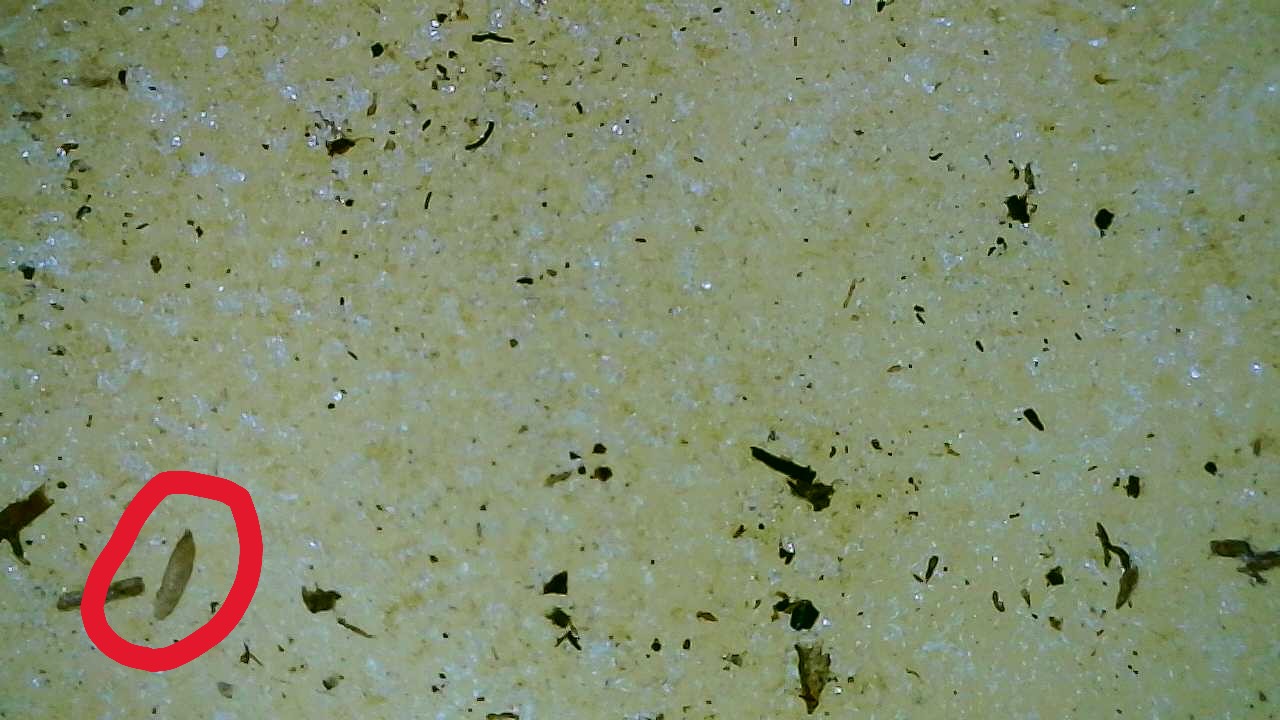
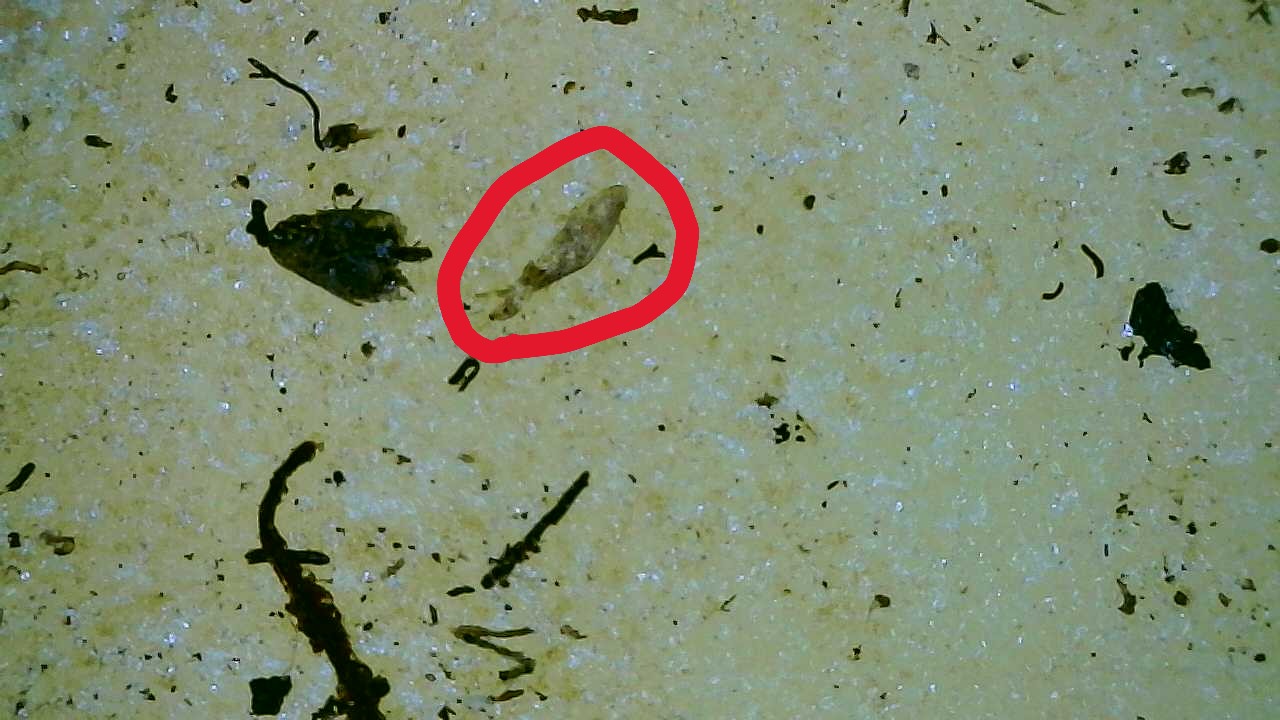
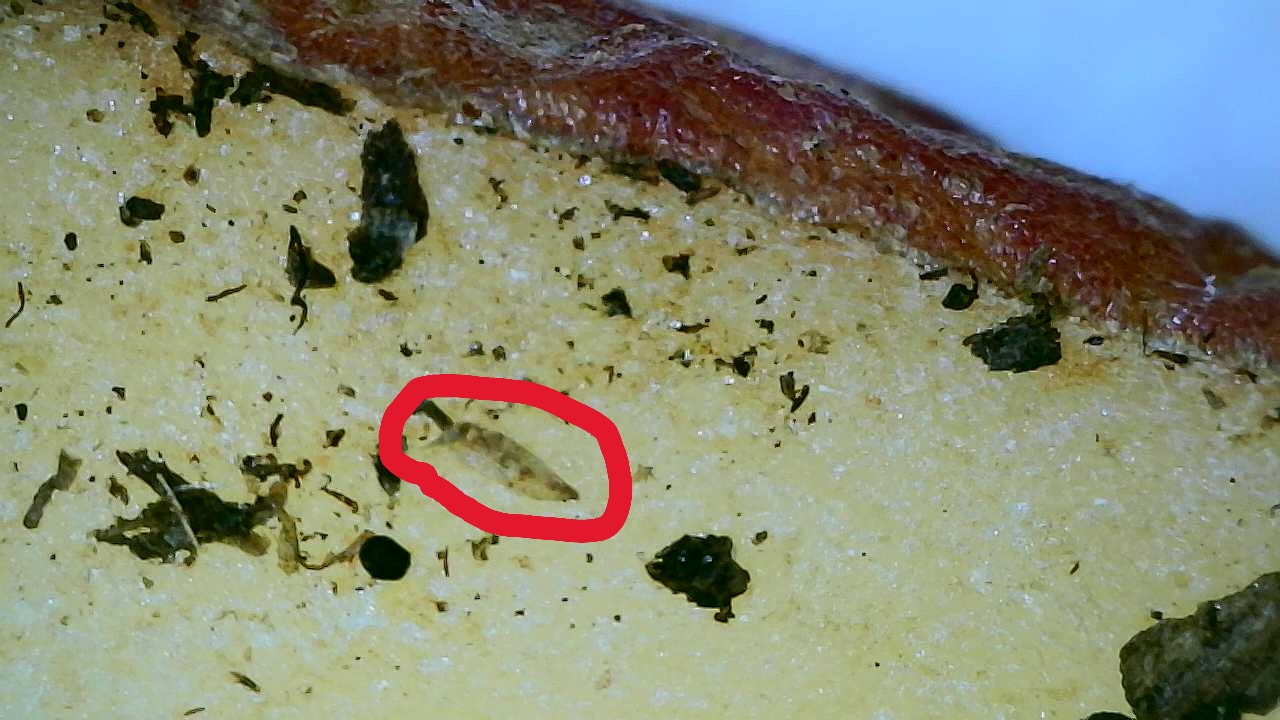
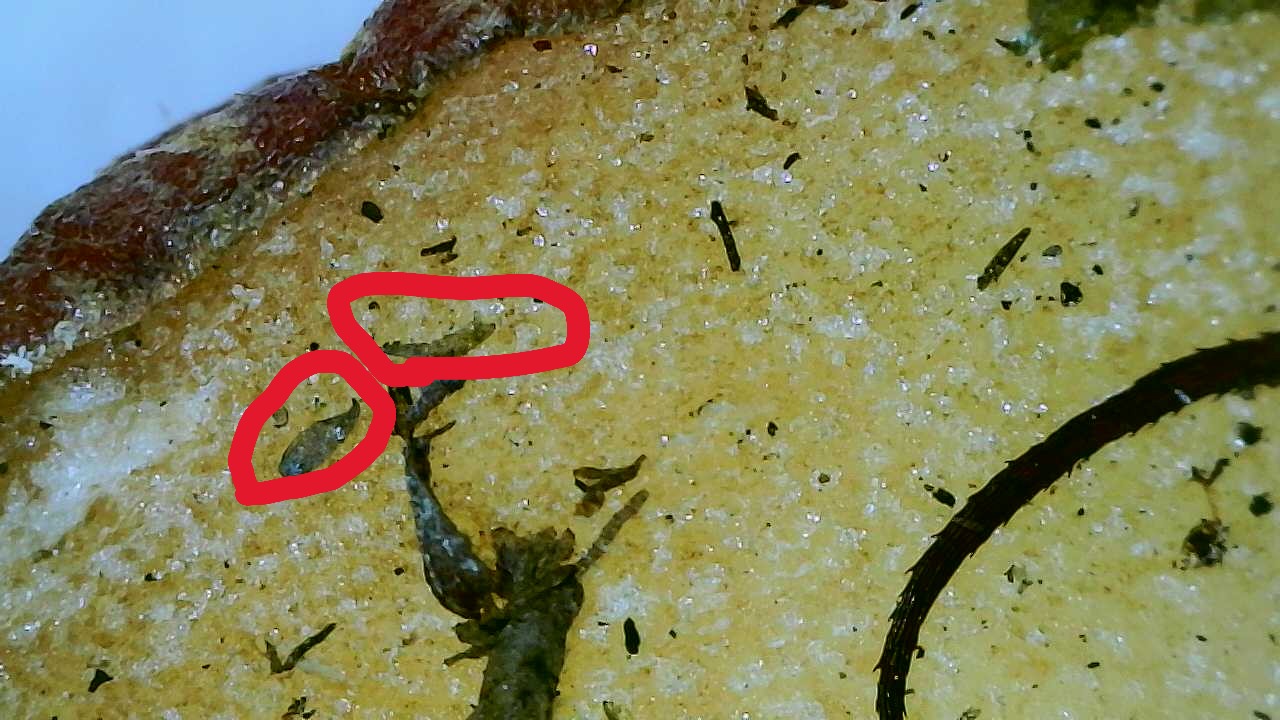
When reviewing pictures, I realized that I was not sure what this was. Are they fungus gnat pupa on this potato? They seem to have a black-brown end. 

Thank you.


Anexo Fungus Gnat Pupa on  Potato 4.JPG
Anexo Fungus Gnat Pupa on Potato 2.JPG
Anexo Fungus Gnat Pupa on Potato 3.JPG
Anexo Fungus Gnat Pupa on Potato.JPG
En respuesta a Amy Howansky

Re: Week 6 Q & A

por John Sanderson -
I'm stumped, Amy. If springtails had a pupal stage, I might guess that maybe those are springtail pupae. But springtails do not have a pupal stage; they do not go through complete metamorphosis. I can see no legs nor antennae. The lack of headcapsule makes me wonder if these are some sort of fly larva, but if so, I've never seen one like this. The projection at one end of the body is interesting but I'm not sure of its function.
Did you happen to poke these to see if they moved or wiggled when prodded?
Sorry I'm at a loss!
En respuesta a John Sanderson

Re: Week 6 Q & A

por Amy Howansky -
I did not poke. I could barely hold my hand steady enough to move the focus lever and click the picture button!
I will poke in the future. :)
Amy
En respuesta a Primera publicación

Re: Week 6 Q & A

por Ana Gourlay -
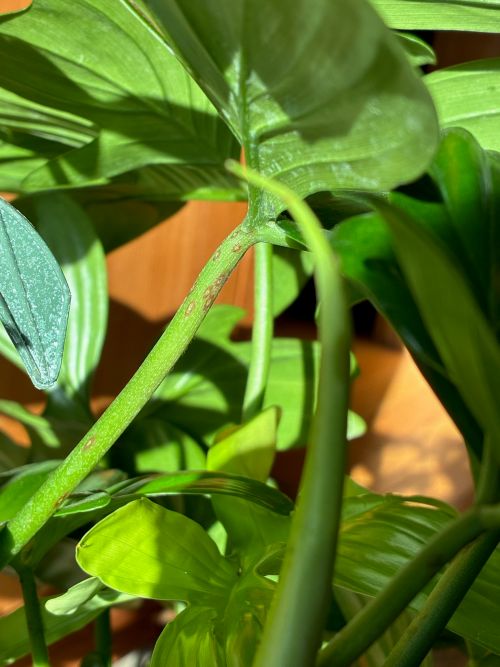
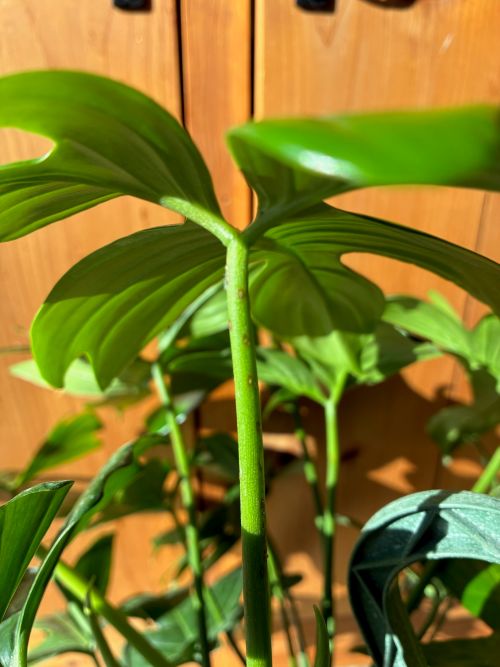
I was scouting a new houseplant delivery and I discovered these markings on the Florida Green Philodendrons. The markings are only on the stems below the older leaves. I don't know if it's a pest or if it's the natural development of the stem. (They can darken in nature and grow bumps and hairs as they mature).
Anexo Florida Green 2.jpg
Anexo Florida Green.jpg
En respuesta a Ana Gourlay

Re: Week 6 Q & A

por Margery Daughtrey -
Based on the discussion tonight, I think extrafloral nectaries are the best answer. Just wanted to park that idea here in case someone who missed Session 7 is reading through the Forum items. There's an Instagram post that shows the same spots as in your photos. Thanks for teaching me something I didn't know about philodendrons!
En respuesta a Primera publicación

Re: Week 6 Q & A

por Ryan O'Connor -
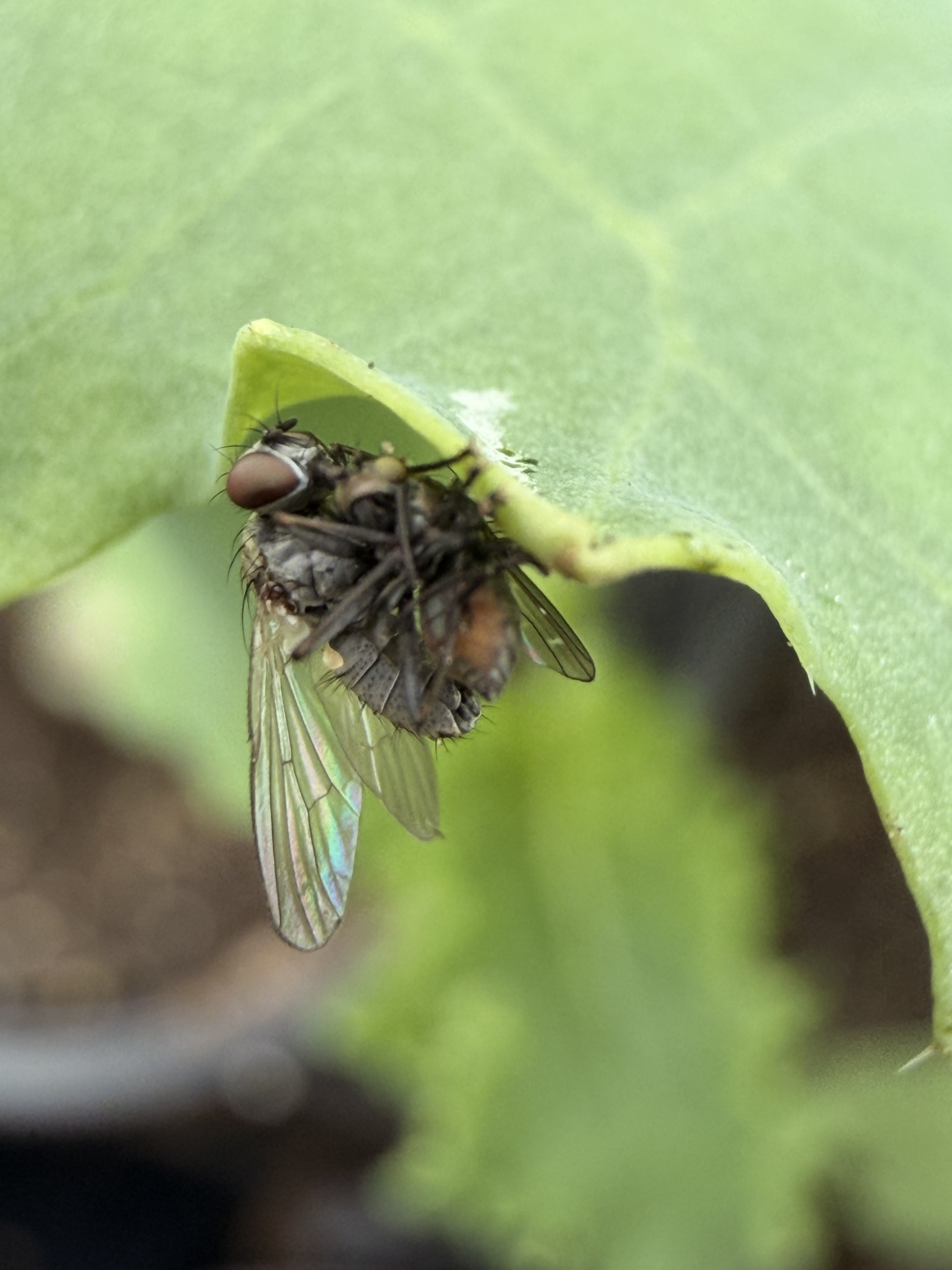
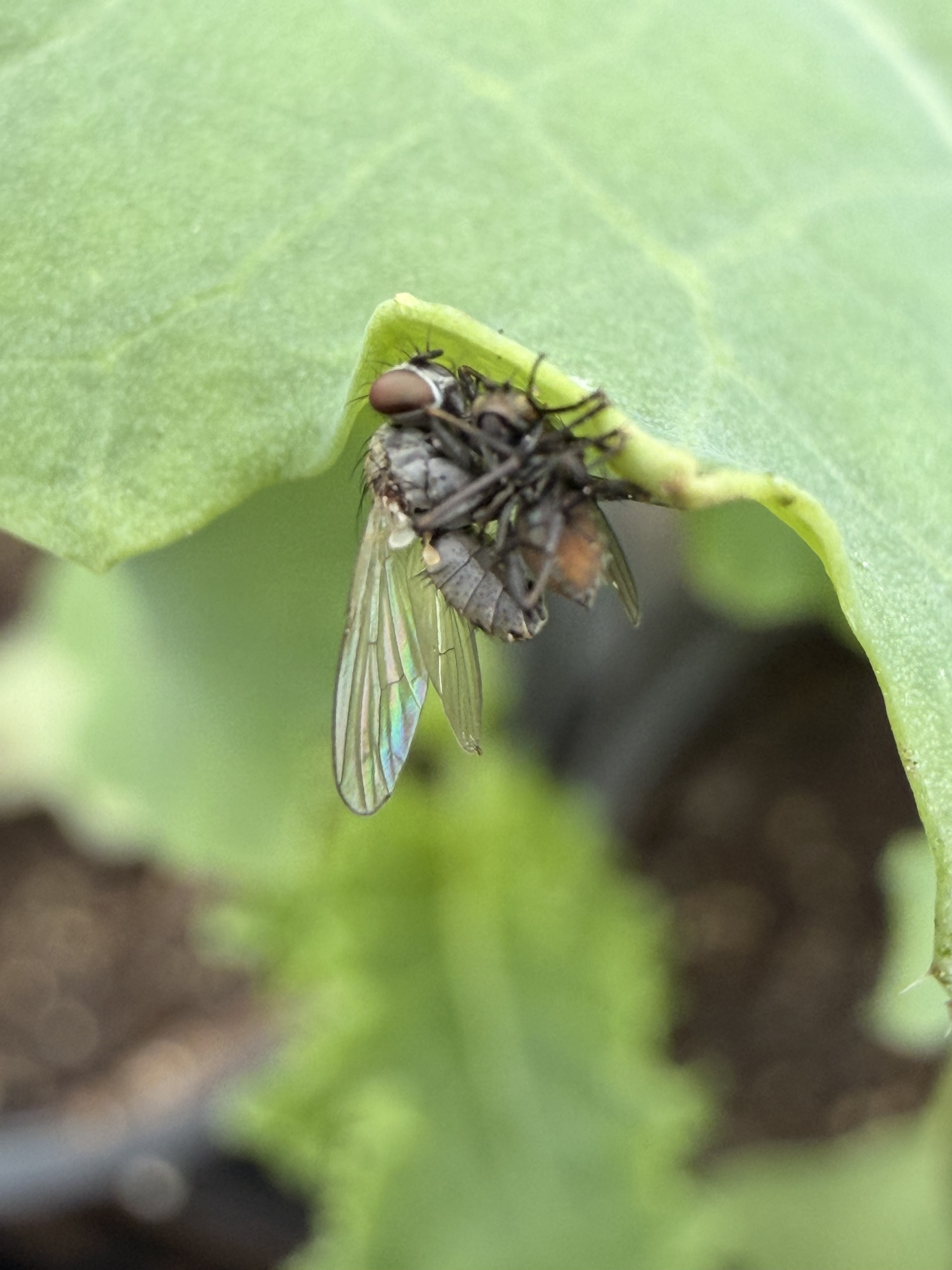
I was putting some cards out the other day when I noticed something interesting on one of our kale plants.
 
Hunter fly eating a shore fly?
En respuesta a Ryan O'Connor

Re: Week 6 Q & A Hunter fly?>

por Margery Daughtrey -

That's quite a clinch - he's either mating with it or eating it!  We'll see what John says. And hunter flies are probably Elise's favorite insects after butterflies...

Cheers, Margery

En respuesta a Ryan O'Connor

Re: Week 6 Q & A

por John Sanderson -
Great photos, and identifications, Ryan!! Yes, this looks like a hunter fly that has captured a shore fly and is "drinking" it. ("drinking" because it secretes digestive fluids into its prey to dissolve internal tissues so that the fly can drink resulting fluids with its piercing/sucking mouthparts). If you're interested and have the time, I bet you could walk slowly sround your plants and look for hunnter flies perched on certain leaves or structures in the greenhouse. The flies use perches above the canopy and watch for small insects to fly by. If they see something, they spring into the air, catch their prey, and return to the perch to eat. It all happens very fast. I've tossed tiny pebbles over the heads of perched hunter flies to watch them take off after the pebbles (their eyesight acuity isn't very good, but they can definitely detect objects in motion!)! If they're hungry enough, female hunter flies will readily attack males and eat them!
En respuesta a John Sanderson

Re: Week 6 Q & A

por John Sanderson -
By the way, the reason we were the first to discover hunter flies in North American greenhouses in 2000 was due to the sharp eyes, detailed records, and unstoppable curiosity of Elise Lobdell!! She kept sending me sticky traps with lots of these flies on them from the greenhouses she was scouting, asking me what they were. I kept telling her that they're just some kind of little fly that wasn't harming the crops so not to worry about them. But due to her persistence, I finally showed some of the flies to a taxonomist who immediately recognized that they were something new to North America. We eventually published several articles on the identity, biology, and behavior of these amazing little flies. Go Elise!!
En respuesta a Primera publicación

Re: Week 6 Q & A

por Grace Harper -
Sory in advance for the long post! I've been experiencing a little trouble with the geraniums, from malnutrition to staying to wet to fungus gnats and now something I'm not sure what it is. I've been grower and scouter for the past two weeks so I am able to get the know the plants on a personal level. I read that geraniums need more nutrients then other plants, but I don;t want to water them water them a whole lot because they are not drying out. I've put a slow release fertilizer but they are only getting fertilized with a 20-10-20 water soluable mix once a week. In the past two weeks I have only watered them 2 or 3 times. The tops look dry but when I pop them out of the pot they are sopping wet on the bottom. The greenhouse temps have ranged from 70 to 90, it's hard to keep the temps 70s right now. I had to move a lot of them around today and noticed a lot of FG and SF. I put a potato wedge in at noon and by 3 in the afternoon it was covered. I know I need to take care of the gnats and fungus, but now something else has popped up. What is the leaf cupping caused by?
En respuesta a Grace Harper

Re: Week 6 Q & A

por Margery Daughtrey -
Grace, I don't see your leaf cupping photo, so maybe you should enter it again. And please tell us HOW MUCH of which slow release fertilizer you used, and how many ppm of 20-1020 you used, and what your growing mix is. Those details will help us to figure out whether your feeding program is good for geraniums. I assume the 70 and 90 figures are daily highs: what is the night temperature? Many thanks, Margery
En respuesta a Margery Daughtrey

Re: Week 6 Q & A

por Grace Harper -
We use a fourth of a cup of osmocote slow release fertilizer and I'm not sure on the 20-10-20 mix. That is something I need to learn though. Our growing medium is called sungrow, it's the only potting soil we use when handeling plugs. The geraniums wenget in 26 count plug trays and put them imediatly in 6.5 containers. The night time temps don't get below about 62 right now. Also we've only had these geraniums for about a month. Thank yall!
Anexo httpslh3.googleusercontent.compwAP1GczNJevpxQcoeTJnnZgCdjw09UJUKCdts6WG5Z9jqz8LQuKJzJwtchkHJVxibnkJi-QbuV4DEZRVo3f7awEtmhXABguzjQSUO6VHVXTqo7G3hj0GkMxw=w54-h72-no
En respuesta a Grace Harper

Re: Week 6 Q & A

por Margery Daughtrey -

Hi Grace! Based on your photos, although they are quite tiny, I think you may have a high salts problem.  See if you can take a sample (pick out all the osmocote first) and test it in-house for salts level. If you don't have that equipment you could send it to a lab, e,g. the Peters Fertilizer Laboratory in PA, to be analyzed for salts, pH and more.  There is discoloration around the outer edge of the leaf, which suggests high salts or high ammonium, and it sounds like you fertilized two ways when one might have been sufficient.Your temperatures and media sound good.  In the winter you would probably want to fertilize more lightly than spring.  If that is a 1/4 of a cup of Osmocote per 6.5" container that sounds like a lot, and the 20-10-20 would be more salts on top of that.  Both likely have some ammonium N in them. You want no more than 12 ppm ammonium to avoid some phytotoxicity (seen as yellow leaf edges). - they would test for the ammonium levels with a soil test at Peters or any other  full-service lab. The way to remediate a high soluble salts problem is to leach the pots with clear water on a sunny day (good drying conditions) and then to resume feeding. With slow-releaase fertilizer in the mix you don't have as much control over the salts leaching, but I still think it would help. You may not have been leaching enough (letting the water run out the bottom) when you have watered the plants under low-light, wintry conditions and the salts have just accumulated.  Warmer growing temperatures that are coming soon will help you with this, and the plants should turn around if they are not extremely over-fertilized.  Figure out how many ppm of fertilizer you are putting with on the 20-10-20, and perhaps just stop this for a few months - water with water for a while, rather than fertilizer-containing water, to reduce the salts load on the plants.  If you put in the prescribed amount of slo-release, that should be enough to power the plants.  If they start showing signs of low N, you can bring back the 20-10-20. Perhaps Stephanie will read this message and add some more comments to help you.   

En respuesta a Margery Daughtrey

Re: Week 6 Q & A

por Stephanie Burnett -
Hi Grace,

I agree with Margery that 1/4 cup of Osmocote and 20-10-20 is probably a bit too high of a fertility rate. Geraniums are one of the rare plants that need a high level of fertility, but for a 6.5" container, a tablespoon of Osmocote as a topdress would probably be plenty. Stopping the fertilization with the 20-10-20 and leaching as much as you can is probably a good suggestion. If you can move the geraniums to any place with high light to promote growth, that might help the plants use some of the additional fertilizer. In future years, a combination of a controlled release fertilizer and liquid fertilizer is good - the controlled release can be useful on cloudy, dark days when you can't water or fertilize with a liquid fertilizer. But, you would just want to make sure you aren't exceeding about 300-400 ppm for the liquid fertilizer and use a small amount of Osmocote as a topdress. I hope this helps!
En respuesta a Grace Harper

Re: Week 6 Q & A

por Tiffany Donaldson -

Hello! My experience with overwintering geraniums is very little watering and only fertilizing them once in the spring while they are indoors. From my experience, geraniums HATE to have their feet wet. I reccomend checking the roots for rot. They are very susceptible to bacterial and fungal root rots. They can also experience edema if they are being watered too much (which looks like blistering on the leaves). However, I would wait to see what the professors say! I only deal with mature plants and I'm unsure if these are cuttings you are talking about (so protocol may be a little different). Hope this helps!

En respuesta a Primera publicación

Re: Week 6 Q & A

por River Waterman -
Hello!

Our guest speaker on weeds last week talked about how nostoc can build up and become a problem in greenhouses, and I know other cyanobacteria can cause toxic blooms in ponds, but are there any species that are used beneficially in greenhouses for their nitrogen fixing abilities?
En respuesta a Primera publicación

Re: Week 6 Q & A

por Sathwik Manjunath -
What is an effective way to prevent TMV before starting new crop cycle in greenhouse tomato cultivation ?
En respuesta a Sathwik Manjunath

Re: Week 6 Q & A

por Margery Daughtrey -
Hi Sathwick!
If you have had TMV the previous season, and are bringing new tomatoes (the most vulnerable crop depending upon the cultivar; many are resistant and will say so) into the same space, you want to do scrupulous sanitation: first remove all plant material, plants or debris from plants from the previous crop. You could wipe down inanimate surfaces (not the media, which should be discarded after a TMV outbreak) with 10% bleach solution (bleach diluted 1 part bleach to 9 parts water) - but wear respiratory protection when you do this or at least have all the vents open for your own protection. Then you could also use a nonfat dry milk solution (20% wt:vol) to spray the incoming plants as an extra precaution, upon arrival. If you HAVEN'T seen TMV in the previous season, what you generally do between crops, plus a NFDM spray on the incoming plants, before handling them, would be fine. TMV is always more likely to be in the new plants than to be picked up from the benching, doorknobs, etc, but if workers touch a contaminated area and then handle plants, they could transmit it from a surface to a tomato plant, so extra sanitation is helpful. Washing the whole place down with milk as Elise wonders in her post would be a useful sanitation practice, but it IS sticky, and you may find it leads to sooty mold growth on plants, which is not harmful, but is not attractive. So I think bleach or Virkon disinfection would be better when the greenhouse is empty. The milk is the only option to use directly on the tomato plants, and it doesn't cure infections, just minimizes spread.
En respuesta a Primera publicación

Week 6 Q & A

por Mary Taylor -

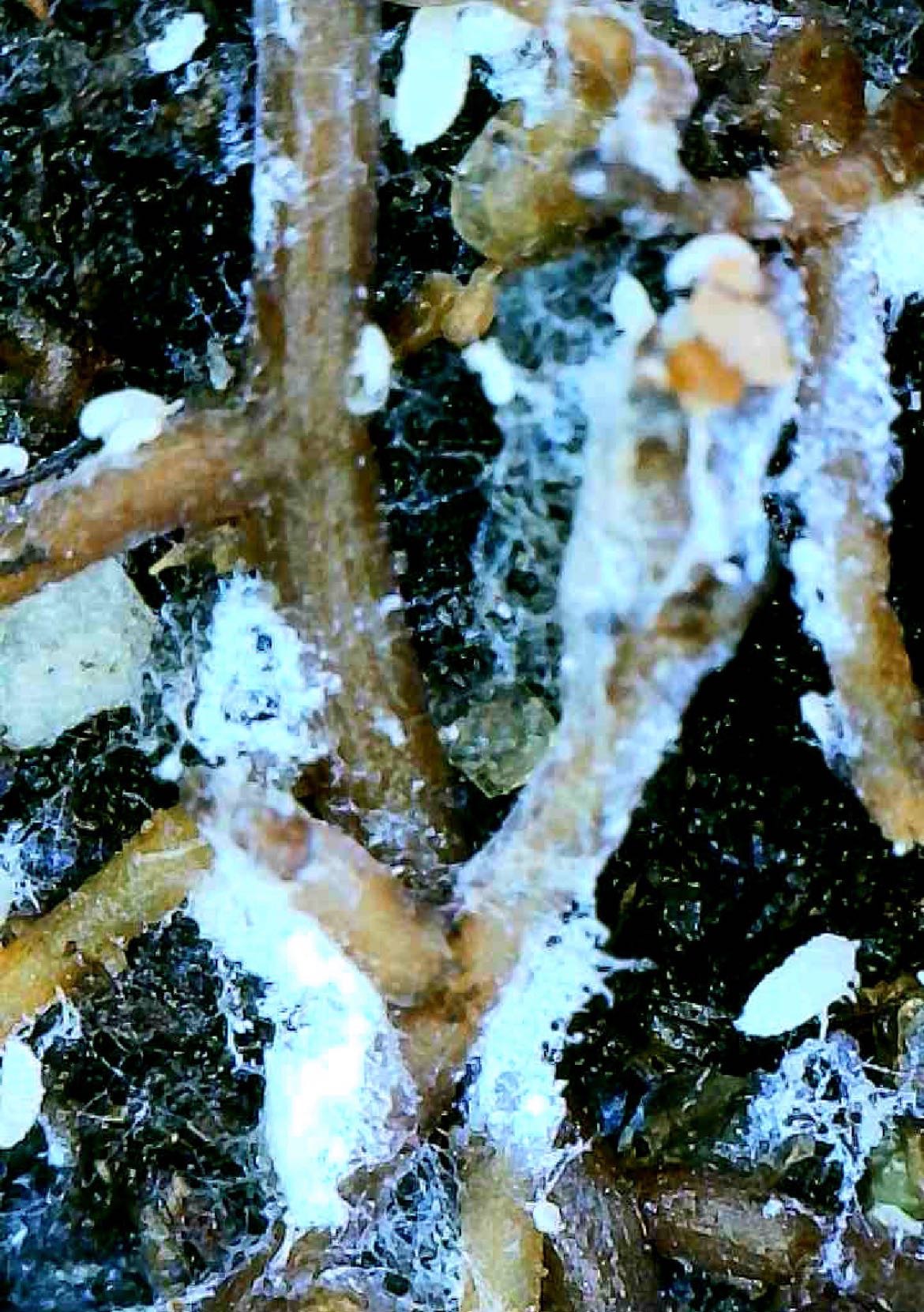
A customer recently came in with her Myrtle topiary and it was absolutely covered in root mealybug. We treated it and gave it back to her so hopefully it lives…

Anexo cdv_photo_1774213257_20260322170057.jpg
En respuesta a Mary Taylor

Re: Week 6 Q & A

por Shawn Jenkins -
What did you treat it with and how. We are now having a mealybug outbreak in the greenhouse and I have been very unsuccsessful with clearing mealy bug from plants once its established. Advice would be appreciated.
En respuesta a Shawn Jenkins

Re: Week 6 Q & A

por Elizabeth Lamb -
Shawn,

What limitations do you have on what pesticides you can use in your houses? ANd are you talking about mealybug on the foliage or root mealybug?
En respuesta a Shawn Jenkins

Re: Week 6 Q & A

por Elizabeth Lamb -
Also found this...https://www.youtube.com/watch?v=ra55r6lxI24&list=PLfSMAKNYIe_kk5yWcuqqsnyBKks3ePuZM&index=1
Challenges associated with mealybug in greenhouses - hopefully it has some answers.