Week 5 Q & A

Week 5 Q & A

Week 5 Q & A

Número de respuestas: 36

Do you have questions about this week's content? Post them here to get the answers! 

To Post Your Question:

Click on Reply and type your response in the text box. To post an image click on the Advanced link and then click on the image icon in the tool bar at the top of the text box. To post an attachment, click on the Advanced link and drag and drop your file in the attachment box. Click on Post to forum to submit your question or reply.

En respuesta a Primera publicación

Re: Week 5 Q & A

por Tiffany Donaldson -
Hello! We are in the process of constructing a greenhouse in Allegany State Park. I was wondering if anyone has any suggestions on which supplies are crucial to keeping a healthy greenhouse. For instance, in class we discussed screens over the outside vents to keep pests out. I also think a boot brush at each door might help keep weeds out. Any guidance and/or suggestions welcome! Thank you.
En respuesta a Tiffany Donaldson

Re: Week 5 Q & A

por Stephanie Burnett -
Hi Tiffany, after years of growing in greenhouses with gravel floors or portions of flooring that are uncovered soil, I think that making the floor concrete goes a long way to helping reduce problems. Not having plantings outside the vents is also helpful. Some commercial greenhouses have sterlizing pads at the entrances to help clean shoes. And, making sure that any hoses used for watering aren't on the ground is helpful. I'll be interested to hear what other folks have to suggest! Good luck with your new greenhouses, Tiffany; that sounds like a cool project.
En respuesta a Stephanie Burnett

Re: Week 5 Q & A

por Elizabeth Lamb -
The sterilizing pads have to be kept clean and refilled with solution but they can be very helpful.
En respuesta a Elizabeth Lamb

Re: Week 5 Q & A

por Tiffany Donaldson -
What are sterilizing pads used for? Are these sanitizing wipes used for surfaces or are they for tools? Or maybe something different?
En respuesta a Tiffany Donaldson

Re: Week 5 Q & A

por Margery Daughtrey -

Hi Tiffany! I thought they were referring to the foot baths that people put just inside greenhouses. They are soaked with disinfectant so that shoes passing across can be sanitized on the way into the greenhouse, counteracting things that might be in soil from the outdoors. 

this is usually done for propagation greenhouses.  It isn't standard operating practice,but it helps to keep a really clean house really clean.

Now we'll wait to see if that is indeed what they were referring to. . . 

Cheers, Margery

En respuesta a Tiffany Donaldson

Re: Week 5 Q & A

por Elise Schillo-Lobdell -

Tiffany, I worked at a hydroponic tomato growing facility where we had to step onto pads soaked in trisodium phosphate.  It may have kept diseases out but it rotted through our footgear rather quickly!

En respuesta a Stephanie Burnett

Re: Week 5 Q & A

por Amy Howansky -
Hi all,
The sterilizing foot baths are also sometimes used at horse farms and especially sheep/goat barns, but not all farmers use them. My friend in the horse industry swears by them, and we saw one farm using them when we did a sheep/goat/llama/alpaca farm tour this past summer. We expected to see them at a rabbit-breeding facility, but did not.
Amy
En respuesta a Tiffany Donaldson

Re: Week 5 Q & A

por Amy Howansky -
Tiffany,
Though I am not an expert, I would like to make some suggestions from my experience as an employee at retail greenhouses and public greenspaces.

I agree with the other comment about keeping the watering hoses off of the floor. If they need to be on the floor during the actual watering process, buy some prominent red/orange road-safety cones to put at each end of the row you are crossing with the hose. Or better, yet, get signs made that read something like, “Caution! Wet Floor! Watch out for hoses!” This will help protect you from liability if anyone trips.

Also, when someone is watering, that person does not answer questions from park visitors or take phone calls. You arrange before that to have a different employee available for questions and calls. That way, the watering does not get interrupted, you don’t forget where you already did/didn’t water, plants don’t get over-watered, plants don’t get missed, and most importantly, the hoses do not remain a tripping hazard while no one is around if you have gone off to help a visitor find their way around the park.

I have been to Allegany for a winter festival, and I helped take information from the people who wanted to do snowmobile races on the ice. We also saw 11 eagles, and a group of turkeys leaving tailfeather fan prints in the snow. I was truly lucky to be able to snowmobile in freshly-fallen snow through tunnels of bending over trees laden with snowfall… magical! I learned an important thing: though I, at first, didn’t want the sound of snowmobiles to “ruin” my experience at the park, I was told that the annual funds raised by snowmobile registrations and club fees were huge, and went to support the park, while people entering the park by walking or for cross-country skiing did not generate as much revenue. It was interesting to learn about the winter aspects of the park when many of us tend to visit these sorts of places much more in the warmer months.

Best wishes to you as you expand the greenhouse facilities!

Amy
En respuesta a Amy Howansky

Re: Week 5 Q & A

por Tiffany Donaldson -
Amy, Thank you so much for your reply! I will definitely need to make a system to keep the hoses off the floor and out of the walkways, as the park is huge on safety! It is not something I would immediately think of as a hazard. I think it is super important that the waterer goes uninterrupted for all the reasons you just listed. It is such an underrated task, but probably the most important!!
I am really glad you enjoyed your time at the park! Even though I see eagles regularly, I always have to take a pause and watch them. You get to see a lot of the park snowmobiling that most summer goers never get to see! The park does not allow patrons to use ATVs in the summertime, so the snow mobile allows you to cover a lot of the 'wild' parts of the park in a relatively short period of time.
En respuesta a Tiffany Donaldson

Re: Week 5 Q & A

por Mary Taylor -

I haven’t seen this done anywhere but I’d imagine a small “decontamination” room to enter before entering the main greenhouse with fans to blow off any pests that might have hitched a ride might help. 


I’d also like to echo the concrete floors bit too. That and having designated drainage for water and also excess soil that falls to the ground. I’m currently working in a 100 yr old greenhouse where the soil builds up under the benches because there’s no allocated drainage so it’s  created an entire layer of soil on top of the concrete floors. Makes for a lovely jungle vibe having tradescantia and baby’s tears on the floor but as you’d imagine it’s terrible for pests. 


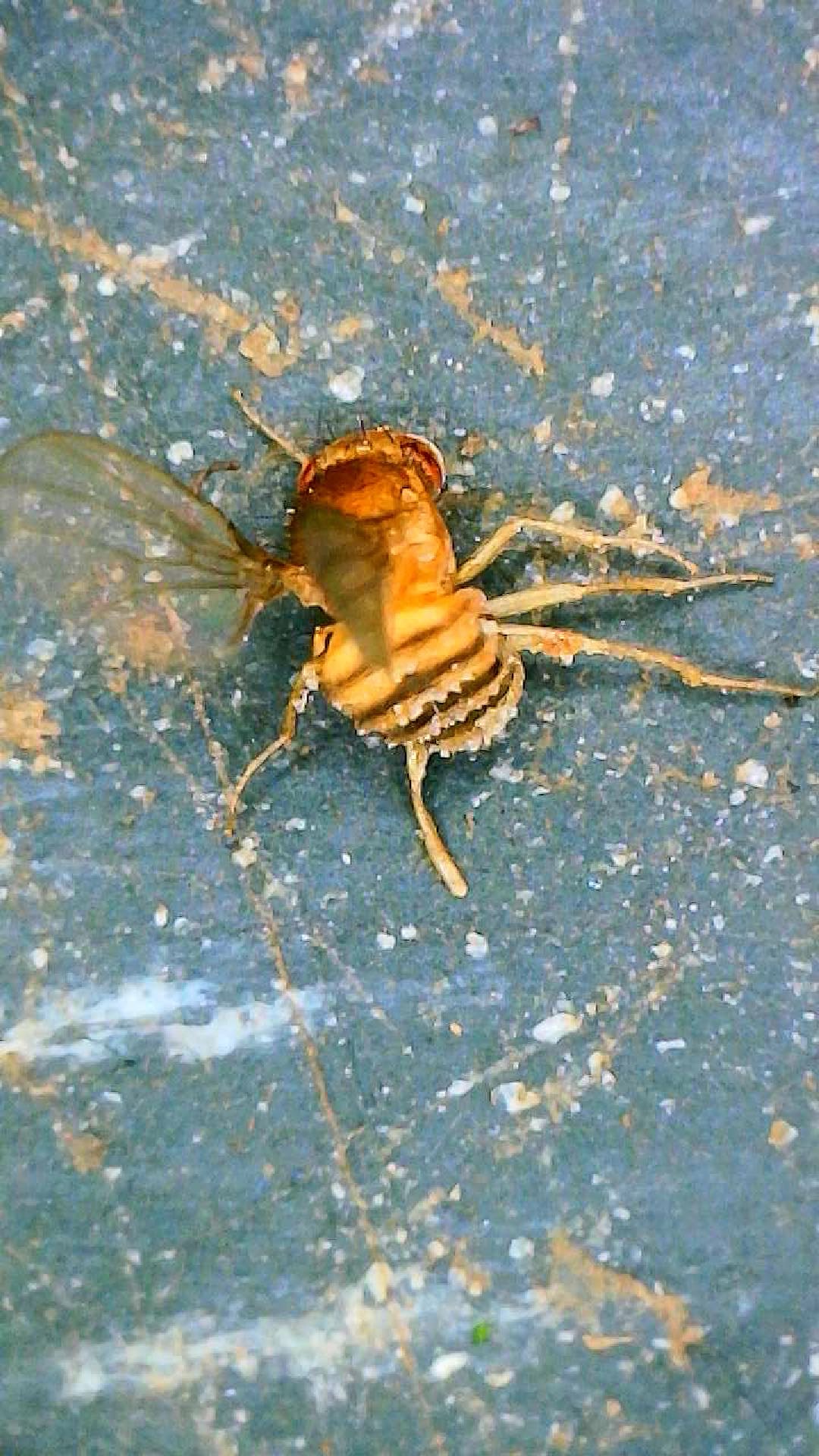
Also attaching a photo of some kind of fly that looks like a bee. 

Anexo cdv_photo_1774212898_20260322165458.jpg
En respuesta a Mary Taylor

Re: Week 5 Q & A

por Elizabeth Lamb -
Mary - I have been in greenhouses that have that kind of decontamination entry. They have fans that move the air away from when you enter the greenhouse itself. More likely in big commercial vegetable houses, i think, but your reasoning is very sound!

With soil on top of the concrete floors, you might want sticky cards under the benches to see what's coming out of that jungle - fungus gnats and thrips are likely!

that may be a hover fly... John?
En respuesta a Primera publicación

Re: Week 5 Q & A

por Ryan O'Connor -
Evening everyone,
Quick question about beneficials and sticky cards. In one of the previous assignments I mentioned I was catching beneficials on my cards and Elise and John gave good advice about possible ways to alleviate this. Today, I mentioned to my boss that we had more parasitic wasps than pests on one of our cards (3 colemani and one fungus gnat) and he proposed a question that I thought I would forward along. He was wondering if us catching more parasitic wasps on our cards than other pests can tell us anything about our release rates and if it means we have a good population established and can stop releasing. My initial thought was no, because the parasitic wasps attack aphids and our cards don't really tell us anything about our aphid populations and therefore the amount of wasps on the cards is unrelated. And I know we have aphids on our peppers so I want as many parasitic wasps in that greenhouse as possible! However, because my boss is the one paying for the beneficials he doesn't want to order anymore than is necessary. So, basically, he was wondering if numbers of parasitic wasps on sticky cards can tell us anything about release rates or is it just bad luck and the cards should be moved to a new location. Or like Elise said before, maybe it just means there are aphids there. This card was not placed among the peppers. I've been releasing 1,000 colemani mummies bi-weekly in a 5000 sq ft greenhouse (which is on the higher end?) but I just switched that to monthly.

Cheers,
Ryan
En respuesta a Ryan O'Connor

Re: Week 5 Q & A

por Elise Schillo-Lobdell -

I’m looking forward to John’s reply but my thoughts are:  I wouldn’t worry about trapping out three aphidius - that really isn’t many (just 0.3%, right?) but I would worry that you are still seeing aphids on your peppers.  Are you seeing any parasitism? If you aren’t seeing parasitism yet then maybe you are releasing the wrong aphidius.  Are you certain which aphid species you have?  You could try switching to Aphidius ervi or a mix of the two, or use Aphelinus abdominalis (they go after a wide range of aphid species.  You should continue weekly releases until 80-90% of the aphids are parasitized.  You may not see the mummies of foxglove and potato aphids because the aphids tend to fall off the plants when they are attacked.  Good luck, I think it’s great that you are using bio-controls, I wish everyone would.

En respuesta a Elise Schillo-Lobdell

Re: Week 5 Q & A

por John Sanderson -
Ryan and Elise, I agree with everything that Elise has said. I'll also add that I hope you are accurately identifying the insects on your traps. In this case, it's possible that you could be identifying Synacra wasps (which attack fungus gnats and can occur naturally in greenhouses) with Aphidius wasps because they are about the same size. Regardless, trapping out 3 Aphidius adults is little to be concerned about. I strongly agree with Elise's advice to look for parasitized aphid mummies. If you do see mummies, use a handlens to check for exit holes through which the wasps emerge. Finding exit holes will tell you that the wasps are reproducing in your greenhouse. But don't stop releasing more wasps until you see lots of mummies. And do your best to identify the aphid species. For peppers, you could have green peach aphid, potato aphid, or foxglove aphid, though if you have foxglove aphid, you'll probably also see distorted leaves. Aphidius ervi will attack potato or foxglove aphid; Aphidius colemani will attack green peach aphid.
En respuesta a John Sanderson

Re: Week 5 Q & A

por Ryan O'Connor -

That is a very good question about accurately identifying the wasp on my cards. I'll have to double check if it is indeed my colemani. I have definitely been seeing some parasitized aphid mummies. And I've seen some parasitic wasps flying and crawling around on my peppers. I'm pretty certain they are green peach aphids Thank you for the advice!


En respuesta a Ryan O'Connor

Re: Week 5 Q & A

por Elise Schillo-Lobdell -

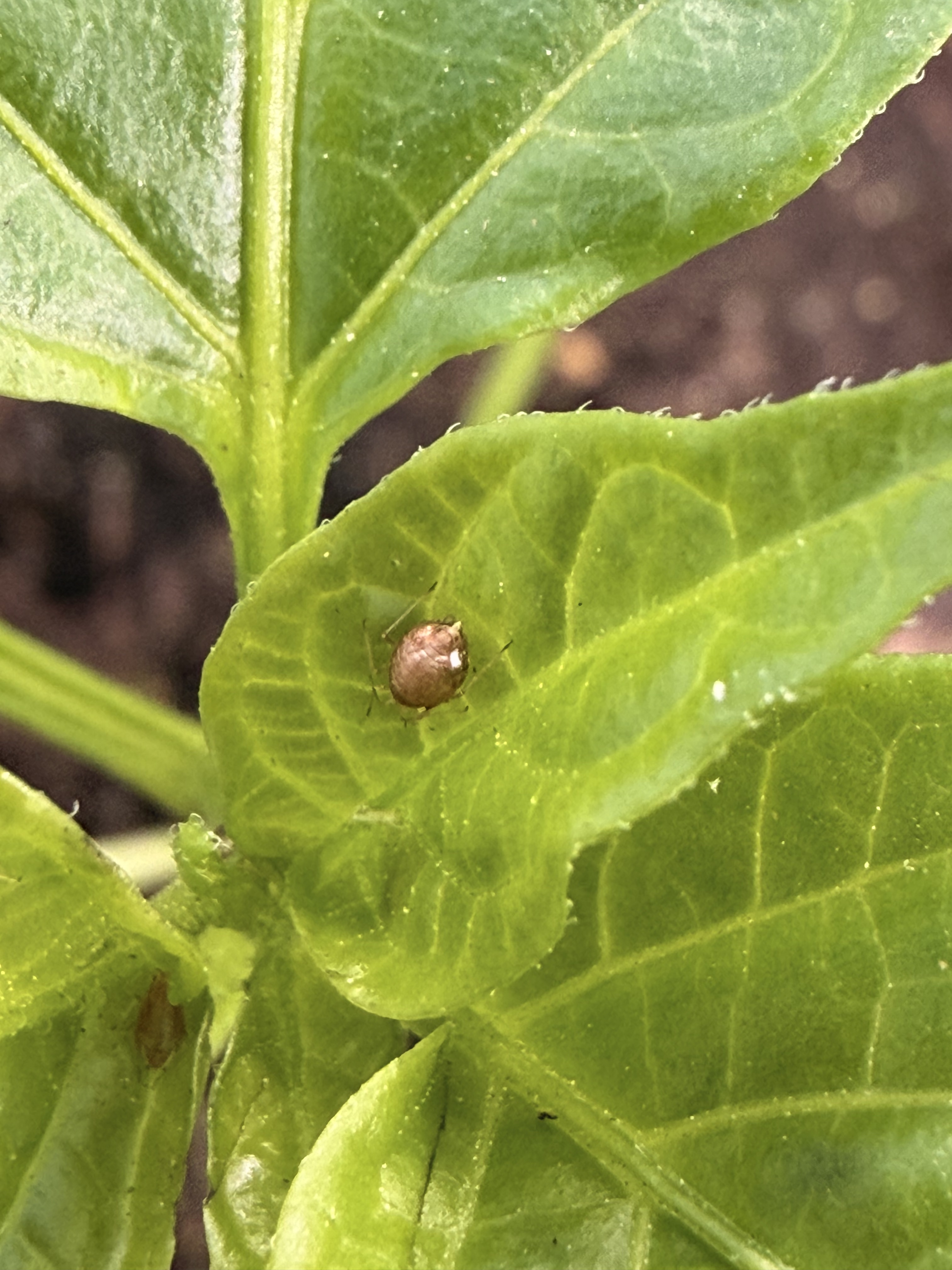
Nice mummy!  Is the white spot on the right an exit hole or just a reflection?

En respuesta a Elise Schillo-Lobdell

Re: Week 5 Q & A

por John Sanderson -
It's just some white debri - I magnified the image so I could tell what it was. Also note that there is no exit hole at the end of its abdomen, so the adult wasp inside has not yet emerged.
En respuesta a John Sanderson

Re: Week 5 Q & A

por Ryan O'Connor -

Thanks John and Elise. I did have one more question. I spray with beauveria bassiana and was wondering if aphids that have been killed via the fungus can also resemble that of an aphid mummy parasitized by colemani. Obviously an aphid killed from beauveria won't have an exit hole but maybe have that golden appearance?

En respuesta a Ryan O'Connor

Re: Week 5 Q & A

por Elise Schillo-Lobdell -
John or Cheryl can you answer this one? I’m thinking the answer is no just because other pests that are killed by fungus usually look fuzzy. You will sometimes see fuzzy fungus gnats on the cards just from naturally occurring fungus.
En respuesta a Primera publicación

Re: Week 5 Q & A

por Lori Voll-Wallace -
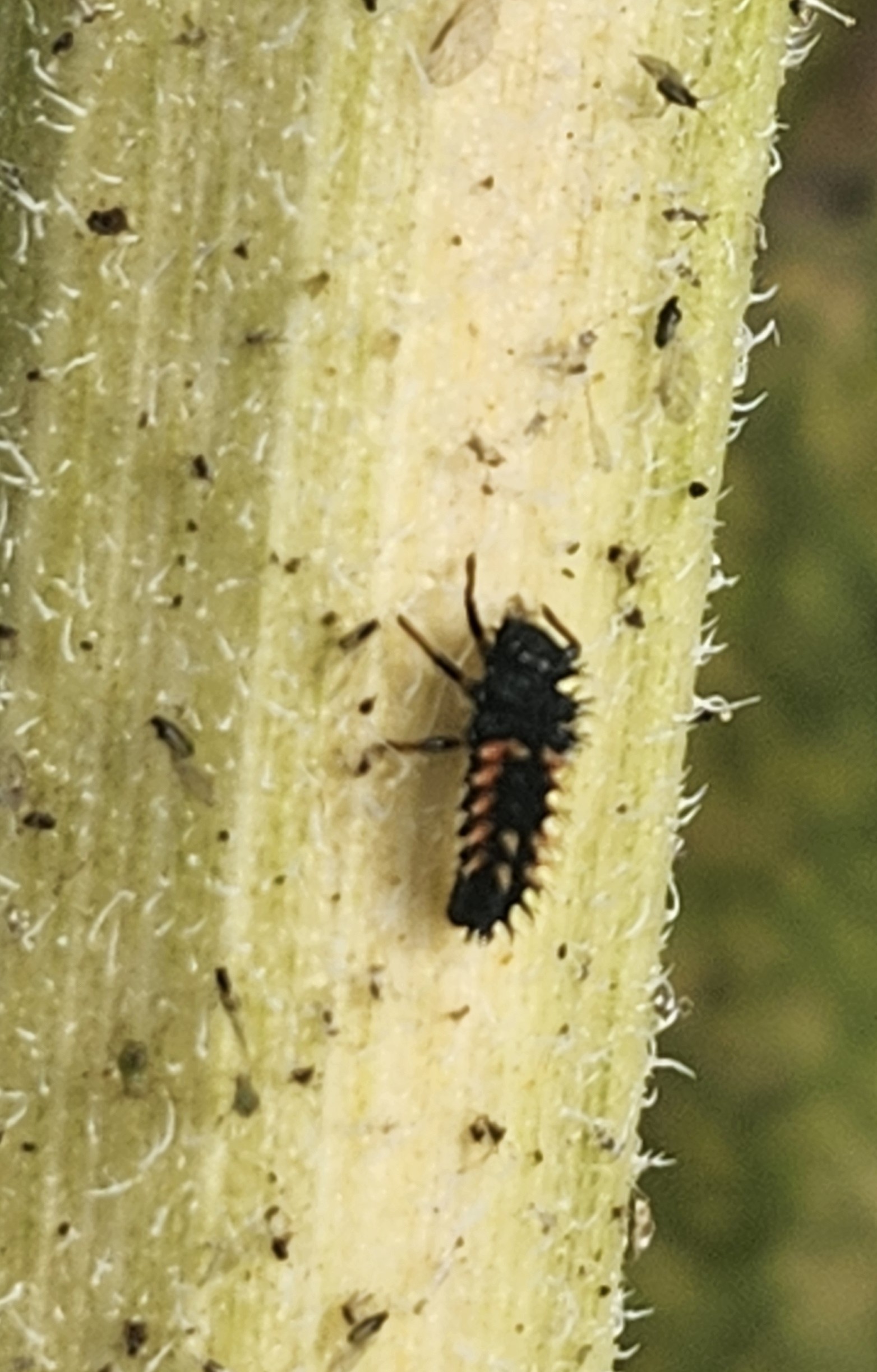
Look who showed up all by themselves!
I need all the help to battle the aphids. Lol
I have a short video of him moving around and in the video there is a tiny wasp like critter that I would like identified. Can I email it to someone or share during class tonight?
Anexo Cropped ladybug larvae-v2.jpg
En respuesta a Lori Voll-Wallace

Re: Week 5 Q & A

por Elise Schillo-Lobdell -

Lori, that one lady beetle has her work cut out for her! Have you added any bio-controls and do you know what type of aphids you have?  I would recommend that you call several different natural enemy suppliers and tell them the average temp. and relative humidity of your greenhouse and the square footage, the crops you are growing and what type of aphids you have.  See what they recommend and go with whomever can get them to you the fastest.  If you don’t know for sure which species you have - or if you think you may have different types - they probably will suggest a mix of Aphidius colemani and Aphidius ervi.

En respuesta a Elise Schillo-Lobdell

Re: Week 5 Q & A

por Lori Voll-Wallace -
Oh, there were lots more than one lady beetle/bug! I even moved a few to other hot spots in my greenhouse. I thought about purchasing some biocontrols, but most need a warmer environment then what I have currently. Although the greenhouse hit 79 degrees in the early afternoon today. So pretty soon.
En respuesta a Lori Voll-Wallace

Re: Week 5 Q & A

por John Sanderson -
Great to see! A biocontrol freebie! With so many winged aphids in this photo, as well as lots of dead aphids (thanks to your ladybug friend), there must have been a sizeable infestation.

I look forward to seeing the "wasp-like critter"!
En respuesta a John Sanderson

Re: Week 5 Q & A

por Lori Voll-Wallace -
Yes there were a lot of them and it was my fault. I got lazy over the winter and did not inspect until shortly before our classes started. I did not realize that aphids don't mind cooler temperatures. Lesson learned the hard way.
En respuesta a Primera publicación

Re: Week 5 Q & A

por Amy Howansky -
Hi, all.

During one of my visits to the greenhouse that I am scouting, I noticed that there were tables and chairs in one of the greenhouses that is only ⅓ filled with plants. The business was using the area for some classes offered to the public. While it made it convenient for me because I could use the area to set up my computer and hand-held microscope without being in the way of employees working or customers browsing, I wonder if it may not be a good idea to host a class inside the actual greenhouse.

Factors I have considered:

They really don’t have much other space to set up a class, but they could wait until nicer weather and hold the class in one of the sheltered/outdoor spaces.

Or they could add on a room specifically for classes as they continue to expand their business, which I have suggested in the past, but I don’t think they have included that in their expansion plans.

When customers take a class and bring in their coffee, drinks, and snacks, are they not possibly providing opportunities for contamination or for bringing in outside pests?

However, it is true that customers walk through the greenhouses all day while maybe shedding pests from their clothes that came from their houseplants at home or were carried in from the outdoor nursery or growing spaces.

Yet, actually sitting in the greenhouse, eating a snack, and taking a class for one hour seems different to me. If I were the head grower or greenhouse manager, I would feel more comfortable if the classes were held elsewhere, though, as I mentioned, there is limited space to do that right now.

I am on the fence about this… or maybe on the bench, as it were. LOL

Any comments? Thank you, much appreciated.

Amy
En respuesta a Amy Howansky

Re: Week 5 Q & A

por Elise Schillo-Lobdell -
Ideally there would be no other people in the greenhouses other than growers and scouts - but this is a retail operation that wants to welcome their customers in (and to educate them - how wonderful!) - so the small additional risk of the customers bringing in (any more pests than the workers already do) problems is worth it for their current business model.
En respuesta a Primera publicación

Re: Week 5 Q & A

por Grace Harper -
Hey everyone! So its spring down here in the south and that means greenhouse shuffling has begun. I have been having trouble with the sticky cards stayinf in the greenhouse they're supposed to. We don't have designated greenhouse people, just my ninny who is the grower. So its hard to keep the stickybcards where they are supposed to be. My question is, instead of putting them on the plants should I attach them on the table to the correct height that they should be? Or do they have to be in the plants?
En respuesta a Grace Harper

Re: Week 5 Q & A

por Elise Schillo-Lobdell -
It is actually better if you can attach them to the structure somehow rather than have them in an individual plant. It’s harder in houses with rolling benches but with stationary benches you can usually figure out something - maybe a can or cup filled with cement with a stick stuck in it - then attack your clothespin to the stick at the proper height.
En respuesta a Primera publicación

Re: Week 5 Q & A

por Sathwik Manjunath -
"In greenhouses with whitefly-vectored viruses like Tomato Spotted Wilt Virus , how do you balance the release of Encarsia formosa (which targets whitefly nymphs effectively) with predatory mites like Amblyseius swirskii (which also eat thrips but may compete or interfere with parasitoids)?Have you seen cases where combining them reduced efficacy, and what scouting or release timing adjustments do you recommend?"
En respuesta a Sathwik Manjunath

Re: Week 5 Q & A

por Elizabeth Lamb -
Sathwick,

Often if viruses are an issue, we turn to chemical control as biocontrol isn't fast enough. I don't think the Encarsia would interfere with the Amblysieus, although it is possible that a mite would eat a parasitized larva.
En respuesta a Primera publicación

Re: Week 5 Q & A

por River Waterman -
Hello!

Effective scouting is definitely more critical in a greenhouse setting than a home, but what strategies/ tools are best suited to scouting smaller areas?
En respuesta a River Waterman

Re: Week 5 Q & A

por Elizabeth Lamb -
I think the strategies are much the same. You'd think that people would keep a close eye on their houseplants but - from my own experience - it often isn't true. We scout where it is economically necessary i guess.