Week 4 Q & A

Week 4 Q & A

Week 4 Q & A

Número de respuestas: 13

Do you have questions about this week's content? Post them here to get the answers! 

To Post Your Question:

Click on Reply and type your response in the text box. To post an image click on the Advanced link and then click on the image icon in the tool bar at the top of the text box. To post an attachment, click on the Advanced link and drag and drop your file in the attachment box. Click on Post to forum to submit your question or reply.


En respuesta a Primera publicación

Re: Week 4 Q & A

de Tiffany Donaldson -
Hello! My biggest issue with overwintering geraniums has been stem rot. I water the plants very lightly in the winter to avoid the problems associated with overwatering. I did use field soil to overwinter this year due to the chaos of getting everything overwintered before the snow (it was just easier), but I think I may have let in bacteria and/or fungi by doing so.
My question is, what is the best way to handle stem rot? When I cut the dead limbs off, I am worried I will be opening the plant up to more infection or spreading it. The stems are very brown and mushy. The roots look okay. If I leave them, will it spread to the rest of the plant, or will the plant 'close off' these branches on its own? The rest of plant looks very healthy.
Thank you for your insight!
En respuesta a Tiffany Donaldson

Re: Week 4 Q & A

de Margery Daughtrey -
Tiffany, I was thinking that you'd for sure have root rot by bringing plants in in field soil to overwinter. A more prudent practice, when you have more time than you did this winter, would be to take the healthiest looking cuttings you can find in early fall and then root them and pot them up into medium-sized pots for overwintering. That would give you less of a chance of getting Pythium or Rhizoctonia or Fusarium along with the roots and soil of a dug-up plant. But perhaps you are being asked to overwinter gigantic geraniums and you need to maintain the big framework? If so, it sounds like you are already following the essential practice of NOT overwatering or overfertilizing, or you wouldn't be seeing white roots by now! Sounds like you are watering them skillfully. I need to understand what you mean by stem rot, because if you meant death of the main stem as something grew up from the roots, you'd be looking at dead plants. Would a better description of what you are seeing be "branch dieback"? Are they sort of withering back from the tip? Like you, my instinct would be to prune that out, but be careful to cut well below any discoloration, or you'll be moving a fungus (I'm thinking Botrytis) from place to place. The open wounds do favor new infections, you are right. You would want to get cut well below anything that you would describe as brown and mushy, and if you find that you have cut into a mushy soft area, dip your knife into 70% alcohol or 10% bleach (1:9 dilution with water) or some other greenhouse disinfectant to sanitize before rinsing and making another cut on that or another plant. Ideally use a group of tools in rotation so that they can all get a 10 minute soak in the disinfestant. Would you be able to take some photos of representative geraniums to show us the dieback? I'm sure they are stressed by winter, so that is a lot of what's behind what you are seeing; it's probably not pure contagious disease. You could delay the pruning operation til late March so that there is some sunlight and better growing conditions - then the plant can "heal its wounds" much better than when it is in low light with low water and low nutrients and winter daylengths. Commercial greenhouse growers of big geranium crops, by the way, usually don't try to take them thru winter: they buy in rooted or unrooted cuttings in the spring so they can start fresh with vigorous young vegetative plants from a cutting specialist. If you still have some plants showing this stem rotting behavior I'd love to see a few pictures. It sounds like stress and Botrytis without seeing exactly what they look like.
En respuesta a Margery Daughtrey

Re: Week 4 Q & A

de Amy Howansky -
Margery,
Thanks for your comment in Tiffany's answer about "ten minute" disinfectant soaks for the tools. I had not heard of that method of rotating tools so that they all get a longer soak rather just a wipe or mist of the disinfectant.
Amy
En respuesta a Margery Daughtrey

Re: Week 4 Q & A Stem Rot

de Tiffany Donaldson -

Thank you for your reply! 

When you mentioned stem dieback, that seemed exactly what I was seeing. It does seem that the stems die back from the tips and move their way down to the base. It isn’t the whole plant, just a few stems. I figured it was due to the shock of moving them from outdoors to indoors. However, once I started to learn about pythium and Xanthomonas, I was wondering if maybe more was going on.

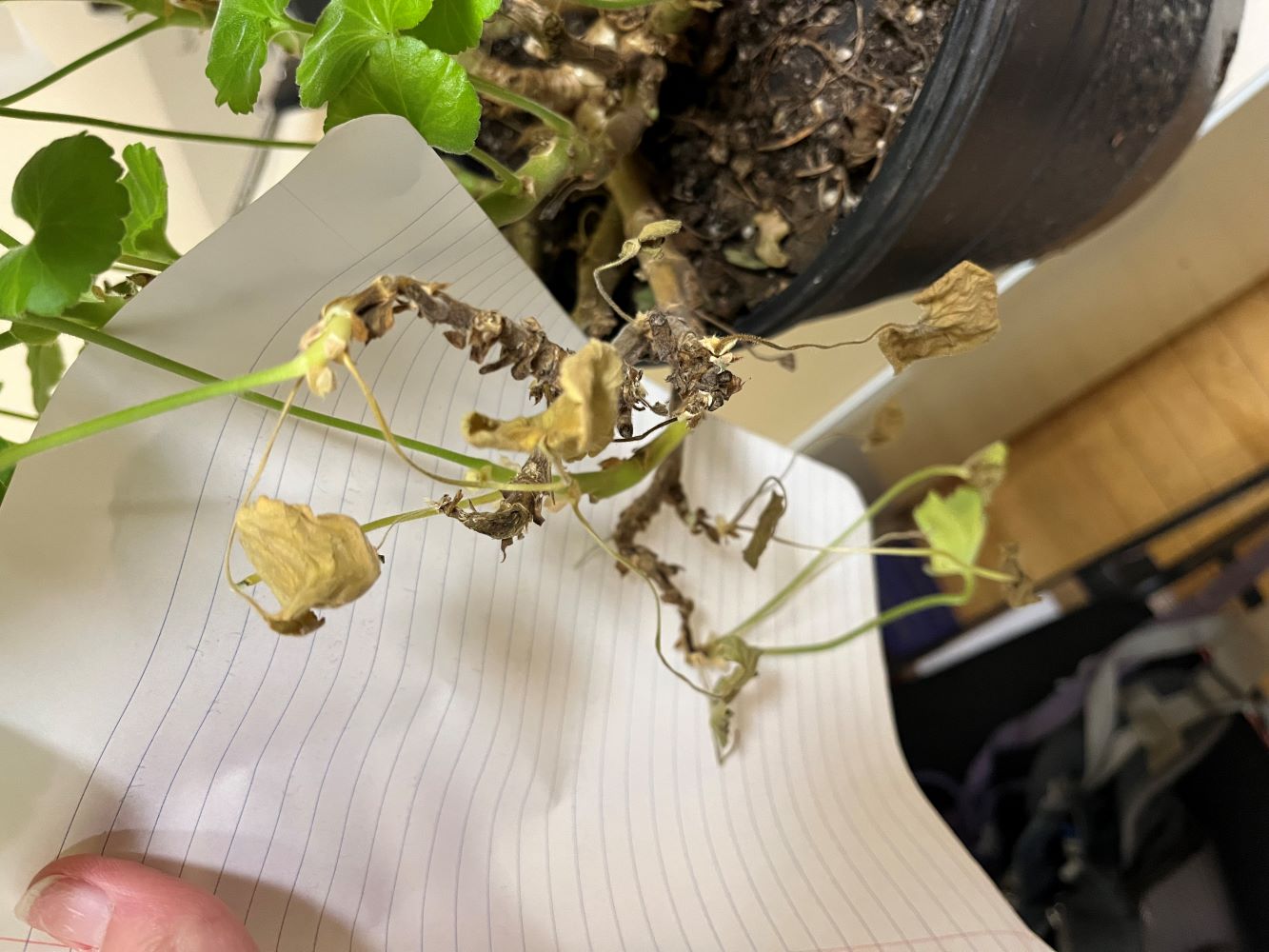
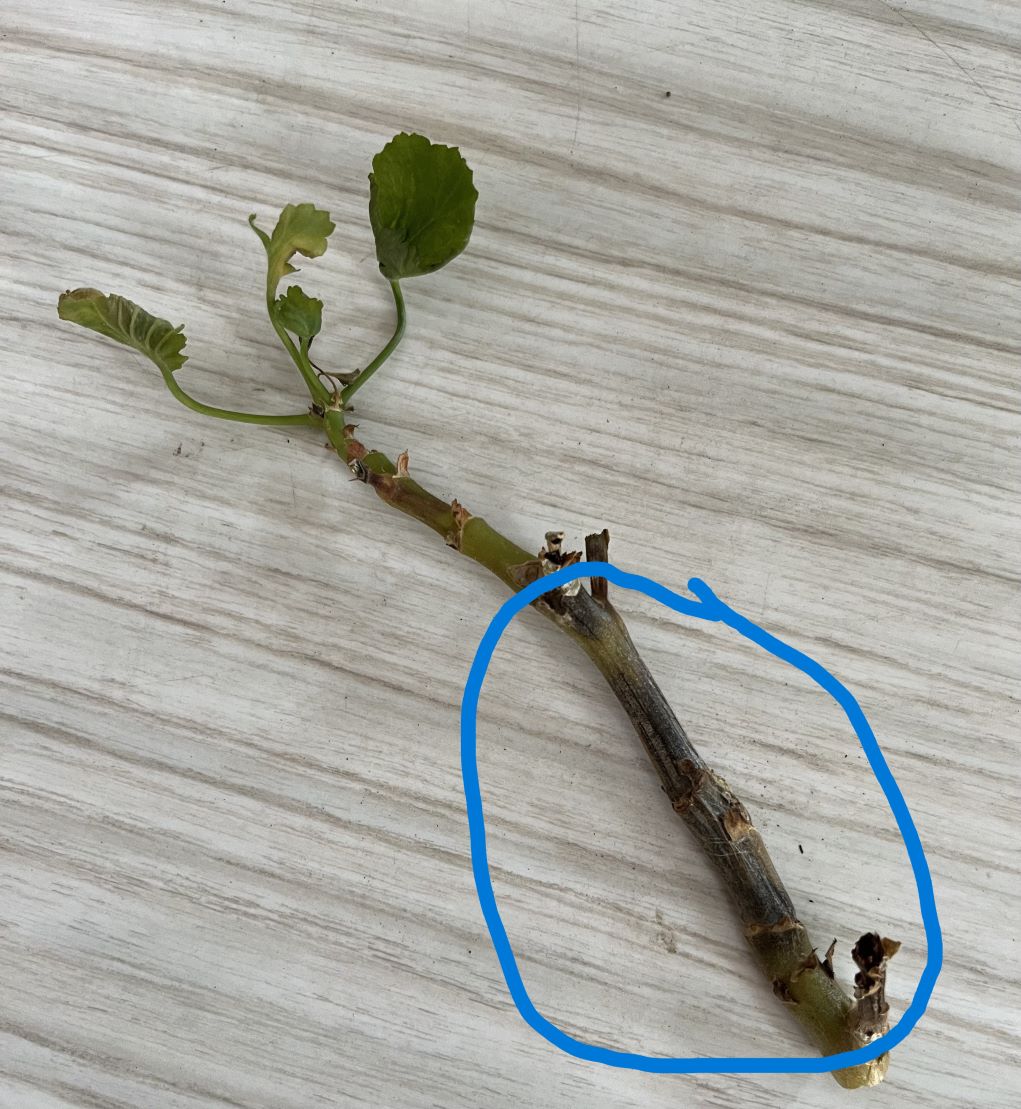
 The 1st photo shows a geranium with a black stem. I cut this one well below the black before it could reach the base of the plant. I did not get a good photo of the inside of this stem because. I did cut it open, and it oozed black. It smelled funky too!

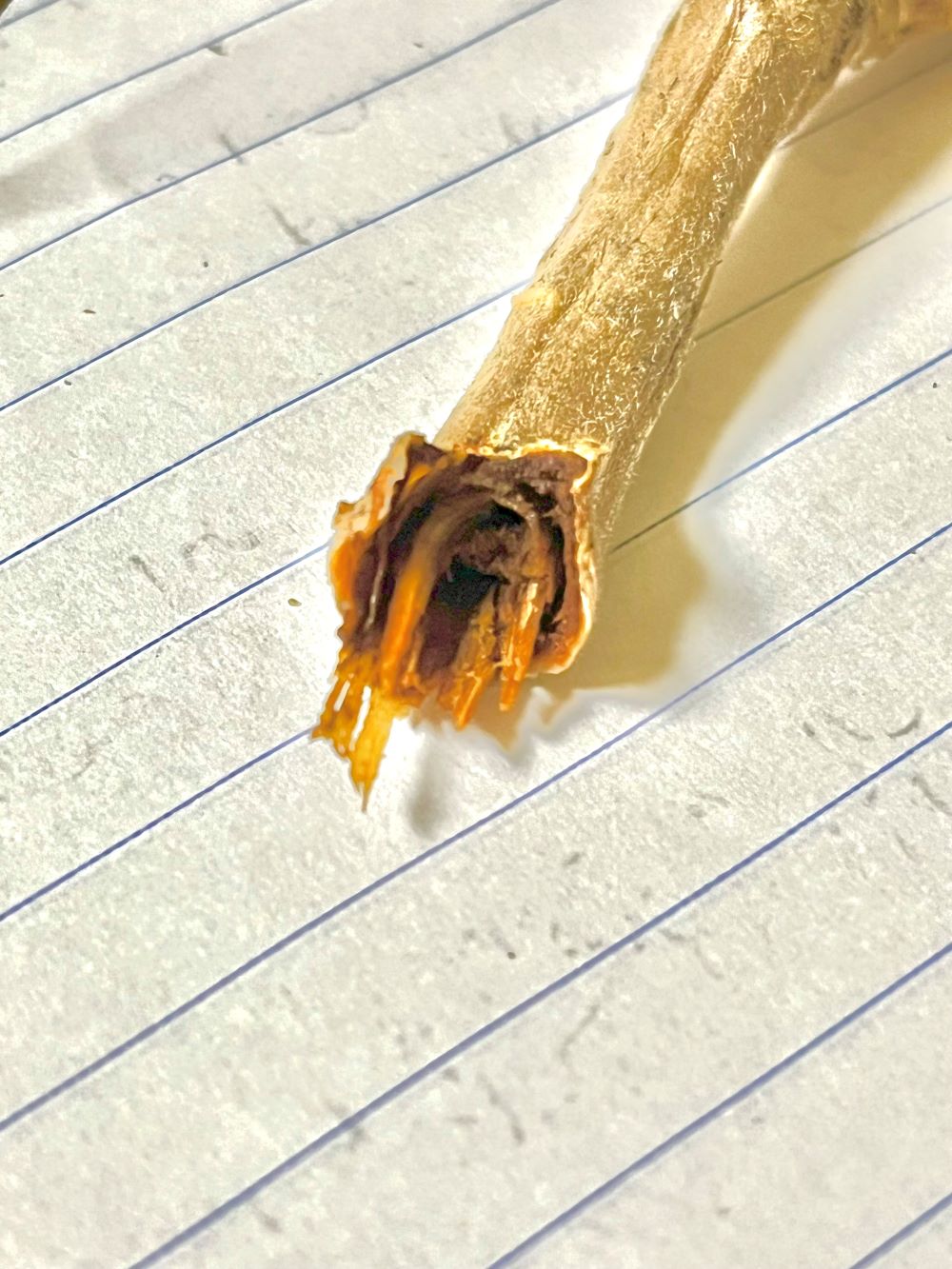
In the second photo, the main stem of this branch appears dead. There are still some leaves hanging on, but they are withering. The third photo shows the inside of one of the stems from the first photo. I titled these photos ‘Brown rot’ because when you look at the inside of the stems, they are brown and mushy.

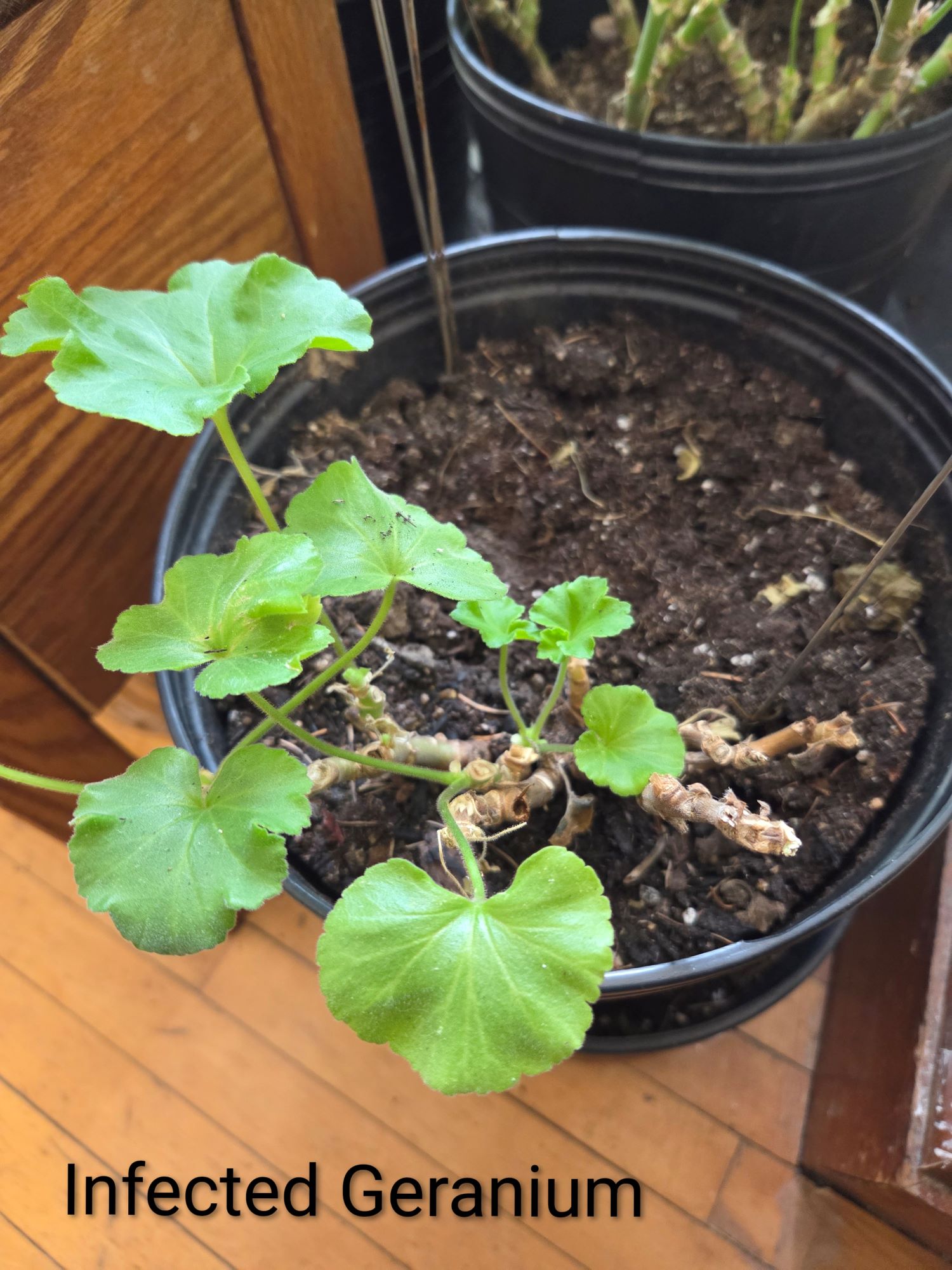
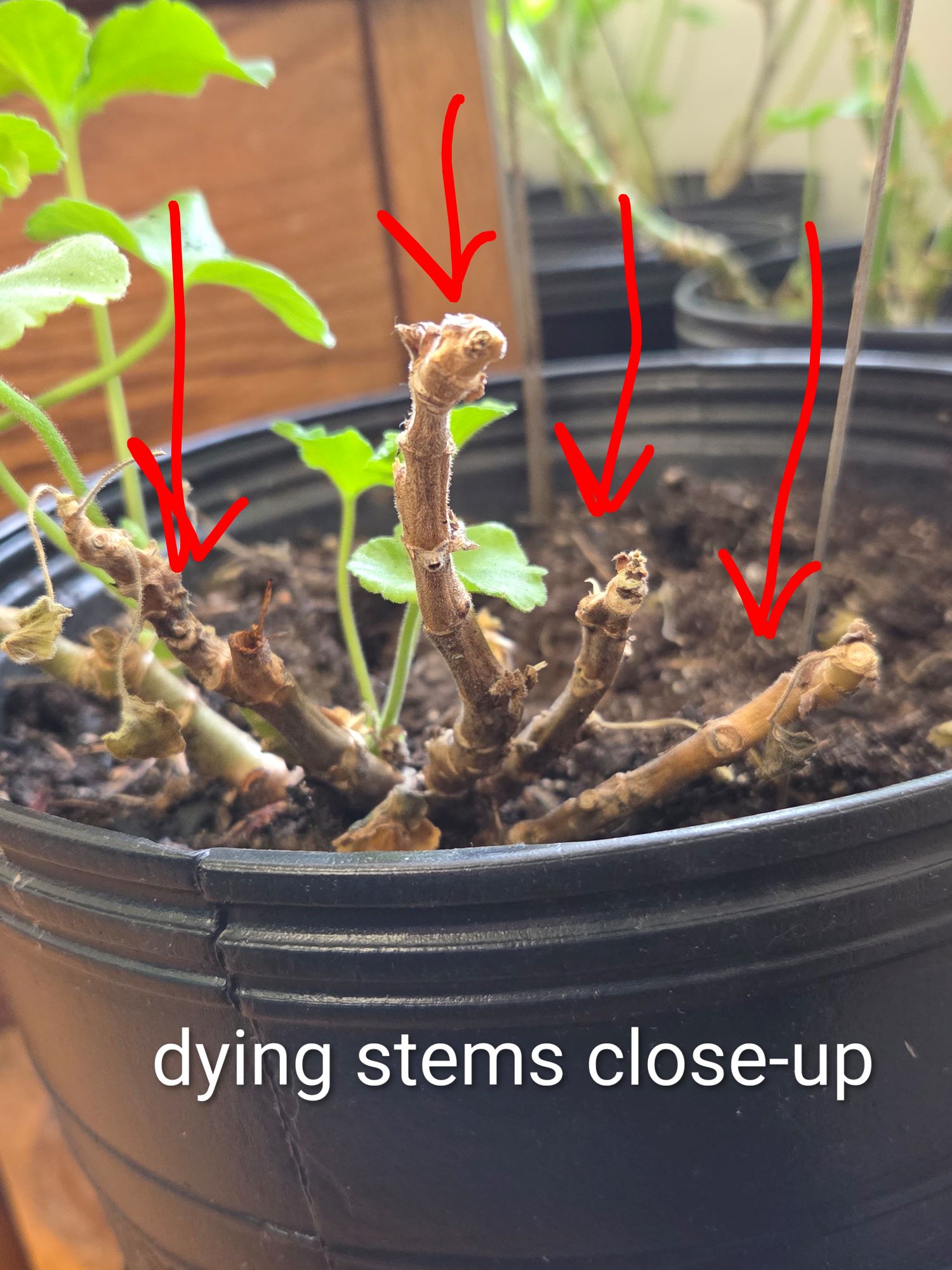
I also included a 4th and 5th photo of what the stem die back looks like (this was submitted for Week 2's homework, but I think it is relevant here). You can see the healthy plant in the background. 

You mentioned cutting well below the soft area of stem. Most of the stems have (at this point) moved all the way to the base of the plant. Would you still recommend pruning in this sensitive of an area if I am careful about disinfecting my tools between every cut?

Thank you again for your help with this! I am learning so much.

Adjunto BlackStemRot.jpg
Adjunto BrownStemRot1.jpg
Adjunto BrownStemRot2.jpg
Adjunto Dieback (2).jpg
Adjunto Dieback.jpg
En respuesta a Margery Daughtrey

Re: Week 4 Q & A

de Ryan O'Connor -
Evening Margery,
Your comment about the potential for bringing in Pythium or Rhizoctonia or Fusarium along with the roots and soil of a dug-up plant raised a question for me. I've recently been thinking of incorporating a component of Korean Natural Farming into my farm which involves collecting indigenous micro-organisms (IMOs) from the leaf-mold soil of the surrounding area. These microbes are then propagated and used to inoculate your soil, the thought being that you are introducing locally adapted microbes to help with organic matter decomposition and also introducing "good" microbes to out compete "bad" microbes. Similar to the idea of using something like Bacillus amyloliquefaciens or Streptomyces lydicus to combat botrytis or other soil-borne fungi. But I have had some reluctance using IMOs because even if I do introduce some good microbes I'm wondering if there is the chance of introducing pathogens like Pythium or Fusarium that were in the leaf-mold soil. I suppose this concept is similar to the idea of using a compost tea. Any thoughts/recommendations on the incorporation of IMOs?

Ryan
En respuesta a Ryan O'Connor

Re: Week 4 Q & A indigenous microbe addition

de Margery Daughtrey -

Ryan, it gets complicated when we try to add indigenous farmers' techniques to modern-day culture.  There is definitely a chance of moving bad organisms with the good.  I think the key thing is to use this practice only when doing outdoor growing in soil.  The most dangerous thing would be to add soil to a soilless mix, where there is not the balance that is in true soils' microorganisms.  Pathogens can overrun things. It also makes a difference how your crop plants were grown...did they come out of tissue culture, from which they'd have precious little microbiome because organisms would be seen as contamination....or are they liners pulled out of a field, in which cse the rhizomes/roots are already colonized by presumably beneficial microorganisms.  If a plant is native to Korea, and brought here as cuttings or seeds, it wouldn't be legal to import soil from the place of origin (since we have rules about bringing in rooted plants and soil to prevent pathogen entry).  If you are talking American natives it will depend just on how they are propagated. Non sterilized seed would have the home organisms already, as would a dug root system, so I don't think you'd need to add anything for the magic to happen.  Taking out the beneficial microorganism sand getting them into pure culture for each plant seems like too much work to ever be affordable. Anyway, that's some food for thought.  You wouldn't necessarily run into trouble moving soil around, but you might.  Cheers, Margery

En respuesta a Primera publicación

Re: Week 4 Q & A

de Amy Howansky -
I am not quite clear on:

When scouting in a house with hanging baskets, do you ever take down the baskets to scout in them? Or is that not possible because they are higher up in commercial greenhouses? I know we should be scouting under them for falling leaf debris and pests, but what is the actual possibility of a scout getting up there to scout?

Thank you.
Amy
En respuesta a Amy Howansky

Re: Week 4 Q & A

de Elise Schillo-Lobdell -
Hi Amy, that would be something the scout and the greenhouse owner would have to discuss as far as what you are both comfortable with (and what type of liability insurance you have). At some of my places I have gone up on very high rolling ladders, but at most greenhouses if the plants are out of reach I just look for signs of cast skins and honeydew on the plants below. If I suspect a plant up above is infested I ask a greenhouse worker to get it down for me to inspect. Sometimes I’ve written in the notes “I couldn’t find the source of the winged aphids on the cards - I suspect they are in the baskets overhead” - then it’s the grower’s responsibility to find them.
En respuesta a Primera publicación

Re: Week 4 Q & A

de Grace Harper -
The greenhouse I am scouting is big enough to put three cars in it. Will I get better results if I put one in a hanging basket, one on the tables, and one on the floor. We have plants all in it and I want to be sure and get the best stats.
En respuesta a Grace Harper

Re: Week 4 Q & A

de Elise Schillo-Lobdell -

Hi Grace, I think you should keep your current cards on the tables then when you are ready to change them you can put the old cards under the benches to trap out whatever is under there until they are just too disgusting and then dispose of them.  Cards in hanging  baskets usually don’t attract enough insects, if you do want to see what’s going on in your baskets it’s best to hang the card under the basket.