Week 1 Assignment

Week 1 Assignment

Week 1 Assignment

Número de respuestas: 64

Each week, we will have you complete activities and report back on what you found in the forum. 

This week, please provide responses to the questions below in the forum and complete the other activities as directed.

1. Introduce yourselves to each other and us.  We find that students are excellent resources for each other so connect!  Where are you located?  What do you do? Why are you taking this course?  What's your favorite greenhouse pest or disease?  Make up your own questions and answer them – and post the answers in the forum! Or ask us questions!

2. Please visit the greenhouse or plant space you plan to use for your scouting assignments throughout the course. Did you discuss pest management with the grower/owner? Post a map of the area you will be scouting with as much detail as you can – crops grown, where the benches are, etc.  It can be hand-drawn or computer generated or whatever you prefer.

To Post Your Reply: 

  1. Click on Reply and type your response in the text box. 
  2. To post an image click on the Advanced link once you have clicked on Reply and then click on the image icon (looks like mountains with a sun) in the tool bar at the top of the text box. 
  3. To post an attachment, click on the Advanced link and drag and drop your file in the attachment box. 
  4. Click on Post to forum to submit your reply.
En respuesta a Primera publicación

Re: Week 1 Assignment

por John Miller -

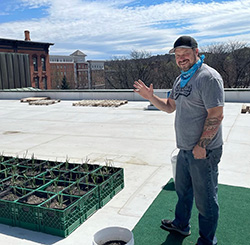
Hi all. I'm John Miller. I'm located in Rochester, NY, and I take care of the day-to-day operations of the Foodlink Community Farm. We have 2.5 acres of raised beds, a small orchard, and an apiary. We serve around 100 families that garden with us. I grow starter plants for our gardeners and for others. Previously, we partnered with a local school and grew in their greenhouse, and we will continue to do this. This past year, we built a 30x60 greenhouse. I'm taking this course so that I can do a good job of managing it. 

While I have a lifetime of experience, I am still learning new things every day. I grew up on a large dairy farm and managed 2500 acres. I've been a crop consultant for forage and veg crops, concentrated mostly on potatoes and cabbage. I was a part of the earliest IPM programs promoted by Cornell. 

My greenhouse scouting will be used to help manage the pests, and I will make the decision on the course of action. Thus far, we have the goal to utilize natural resources and biocontrols. While our garden space is not certified as organic, it is our goal to be pesticide-free. 

Anexo John Oct 2022 copy Small.jpeg
En respuesta a John Miller

Re: Week 1 Assignment

por John Miller -

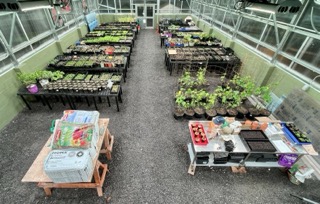
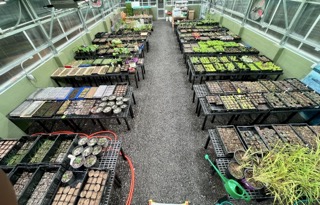
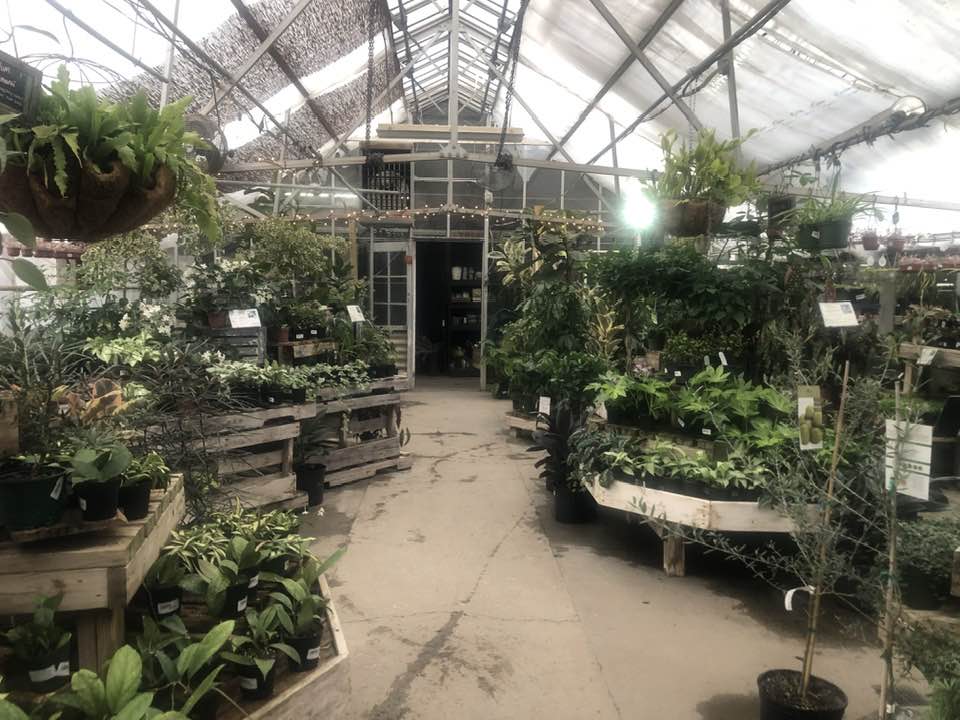
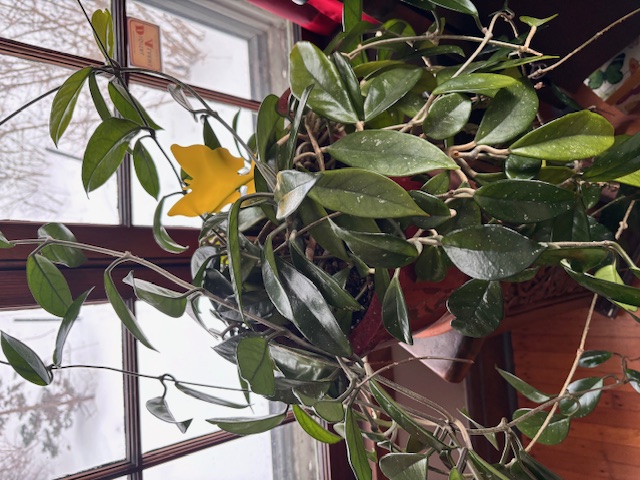
Here's some pics from inside the greenhouse, Jan 14 2026

Anexo IMG_3739 Small.jpeg
Anexo IMG_3741 Small.jpeg
En respuesta a Primera publicación

Re: Week 1 Assignment

por Lori Voll-Wallace -

Hello, My name is Lori Voll-Wallace. I am located in New Milford, PA, which is just below Binghamton, NY. I own a brand new 22 x 24 greenhouse and would like to learn more about greenhouse pests, improve scouting skills, and apply natural/organic methods of pest control. Current problems aphids and spider mites. I grow vegetables and flowers. Half my greenhouse has a concrete floor which is my work area and the other half I grow in raised beds on soil. Loving it!! It's been providing most of my vegetable needs this winter. Plan on doing a small side business of growing transplants. Doing lots of experiments to see what works best in my greenhouse and when. Keep temperature around 45 degrees. My photos are too large to share. Will have to make some sort of diagram.

Current crops: Tomatoes, peppers, eggplant (doing very poorly), celery, kohlrabi, leeks, garleek, saffron, lettuces, kale, cabbages, cauliflower, Brussels sprouts, collards, tatsoi, bok choi, carrots, Swiss chard, radishes, alyssum, nasturtium, and a volunteer sunflower. Just planted 2nd round of cucumbers after first batch was done. 

Recently retired. Love to grow all kinds of stuff and extra produce gets donated to food banks. I also help maintain and plant a large food bank garden. Growing all their transplants. 

Time to start lots of new seedlings for spring and summer!

Marcas:
En respuesta a Lori Voll-Wallace

Re: Week 1 Assignment

por Elise Schillo-Lobdell -
Hi Lori - if you don’t mind sharing - which plants do you have aphids on and which have spider mites, and have you tried any bio-controls yet? My guess would be the peppers and eggplants had the aphids 1st but with such a diverse and interesting mix of plants your answer might be something totally different. Also, are you growing the alyssum and nasturtiums as habitat for beneficial insects?
En respuesta a Primera publicación

Re: Week 1 Assignment

por Amy Howansky -
Hello everyone,

My name is Amy Howansky. I am from the Albany, New York, USA area, but I am currently in the Berkshire Mountains in western Massachusetts, USA. I am an educator, formerly with Cornell Cooperative Extension in Albany and Schenectady counties, and also formerly as a high school teacher in vocational and public schools. I have worked in many aspects of ornamental horticulture, including retail greenhouse and nursery sales, plant production, landscape design and maintenance, and floral design. I am self-employed as a landscape designer/builder.

Just a couple of days ago, I clicked SUBMIT on my application for the Masters of Professional Studies in Integrative Plant Sciences program at Cornell. If I am fortunate to get in, I will be concentrating on Public Garden Leadership so that I can advance my career by becoming a department leader or director of a public garden space, including facilities that have greenhouses, arboretum spaces, museums, zoos, and alternative “green” schools.

I am taking this class to:
Refresh my knowledge of greenhouse pests/diseases/issues.
Learn how greenhouse facility mechanisms and practices contribute to the plant problems.
Receive credits for Certified Nursery & Landscape Professional continuing certification.
Add to marketable knowledge when applying for new management positions during my job search.
Meet people with a shared interest in plants. (More friends to send pictures to when we buy cool plants, right?)

My favorite greenhouse pest is a chipmunk. I just can’t be mad at them, they are fun to watch, except when they are eating just one tiny bite out of every one of my tomatoes. I also like aphids because of their colorful bodies and the way that they congregate and completely cover a stem.

I look forward to participating in this course and working with all of you. Best wishes to everyone!

Amy Howansky
En respuesta a Primera publicación

Re: Week 1 Assignment

por Brian Eckert -
Hello all! My name is Brian, I live and work in NW Vermont in a town called Colchester, pretty close to the University of Vermont. I am a longtime gardener and beekeeper, and last March I started training to be the new head grower and greenhouse manager at a local farm (Sam Mazza's) where the former grower was retiring after 38 years! Greenhouse growing was very new to me, so I've been learning a lot. This course looked like a great addition to that! Favorite greenhouse pest? I'd say the one I'm most acquainted with are mealybugs. Bleh. I've had a hard time controlling them in our houseplant and herb greenhouse.

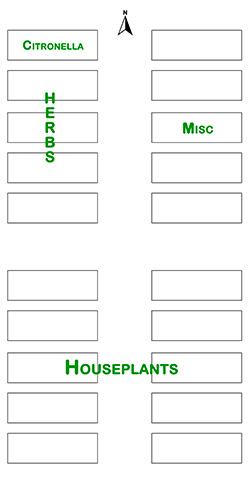
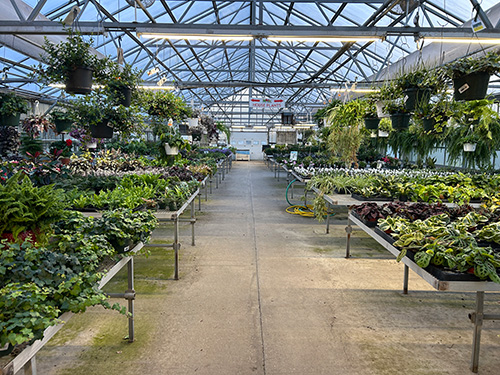
The main place I plan to scout is our houseplant and herb greenhouse. There are 10 benches of houseplants and about 5 of herbs, plus another 5 of miscellaneous things throughout the year. Attached is a layout and a pic.
Anexo A1-layout3.jpg
Anexo A1-pic.jpg
Anexo brian-roof.jpg
En respuesta a Brian Eckert

Re: Week 1 Assignment

por Amy Howansky -
Hi Brian,
Are you near Jasper HIll Cheese-making Farm? My brother used to work there.
Did your compnay's owner find that customers at your company bought more succulents than other houseplants during the Covid shut-down? I saw many people reaching for succulents before any other houseplant during that time.
Nice to meet you.
Amy
En respuesta a Brian Eckert

Re: Week 1 Assignment

por Elise Schillo-Lobdell -
Are you growing plants on the roof of a building?? Also, is that a retail greenhouse or a production greenhouse or both - actually - I’d like everyone to answer that about the greenhouses you’ll be scouting. Just trying to get a sense of do you have to deal with the public, or school groups, or students touching your sticky cards or moving them or moving plants that you know are infested to a (formerly) clean area?
En respuesta a Primera publicación

Re: Week 1 Assignment

por Amy Howansky -

Hi,

I posted earlier to introduce myself, but I had not yet found a greenhouse to scout. I called many, and some were happy to have me work on this project there, but they were not yet growing anything, and wouldn’t be until our class is almost over. One owner declined. A few did not call me back. Since I still did not have a location, I attended a greenhouse growers workshop day (which gives them pesticide recertification credits), and I made an announcement to ask if anyone would allow me to scout at their location. Two growers were very helpful, and are allowing me to use their place for any projects we do in the future.

I also drove to another greenhouse where I used to work, and the manager is double-checking with the owner for permission. So… I am technically waiting for final permission, but I took pictures and drew this map as a starter. There are more tables than this, but they are all kind of linked together to create the outside edge, and I have indicated the rough locations and general outline.

I have talked with the greenhouse and store managers, and was introduced to some of the other employees. They showed me some mealy bug that they found on a shipment of succulents that they had just received. They are getting return credit for the infested plants. The greenhouse is for houseplants only, and includes palms, succulents, and other tropicals. It is linked to a second retail greenhouse space much the same as the one I drew.

I do not want to release the name of the company until I have final permission from the owner.
Amy Howansky
En respuesta a Amy Howansky

Re: Week 1 Assignment

por Amy Howansky -
UPDATE: Today I received final permission to scout at the greenhouse pictured in my other reply. I will visit it Sunday morning to measure, list plant types, and set up sticky cards... I want to beat the 14-20" of snow heading this way.
En respuesta a Amy Howansky

Re: Week 1 Assignment

por Elise Schillo-Lobdell -
Just curious Amy - do you know what they did with the mealybug infested plants - did they throw them out or do they plan to battle the mealies? We need to update our list of scouting tools to include the plastic garbage bag - it really can be the most effective pest control method when used early and aggressively. Elise
En respuesta a Elise Schillo-Lobdell

Re: Week 1 Assignment

por Amy Howansky -
Hi Elise,
They said they did this:
1. Quarantined the plants with mealy bug.
2. Inspected the other plants in the same lot.
3. Took pictures and got a credit from the supplier for the infested plants.
4. Disposed of the plants.

When I was at the greenhouse today, I did not see the original plants where they were previously, so I am assuming the employees did as they claimed.
They also have a recovery area for plants with questionable growth, and there are only a few venus fly traps in there.

Amy
En respuesta a Amy Howansky

Re: Week 1 Assignment

por Elise Schillo-Lobdell -

That is very good news - they handled the problem in the best way possible and they were willing to share that information with you which  means you found a great place to practice your scouting.  When you are scouting a business that is not your own a major part of the job is communication and a huge factor in that is trust.  You have to trust that they are being honest with you (VERY important when discussing pesticide use) and they have to trust your discretion about their business practices.

En respuesta a Amy Howansky

Re: Week 1 Assignment

por John Sanderson -
Amy, when we finally talk about scouting for mealybugs in a few weeks, you'll learn how easy it is for a mealybug infestation to spread, UNDETECTED, from one or a couple infested plants to lots of the plants around the infested plant(s). The problem is the very tiny crawlers that go unnoticed due to their tiny size but are quite capable of crawling. Plus, they don't need to stay on a plant but can hang out under a pot or on the bench.
A colleague of mine in Florida who deals with pests in foliage plant production often recommends to simply discard a mealybug-infested plant (and maybe a few nearby plants as well) rather than spend the time and money trying to stop the infestation from spreading and battling these pests.
En respuesta a Primera publicación

Re: Week 1 Assignment

por Shawn Jenkins -
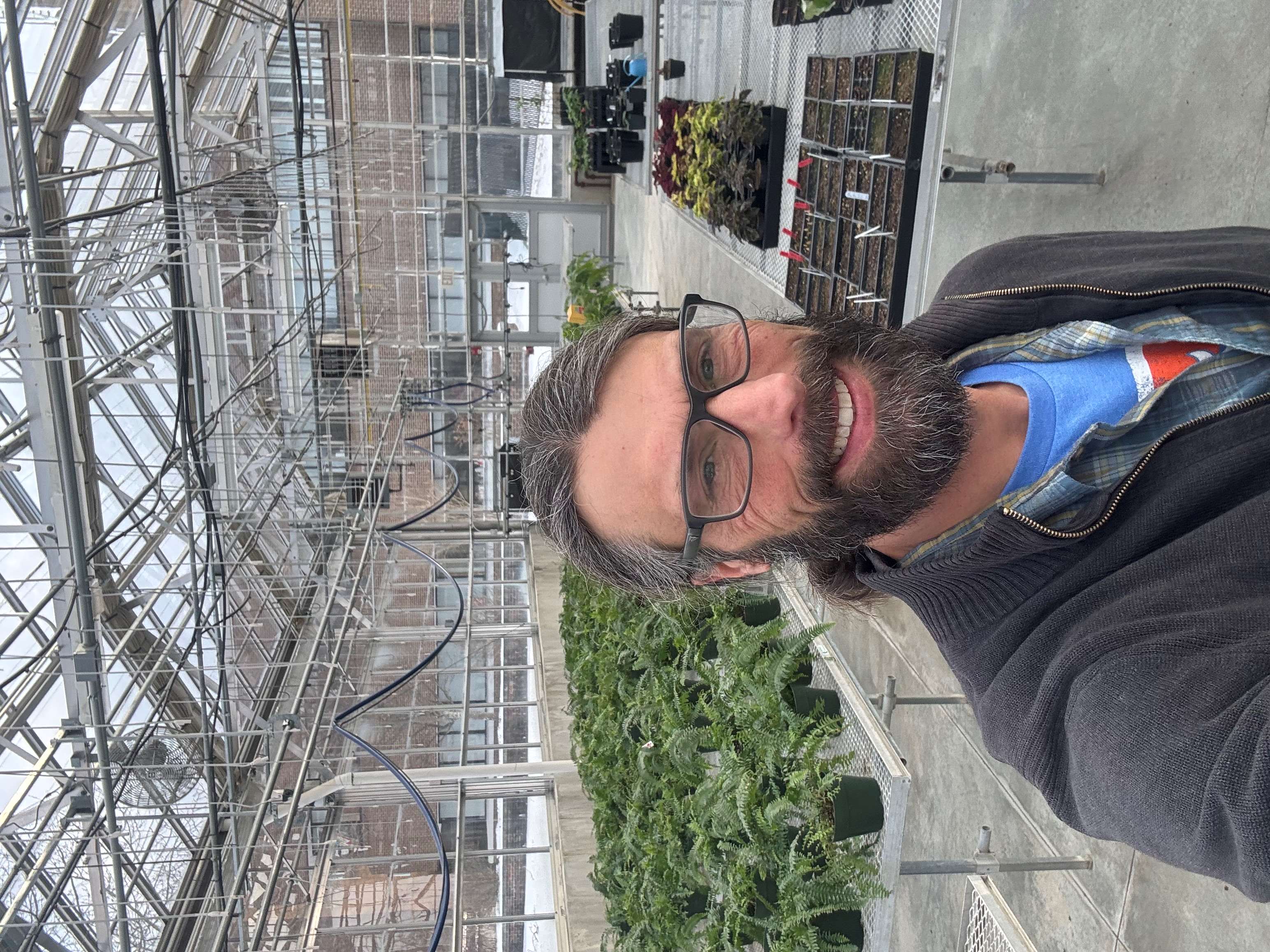
Shawn in GreenhouseHi, I'm Shawn Jenkins and I work as an Instructional Support Assistance (ISA) in the Horticulture department at Suny Morrisville. I manage the greenhouses here on campus, am the lead pesticide applicator in charge of scouting, prevention and treatment of our 3 greenhouses. I also teach our pesticide course through the DEC to our students in preperation for the NYS peticide license exam. I am NYS certified 24 greenhouse applicator for 4 years and am taking this course to improve my scouting skills, gain more recent relevant knowledge, gain recertification credit, and collaborate with others because I've learned in my short applicator career shared knowledge and collaboration is criticle for success in this field.
Aside from my job I am a 50 year old father of two (11 yr old son and 14 yr old daughter), I live in Cazenovia, NY right next to Chittenango falls S.P., which I previosly managed before my career shift to Morrisville. I am a passionate environmentalist, outdoorsman and nature lover with a small homestead property. If/when I have free time you'll find me hiking with my dog /family, snowboarding or throwing my fly on the river. I am always trying to save the planet, become more sustainable so the use of peticides is my least favorite thing to do and I try through many preventative avenues to minimize the need to.
I dont have a favorite pest, but my nemesis in the greenhouse is mealy bug as they are very destructive and super hard to eradicate once established.
En respuesta a Shawn Jenkins

Re: Week 1 Assignment

por Amy Howansky -
Hi Shawn,
Do your students sell the plants to the public as part of their growing experience, or are the ferns pictured here used for research?
Nice to meet you.
Amy
En respuesta a Primera publicación

Re: Week 1 Assignment

por Tiffany Donaldson -
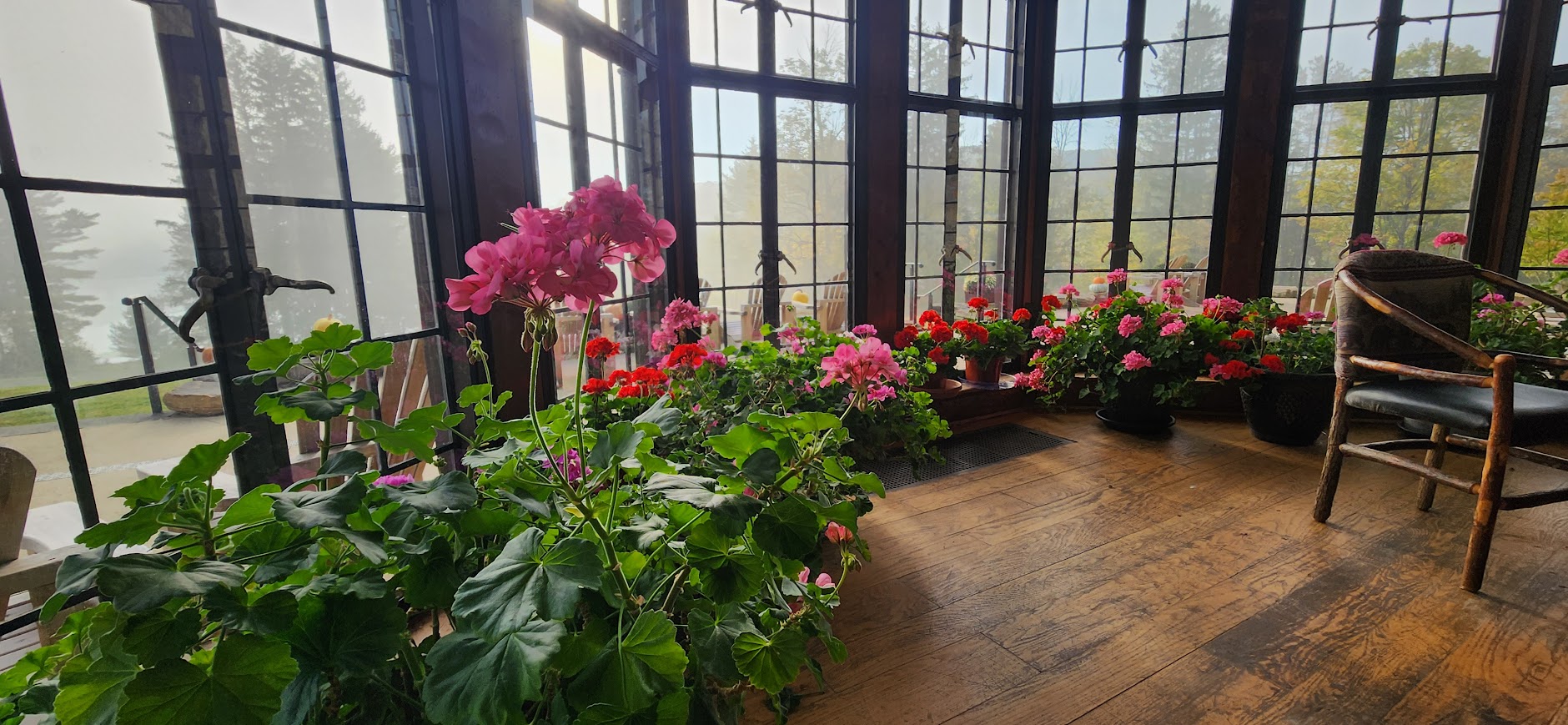
Hello! I am Tiffany D and I am a horticulturist at Allegany State Park. My main job is planning out planting plans in the winter, planting from seed in the spring, and taking care of the Flowers in the summer and fall. I am taking this couse because we are currently installing a greenhouse. I hope this course will help me learn how to manage plants on this scale! My (least?) favorite pest are aphids. It seems impossible to totally eradicate them! Where are you located? What do you do? Why are you taking this course? Here are the geraniums I have been taking care of for the past few years at the park.Geraniums!
En respuesta a Tiffany Donaldson

Re: Week 1 Assignment

por Elise Schillo-Lobdell -
Gorgeous picture! Will the greenhouse be open to the public or strictly a production house for you to start plants that will be planted in the park? Are you responsible for the plant pest control both inside and outside? Elise
En respuesta a Elise Schillo-Lobdell

Re: Week 1 Assignment

por Tiffany Donaldson -
As we start up it will strictly be for production use. However, once things are a little more established, I could see the park hosting educational workshops here.

We will be responsible for the pest control both inside and out, which is why this course is so essential for me! The scale I am used is a popup greenhouse that fits in my office, and even then, I've had pest issues. Working at this much larger scale will be a huge challenge for me, but I am excited for the opportunity.
En respuesta a Tiffany Donaldson

Re: Week 1 Assignment

por Elizabeth Lamb -
Tiffany,

Are you using the geraniums to scout? The do look terrific!
En respuesta a Elizabeth Lamb

Re: Week 1 Assignment

por Tiffany Donaldson -
I am working on contacting a greenhouse in my area, but if they are unable to accommodate me, I figured the geraniums would do the trick. I also have a personal collection of Coleus plants at my house that I could also scout in.
En respuesta a Tiffany Donaldson

Re: Week 1 Assignment

por Tiffany Donaldson -

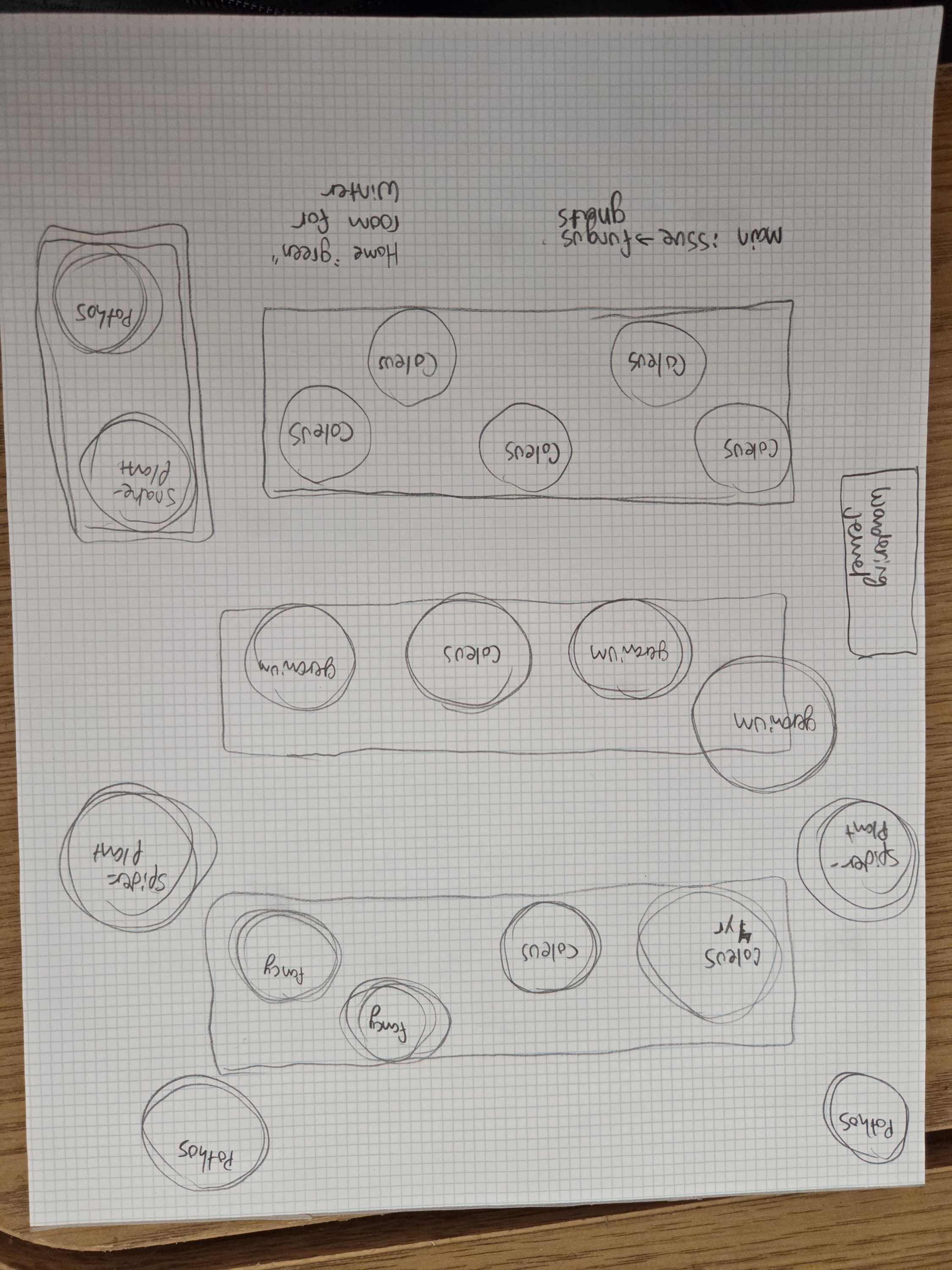
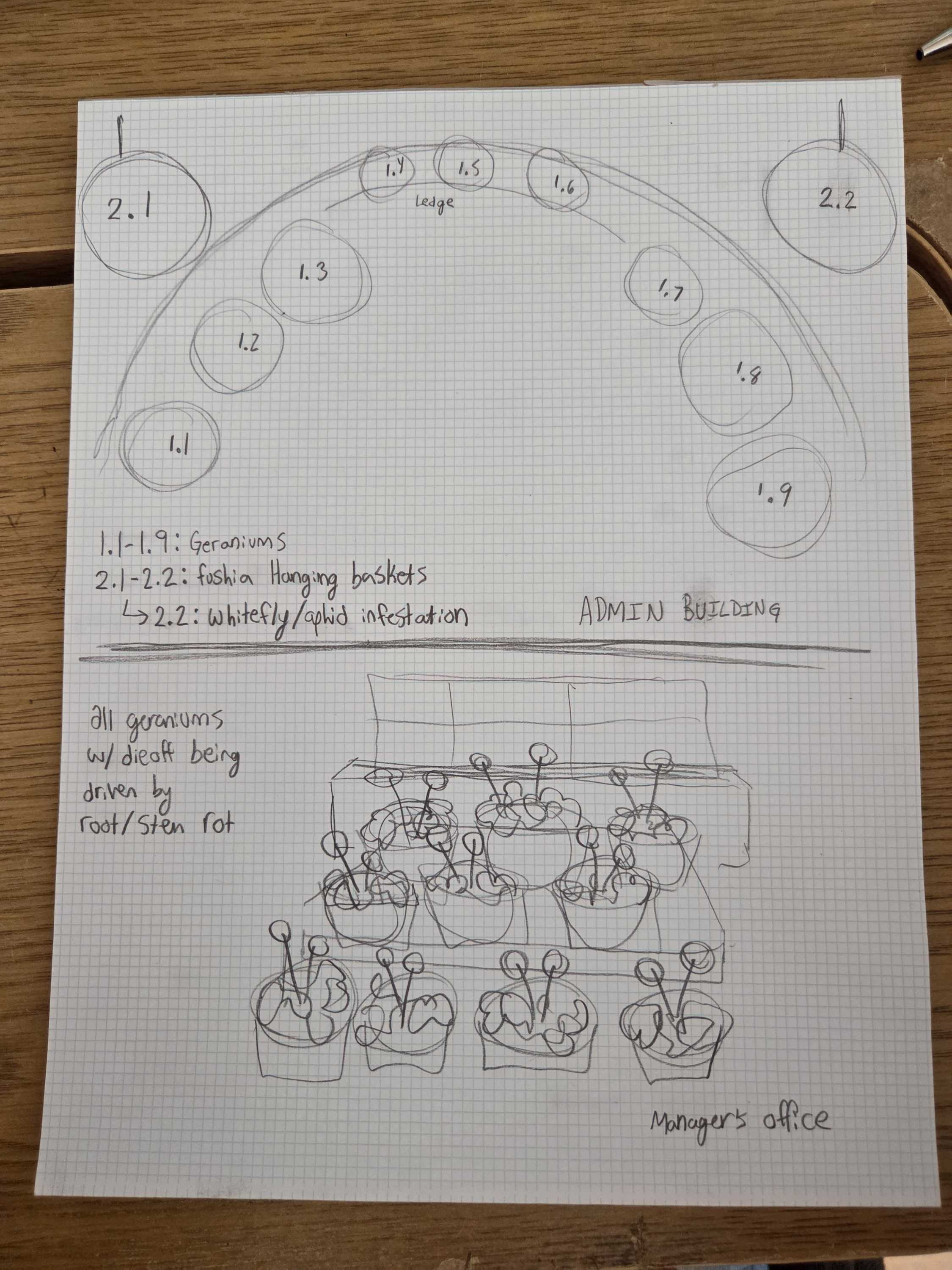
Not as large as some of the other scouting locations that I see on here, but until I get permission to work out of my local greenhouse I will be scouting between work and home. All of these plants are only indoors for the winter and then they get moved outside in the spring. 

 The one image shows locations of my most mature geraniums and some fushias. The only issues I have here is that one of the fushias has an infestation of whiteflies and aphids. I'm trying my best to keep them from spreading to the other fushia (ADMIN)

The second image shows my work area that is currently in my manager's office. The main issue is have here is stem and root rot. 

The last image is my dining room converted into a temporary spot to overwinter my coleus. The main issue I have here is fungus gnats. 

Anexo 4423.jpg
Anexo 4424.jpg
En respuesta a Tiffany Donaldson

Re: Week 1 Assignment

por Elise Schillo-Lobdell -
Tiffany, have you tried cutting back the infested fuchsia? Usually the aphids are on the growing tips of fuchsias (especially when they’re foxglove aphids) - so even taking off a few inches will greatly reduce their numbers. As for the whiteflies - have you looked at the backs of the leaves and tried to remove the leaves that have the immatures? Use your various magnification tools and search for the eggs & crawlers. If you can get some good photos of the pupal cases we can tell you what type of whiteflies you have and then you can order the appropriate bio-control. OR you could sacrifice this one plant to spare the others and save yourself a lot of work. I’m not heartless, I’ve been known to keep infested plants around, but there is a time & a place and that beautiful conservatory is not the place. Both aphids and whitefly produce a lot of honeydew - and that leads to sooty mold if the conditions are right - so be watching for those issues if you do keep the plant.
En respuesta a Elise Schillo-Lobdell

Re: Week 1 Assignment

por Elizabeth Lamb -

Posting pictures for Elise - she can comment


En respuesta a Elizabeth Lamb

Re: Week 1 Assignment

por Elise Schillo-Lobdell -
Thank you for posting those Betsy! Tiffany, you can get these little sticky cards on eBay and Amazon, they work well to reduce the fungus gnat populations in houseplants, not practical for greenhouse use but fine for use at home.
En respuesta a Elise Schillo-Lobdell

Re: Week 1 Assignment

por Tiffany Donaldson -
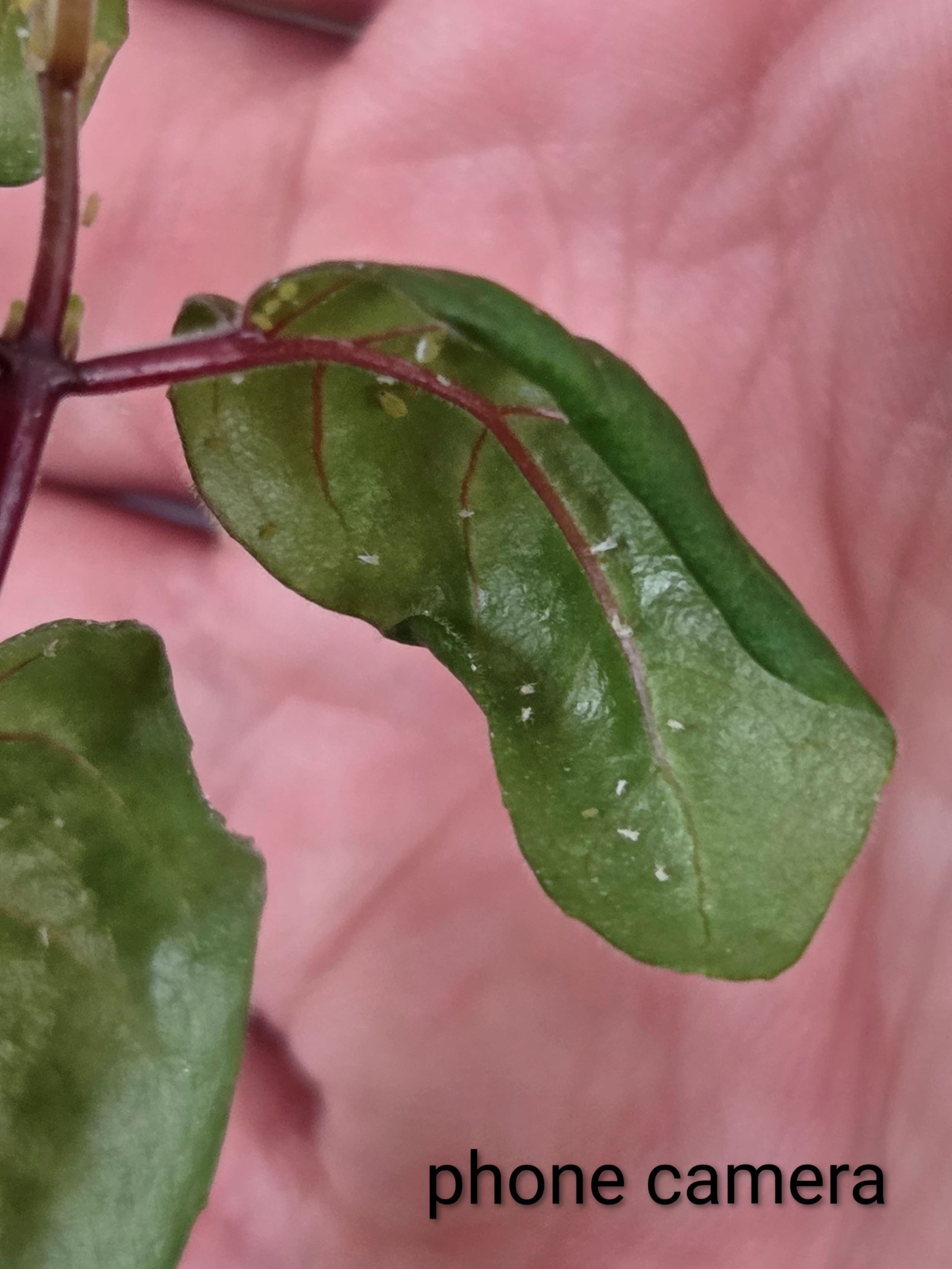
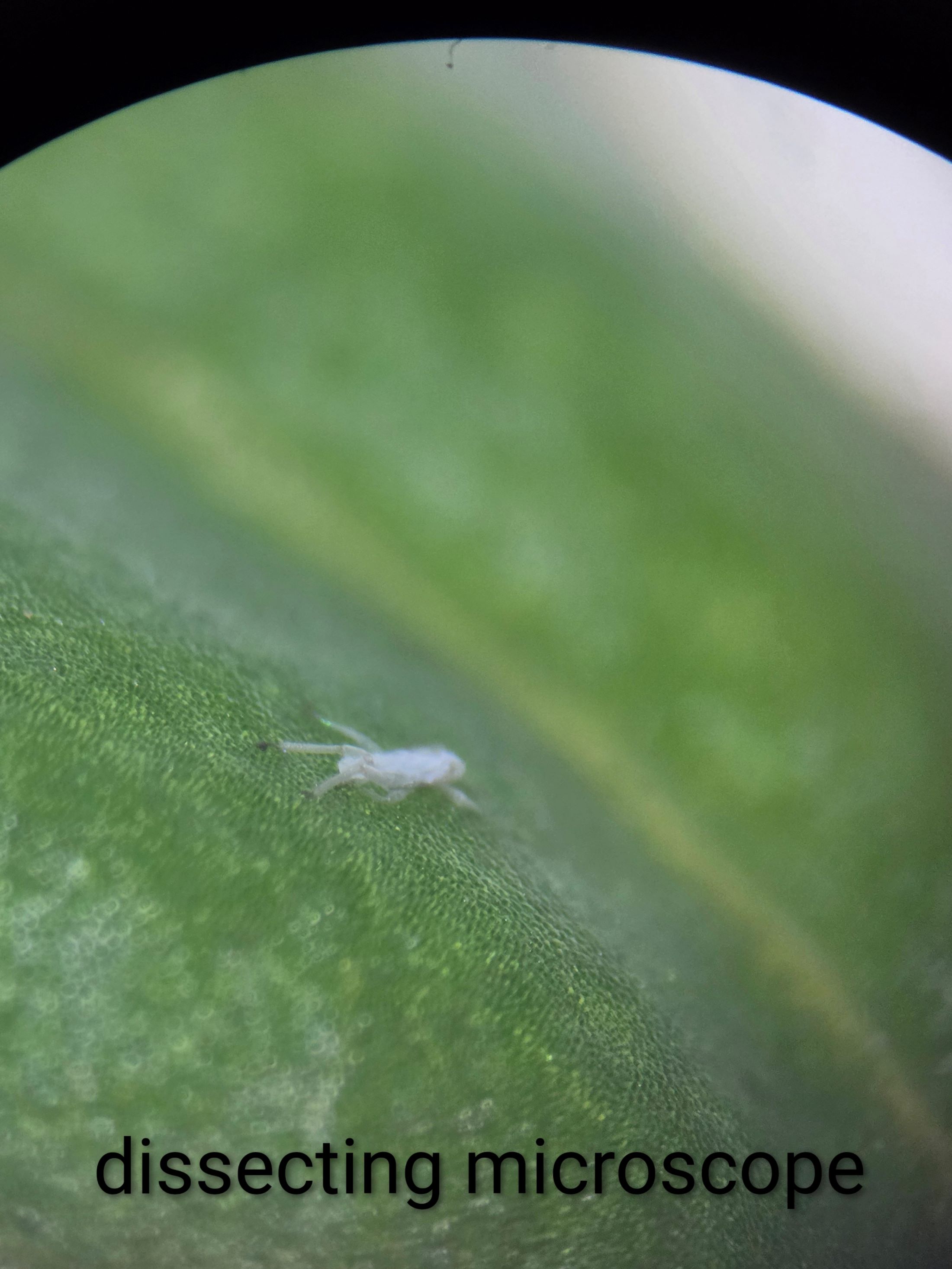
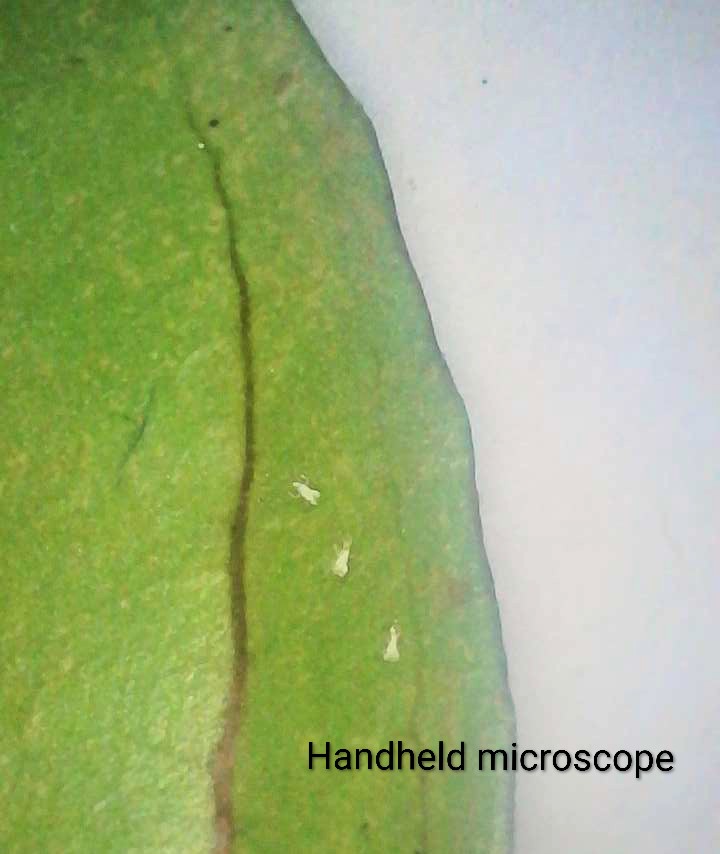
In the past, I have cut back the most infested stems and leaves. However, this week it seems worse than ever, so I did remove it into a quarantine area in my office so the problem would not spread to my other fuchsia. The aphids are a new issue. I haven't noticed them before.
I added a yellow sticky card, but I haven't noticed any captures yet. This could be because I gave them another bath with soapy water. The pests are so small it is difficult to get a good eye on them, even with magnification. I am wondering if they could possibly be thrips, and not whiteflies.

I added some photos, which was part of the week 2 homework, but I thought it would make sense to keep this in the same thread. 

Thank you for your guidance with this. These pests have been an uphill battle for me.
Anexo aphid.jpg
Anexo Fuschia (2).jpg
Anexo Fuschia.jpg
Anexo Fuschia4.jpg
En respuesta a Tiffany Donaldson

Re: Week 1 Assignment

por Elise Schillo-Lobdell -
The little white things are the cast skins from the aphids from when they molt from one stage to the next. Those can get on sticky cards sometimes and people can mistake them for whiteflies - but the cast skins are always totally white with maybe just a touch of black at the joints or feet. Whiteflies will always have just a bit of an orange body showing on the cards - and as they melt into the cards sometimes all you can see is the orange body - which can be easy to mistake for a thrips.
En respuesta a Tiffany Donaldson

Re: Week 1 Assignment

por Elise Schillo-Lobdell -
The reason you have not caught any aphids on the cards yet is because they are not overcrowded enough to need to produce winged males. All of yours are females just happily producing their daughters and granddaughters without the assistance of any males. John & Cheryl will be talking about aphids tonight.
En respuesta a Tiffany Donaldson

Re: Week 1 Assignment

por John Sanderson -
Good information, Elise, as always! By the way, the aphids in the photos are not among the four most common aphid species in greenhouse production. These look pretty similar to melon aphid, but notice their cornicles - they are not black like melon aphid cornicles. I suspect that there are the less common leaf-curling plum aphid.
En respuesta a John Sanderson

Re: Week 1 Assignment

por Tiffany Donaldson -
Thank you for this information! I was trying to use the notes from class to identify them, and I suspected maybe I had just captured a juvenile, so the characteristics were not present. I could not go back to check because I had used Elise's advice and cut them back before our aphid talk. I haven't seen any since, but I am still scouting for them regularly. It only takes 1 for the infestation to come back!
En respuesta a Tiffany Donaldson

Re: Week 1 Assignment

por John Sanderson -
You're correct, Tiffany. Aphids are parthenogenic, meaning that they don't need to mate to reproduce. Plus, under greenhouse conditions, aphids are particularly weird in that not only do they not need to mate, but they give birth to live young - there is no egg stage. And even weirder, the newly-born nymphs are always female and PREGNANT at birth! So under greenhouse conditions, aphids are all females and genetic clones of their mothers. So you're correct - it would only take a single aphid to start an infestation.
By the way, under natural outdoor conditions, usually in the fall, males are produced, mating does occur, and eggs are laid that overwinter on their primary host plant. So there is genetic recombination. But this does not happen under greenhouse conditions.
En respuesta a Tiffany Donaldson

Re: Week 1 Assignment

por Elizabeth Lamb -
And doing my IPM thing - be very careful with soapy water. You can burn plants badly with it. Use an insecticidal soap (and even then check the label to see if any phytotoxicity is noted for the plant you are interested in) and follow the directions.
En respuesta a Primera publicación

Re: Week 1 Assignment

por Ana Gourlay -
Hi. I'm Ana Gourlay. I'm a Master Gardener with a background in Permaculture and Herbal studies. I manage the houseplant division of Black Forest Nursery, a 4.5 acre retail nursery in central NH. We source houseplants, annuals, perennials, shrubs and trees from a variety of growers and locales making it important for us to scout for problems and pests. I teach classes at the nursery and answer a great many questions from customers asking, "What's wrong with my plant?" (usually accompanied by a photo on their phone). I look forward to increasing my knowledge of pests and diseases and improving my diagnostic skills.
Anexo BFN Houseplants.jpg
En respuesta a Primera publicación

Re: Week 1 Assignment

por Joseph Moreno -
Hello! I'm Joe, and I live in Durham North Carolina. I work for Plantworks, a nursery that grows ornamental herbaceous perennials, annuals, and ground covers. I just recently started a new role there where I am responsible for scouting and maintaining a scouting record, as well as conducting trials for new plant introductions, plant growth regulators, and more. Scouting on this scale in very new for me which is why I decided to take this course and hopefully become better at scouting successfully in greenhouses. I'm not sure that I have a favorite greenhouse pest or disease if i'm being honest but I will go with powdery mildew because it is so distinguishable from other diseases.

The greenhouse that I chose to use for the assignments in this course are a group of 7 conjoined heated houses where contract grows for American Meadows are currently being finished. Yes, I work closely with the head grower of this area and anytime I find anything while scouting I work with her to come up with a management plan. All of the crops are grown directly on the ground and are arranged in rows with enough space to walk through when watering/scouting. 
En respuesta a Primera publicación

Re: Week 1 Assignment

por Ryan O'Connor -
Hi everyone. I'm Ryan O'Connor and I am located in Traverse City, Michigan. I am the production manager and IPM lead at an organic vegetable and cut flower farm called Lakeview Hill Farm. Although I have been farming for a while now, I am only just starting IPM. So I am taking this course to better my skills in all things IPM. If I had to choose a favorite pest or disease it would be aphids and powdery mildew, only because they are easy to identify!

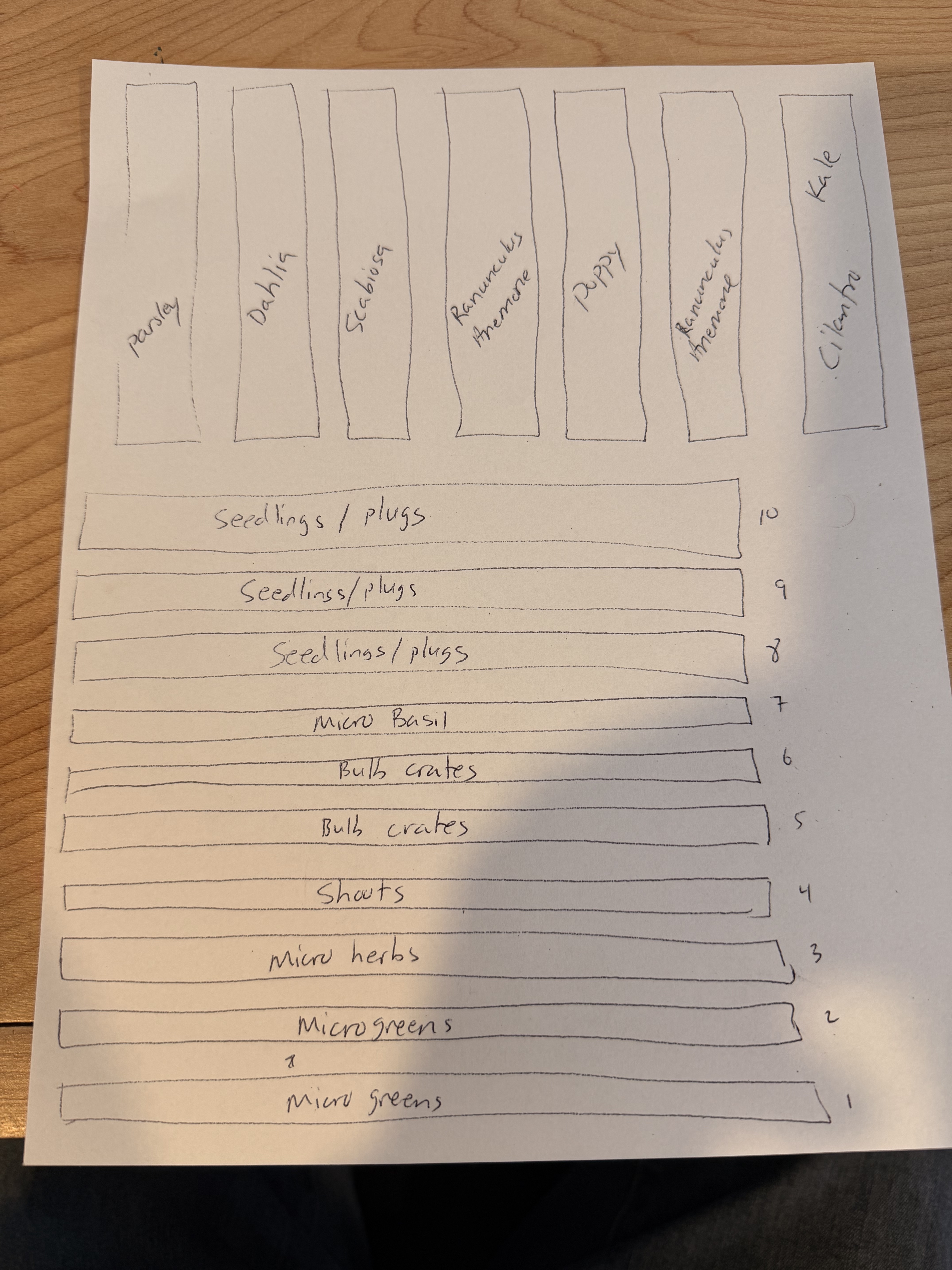
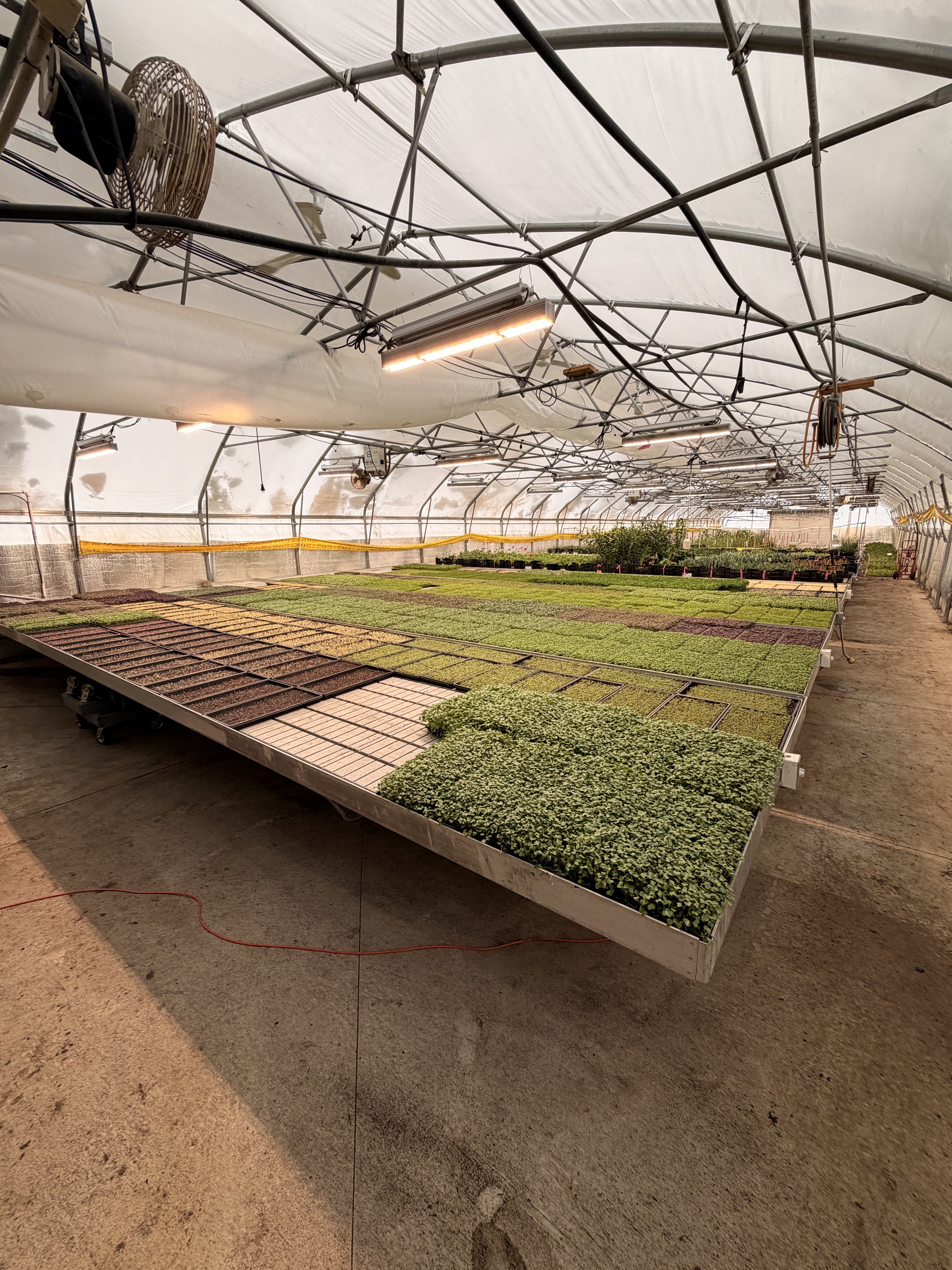
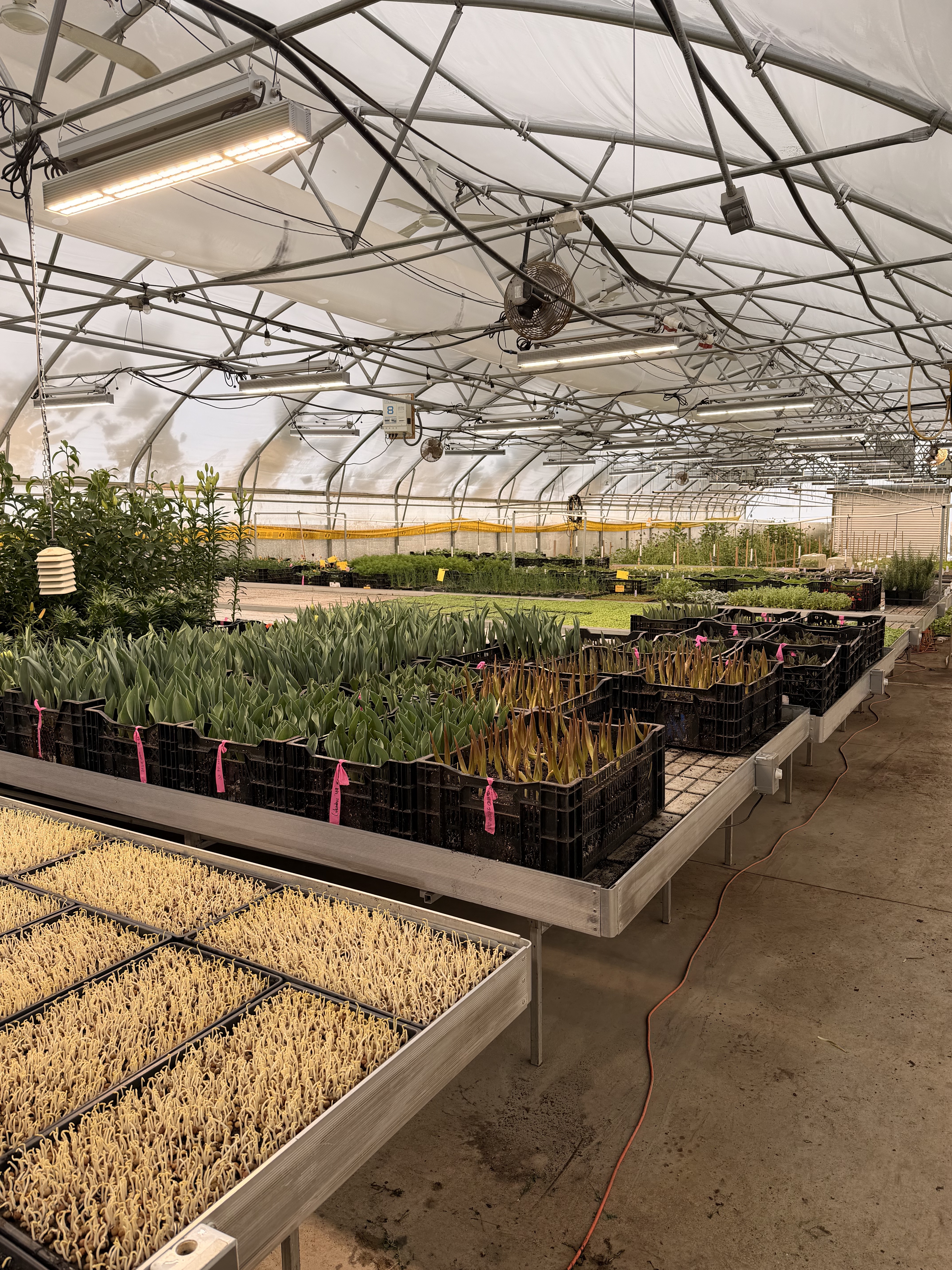
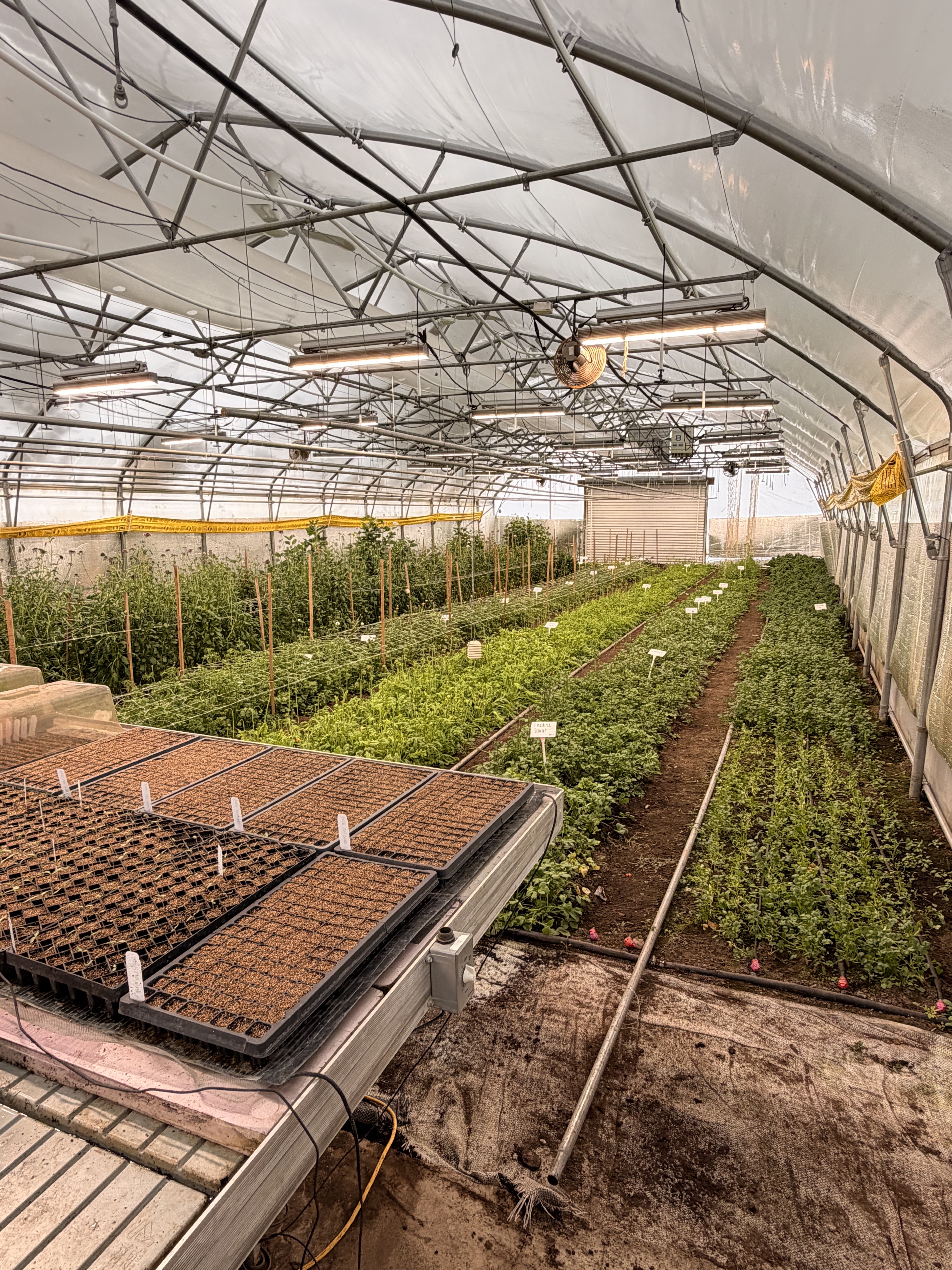
For my scouting assignments, I will be using one of our heated greenhouses. This particular greenhouse is broken up into half bench tops and half soil beds. On the bench tops, we grow microgreens, microherbs, container herbs, flowers in bulb crates, seedlings, and plugs. In the soil beds we currently have a mix of vegetables, herbs and flowers. I've attempted to take photos and draw a map to try and show you how it is set up.

Happy scouting!

Ryan


En respuesta a Ryan O'Connor

Re: Week 1 Assignment

por Elizabeth Lamb -
Thanks, Ryan! what a lot of different crops and environments. And scouting in ground beds is just that much more difficult. How did you and the greenhouses do in the cold snap (which i suspect is still going on)?
En respuesta a Elizabeth Lamb

Re: Week 1 Assignment

por Ryan O'Connor -
Hi Elizabeth!

We hung in there. Luckily, most of our greenhouses are regulated around 40 just to keep things from freezing. One of our greenhouses is maintained at a higher temp though, and that heater had its work cut out for it!
En respuesta a Primera publicación

Re: Week 1 Assignment

por Chester Lam -

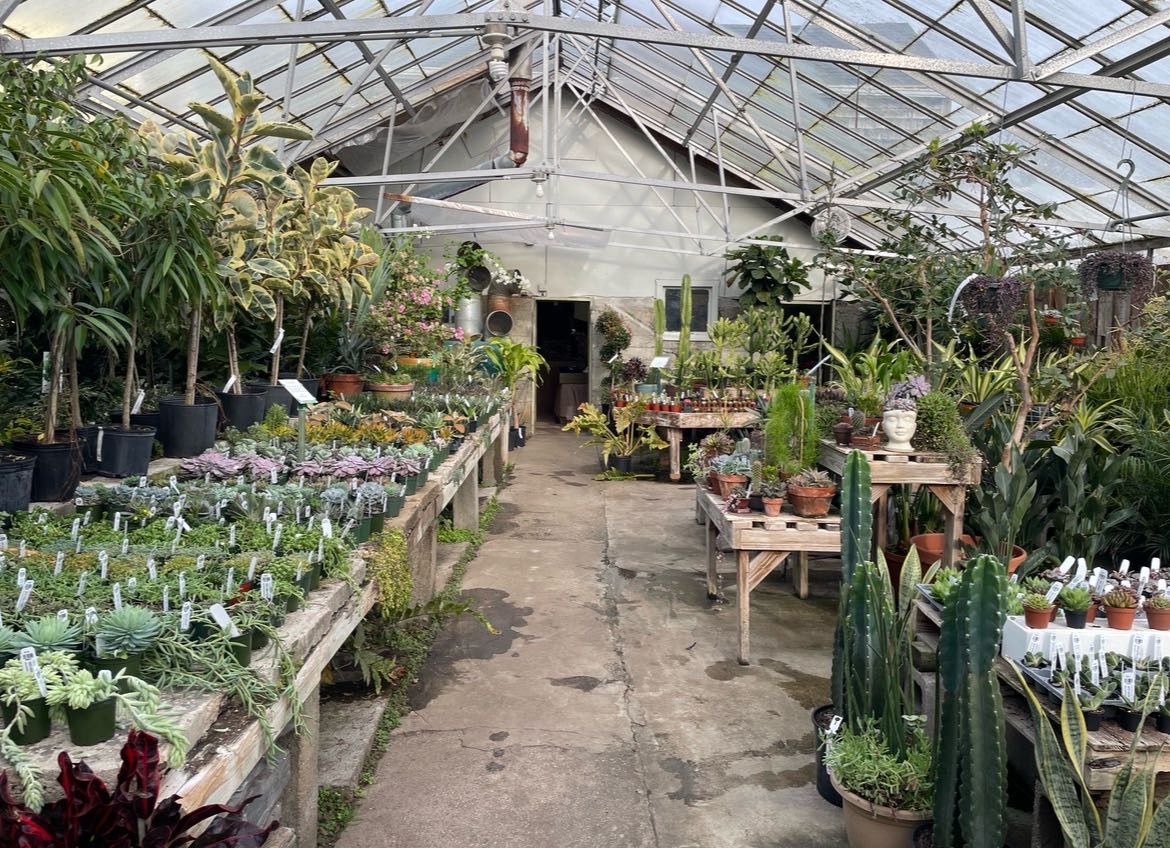
Greenhouse 1Hi everyone. I’m an undergraduate at the University of Toronto. I was previously studying Kinesiology, but I am currently transitioning over to Agriculture. I am a Queens local, and I’m taking this course to build up a solid foundation in the field before I head out to Arizona this April for a farm apprenticeship.
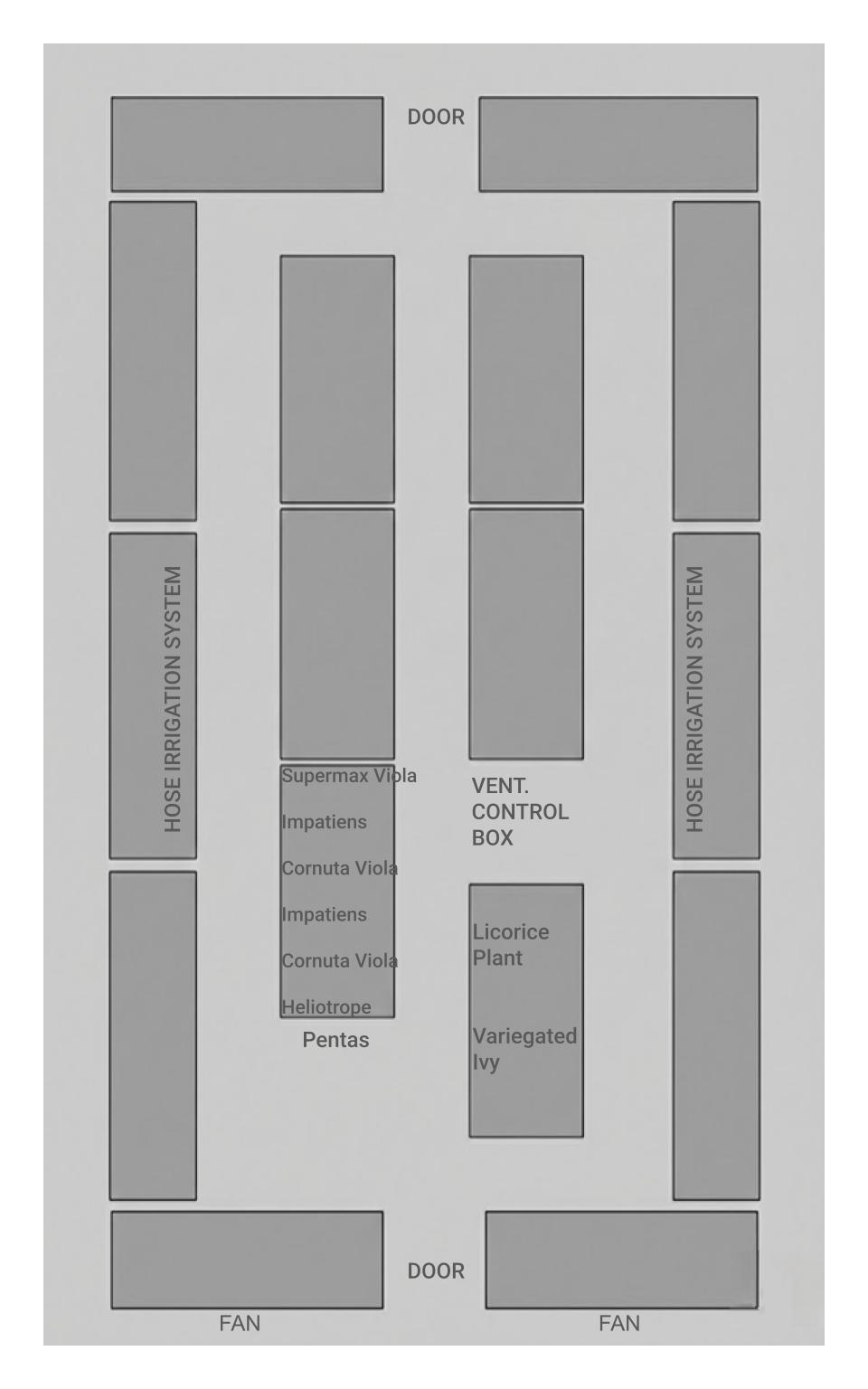
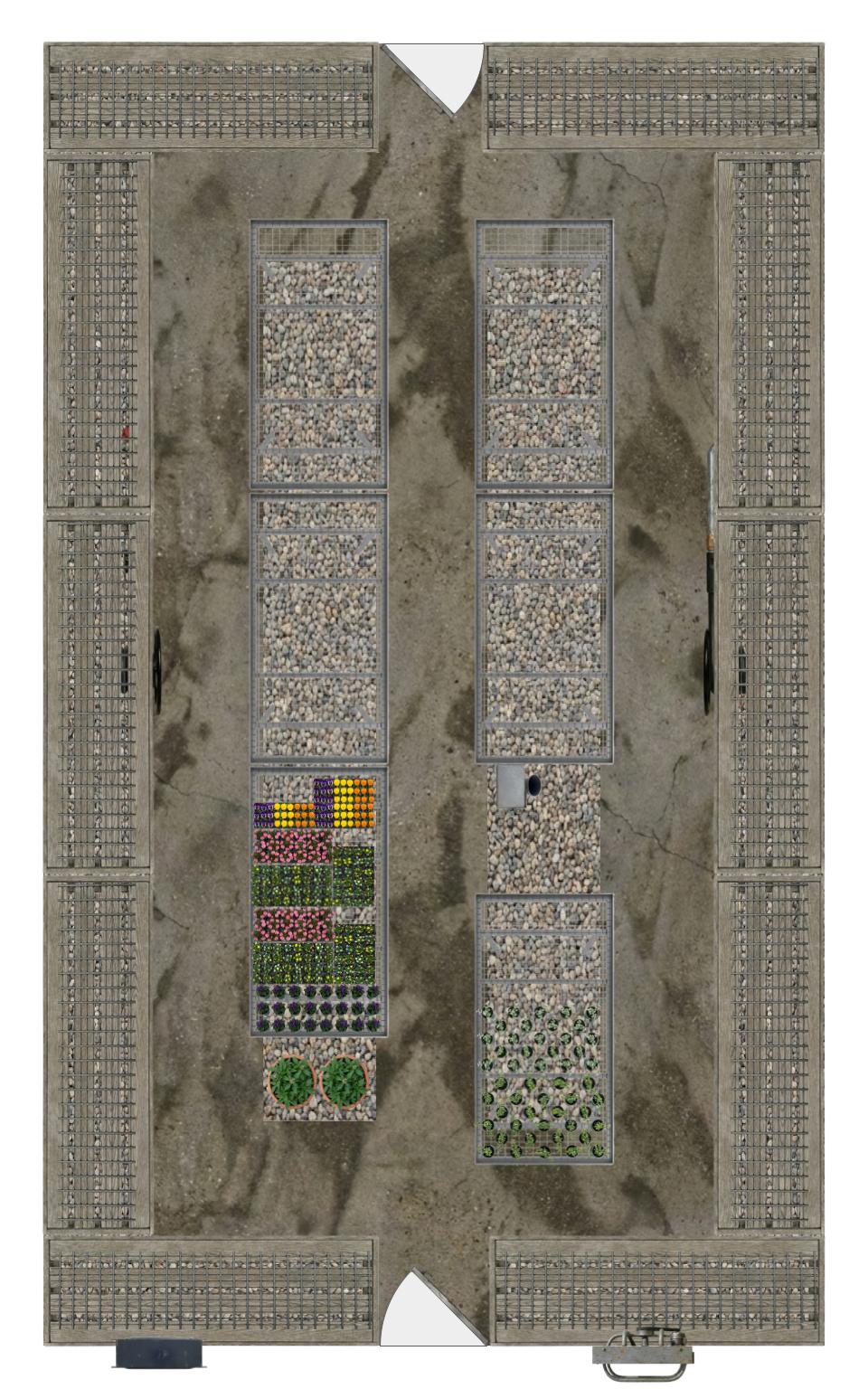
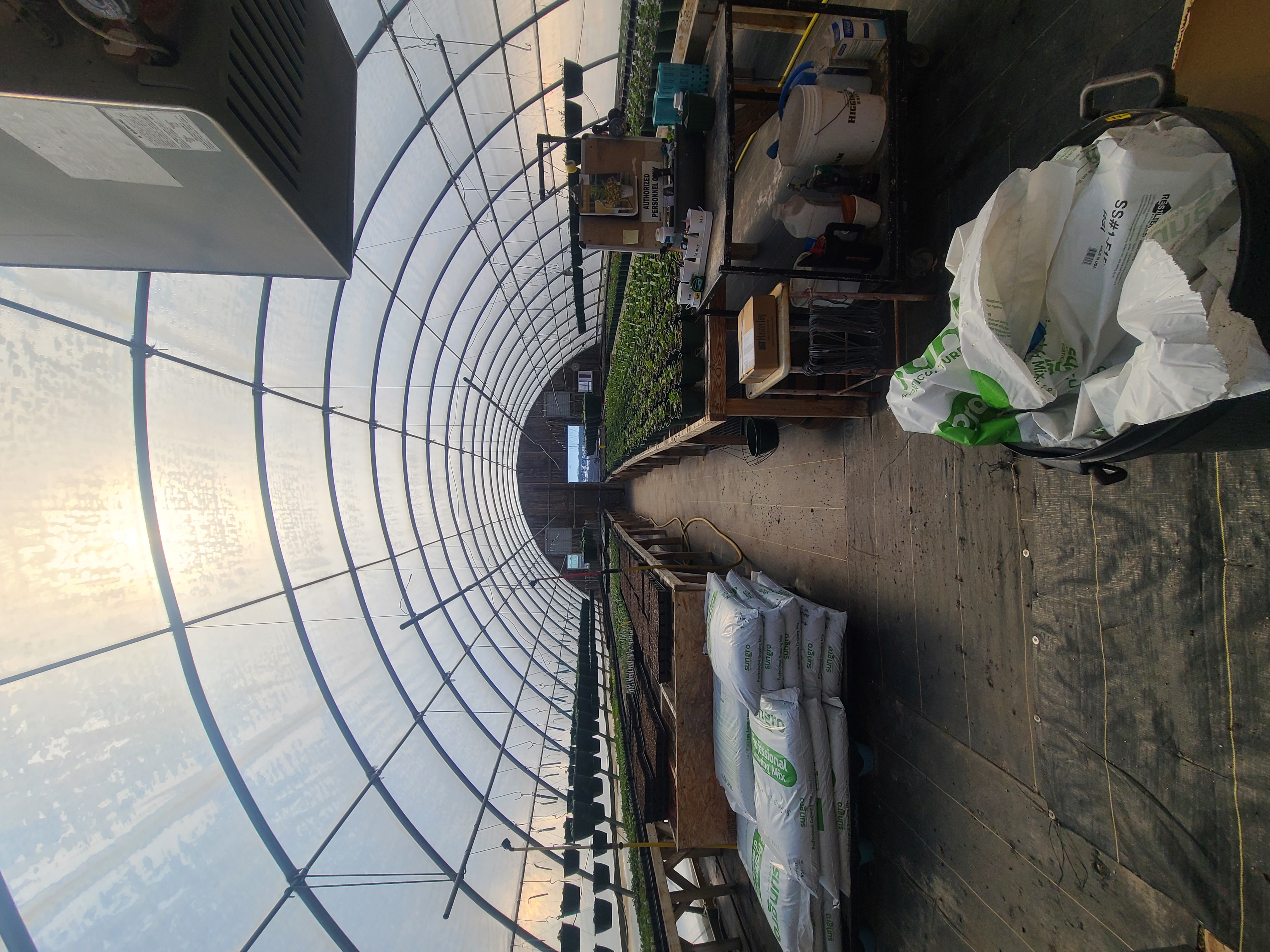
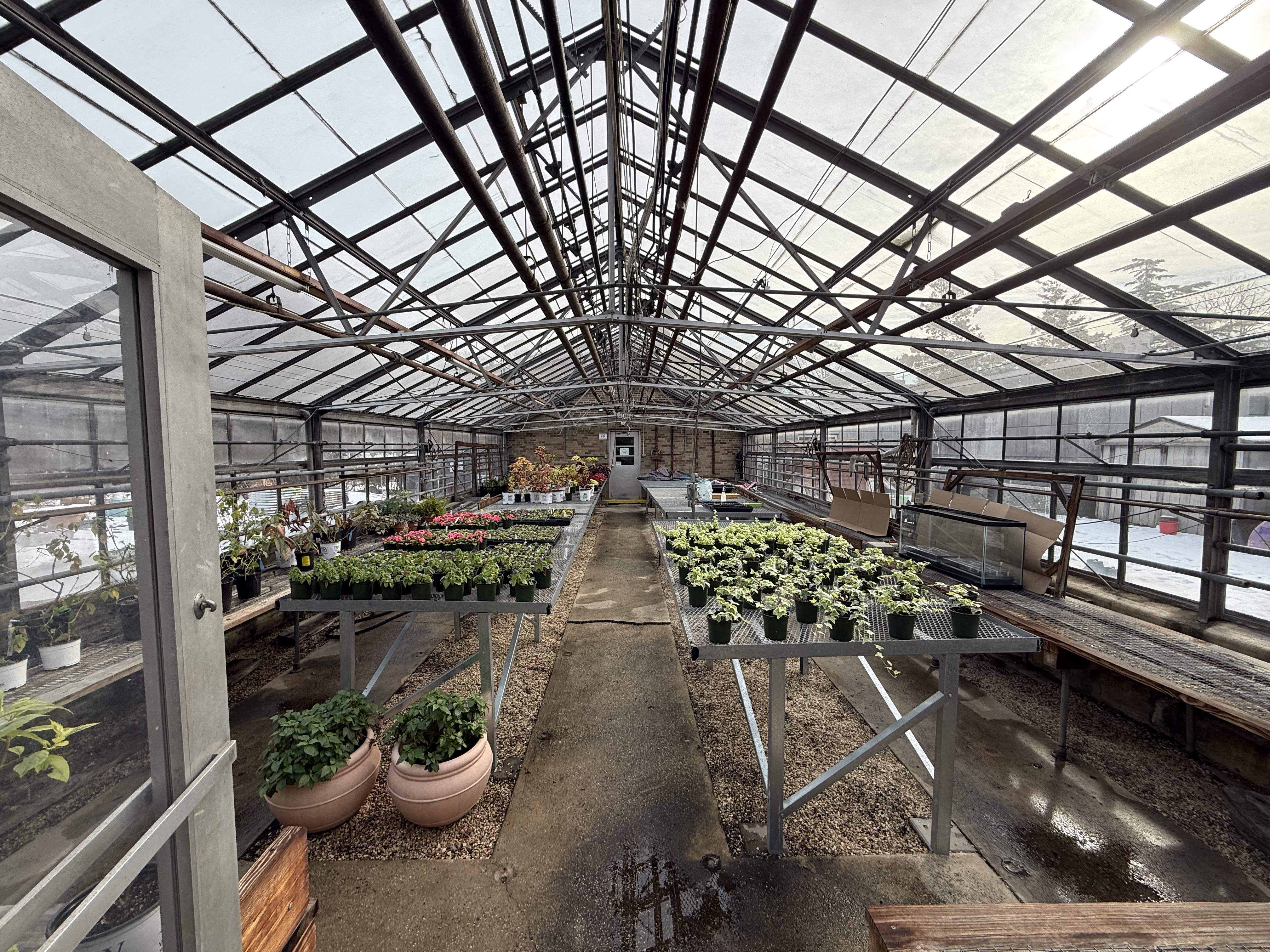
For my scouting assignments, I’ll be working out of the Queens Botanical Garden. Dr. Lamb helped me set up an opportunity there. The garden has three different greenhouses. One houses tropical and exotic plants and herbs, while the other two are for larger and smaller flowers and plants, respectively. I’ve been in contact with the team at QBG and will be starting as a volunteer at the greenhouse soon too, so I’m looking forward to getting more involved with the space.

Here's aa map of the first greenhouse. I haven’t fully mapped out the entire facility yet, but I have detailed the specific bench I’ll be using for my scouting reports.

Greenhouse Layout & Crops:

  • Main Bench (Top to Bottom): Supermax Viola, Impatiens, Cornuta Viola, Impatiens, Cornuta Viola, and Heliotrope. Two large pots of Pentas on the neighboring ground.

  • Left Bench (Top to Bottom): Licorice Plant, and Variegated Ivy.

  • Floor & Assets: Concrete center walkway with gravel drainage sections located under the benches. Hose system and circulation fans.

Looking forward to learning how to scout!

Anexo GreenhouseMapKey.jpg
Anexo GreenhouseMapQBG.jpg
En respuesta a Chester Lam

Re: Week 1 Assignment

por Elise Schillo-Lobdell -
Hi Chester, how did you create that bottom image, the overhead view?, it’s very cool. As for scouting that house - really pay attention to all those old pet plants along the left side. They really just look like abandoned plants that no one has the authority - or heart - to throw out. You probably will find spider mites in there. Also watch those pentas pots which may have brought pests in with them when brought in for the winter. There are some curled leaves on the right side of the right pot - it could have aphids or possibly broad mites (week 4, Feb. 12th).
En respuesta a Primera publicación

Re: Week 1 Assignment

por Grace Harper -

Hi! My names Grace! I live in Breckenridge, Texas, so I'm a little down south from y'all! I work at a nursery in Breckenridge and absolutely love it! I grew up in this nursery and was able to learn from a lot of experienced people. I all myself the modge podge child because of all the guidance and different view points I was given. I am taking this class because I want to learn more and understand why plants act like they do. I am lucky to have a boss that pushes me to be better and gain more knowledge for the long run!

The picture tagged at the bottom is the picture of the Big Greenhouse. We have 5 greenhouses total, but this one gets the most attention. The Big Greenhouse is our main plug planting greenhouse. Right now we have lots of bedding plants and a few veggies and fruits. This greenhouse stays the most constant on temperature as well as maintaince. The main reason I chose this greenhouse though is because of how packed it gets with the plugs, as well as how many different plugs wholesalers are placed in it too. 

We always have to keep a close on it, but we didn't know how to properly scout. I hope with this class I'll be able to put all of what I learn and put to it to good use in this greenhouse! Because of all this, my boss really pushed me to take this class. I am excited to learn everything y'all throw at us!The Big Greenhouse

En respuesta a Primera publicación

Re: Week 1 Assignment

por Brandon Webb -
Hello everyone,

My name is Brandon Webb and I work with NYS parks (Allegany region) as a horticulturist. This fall Allegany State Park started erecting the framework for a greenhouse that we hope to have completed in the spring. I am taking this class to gain information on greenhouse operations and to establish relationships with folks that may be willing to answer the multitude of questions we will have moving forward with this project.

I recently relocated back to WNY after twenty years in the PNW to be close to family both old and new. While in the northwest I worked as an arborist and a plant health care technician but have little greenhouse experience beyond an intro college course and being a frequent shopper. Outside of work I was a volunteer crew leader with Friends of Trees and a regular with Arborist's in the Arboretum at Hoyt Arboretum in Portland Oregon. I always enjoyed the scouting aspect as a PHC tech and look forward to getting back into it in a new setting.

I have spoken to the owner/operator of a local greenhouse in Hindsdale NY that I hope to work with for this project. At this point I do not have any photos to share as details have not been finalized.
En respuesta a Primera publicación

Re: Week 1 Assignment

por River Waterman -
Hello!
My name is River and I am currently a fourth-year student studying wildlife conservation in PEI, Canada. I love working with plants, and though I am not as familiar with ornamentals or working in a greenhouse, I figure it couldn’t hurt to learn about the pests in these spaces, as I’m sure it will come in handy eventually. I also just really enjoy learning about new species and how to identify them.
The past couple of summers I have worked at a nursery for a non-profit forestry project. They do operate a greenhouse which I have gotten to work in; however, we only grow native plants and pests haven’t been much of an issue. I also own many houseplants that occasionally become host to thrips or scale, so I would love to know how to better manage them in order to avoid a full-on outbreak.
Unfortunately, so far, I have been unable to locate a greenhouse to practice scouting in. For the time being I will be using my houseplants, but hopefully in the summer when things open back up, I will find somewhere to practice my new skills.
En respuesta a Primera publicación

Week 1 Assignment

por Mary Taylor -

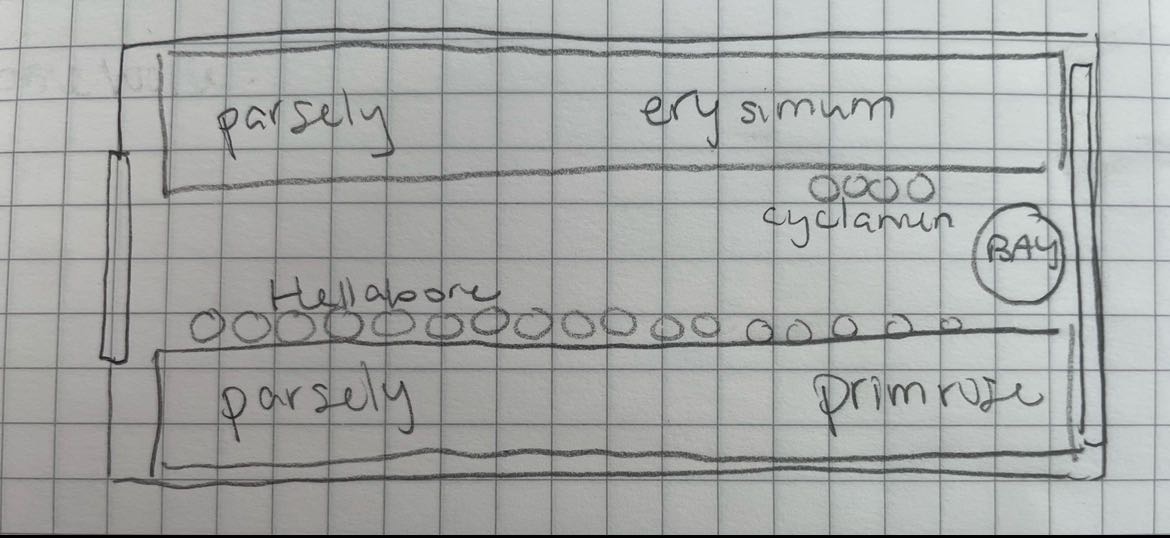
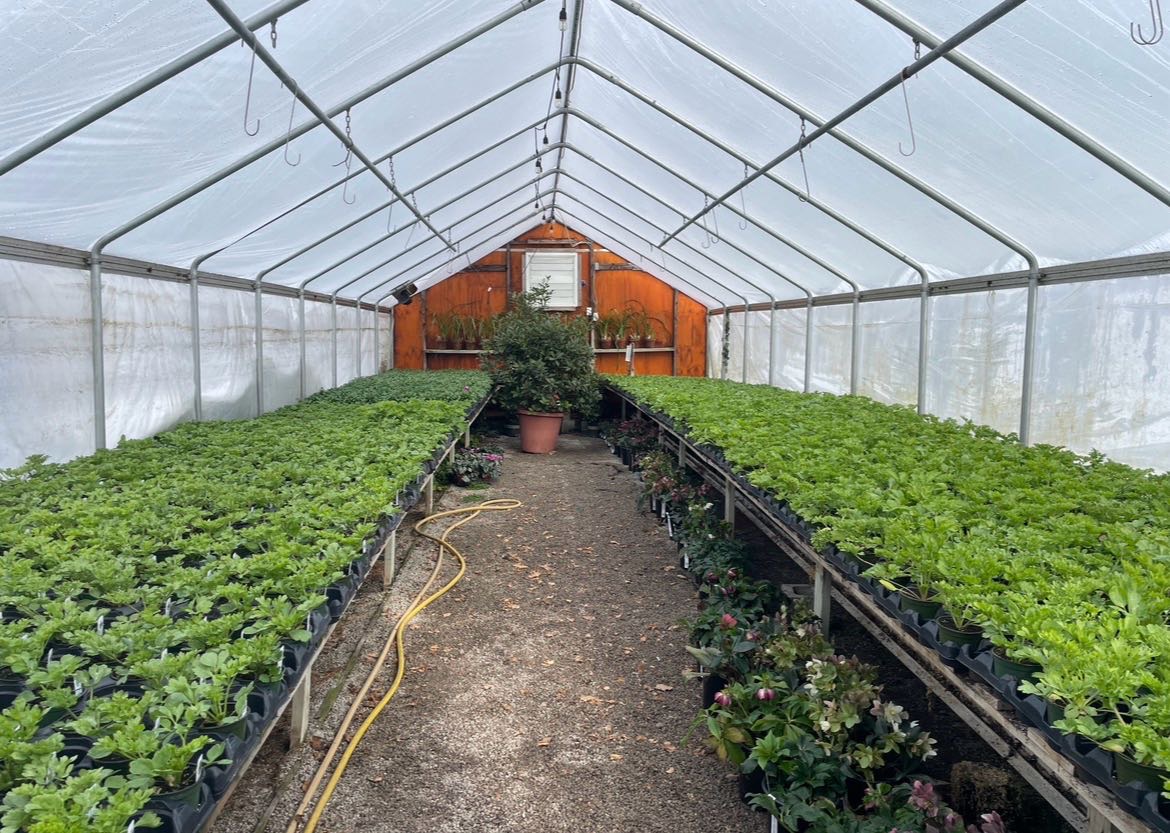
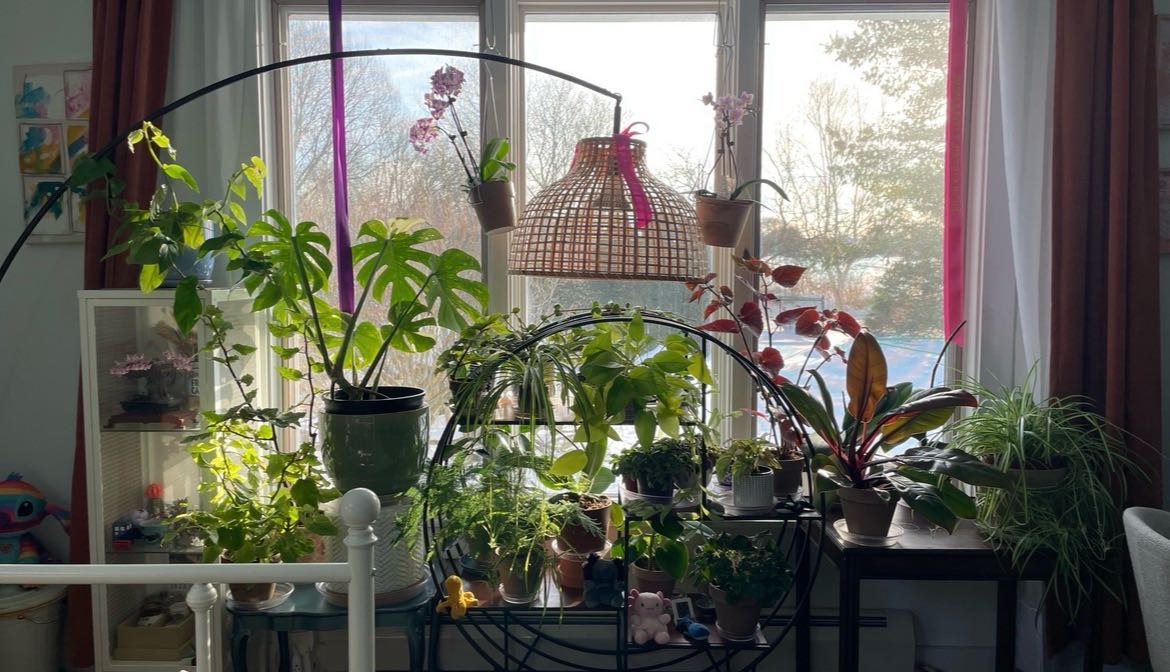
Hi, my name is Mary Taylor. I live in Little Compton Rhode Island and I work at Peckham’s Greenhouse also located in Little Compton. I will have been working at Peckham’s for a year come March. Previously my only experience with plants was my 10 houseplants and my chaos garden. Now of course I’ve expanded to almost 150+ houseplants… I haven’t counted in a while. I will be scouting at Peckham’s for this course. Since there are so many different houses to possibly scout I decided to go with one that has a couple of flowering crops, primrose and erysimum. I’ve included a little drawn diagram of D house as well as a photo.

I’m taking this course because I am interested in learning more about the various pests that plague not only Peckham’s but my own plants. I’m also studying to take the Rhode Island pesticide license exam. Once I have my pesticide license I will also be able to spray at Peckham’s which will be helpful since currently we only have one person who can spray. 

My “favorite” greenhouse pest is currently mealy bugs because it’s so easy to spot and also easy (and fun) to spot treat with rubbing alcohol. I have dealt with them before and know how to treat them effectively. I have not had to deal with them en masse so I may not be as “fond” of them once I’ve been truly tested. 

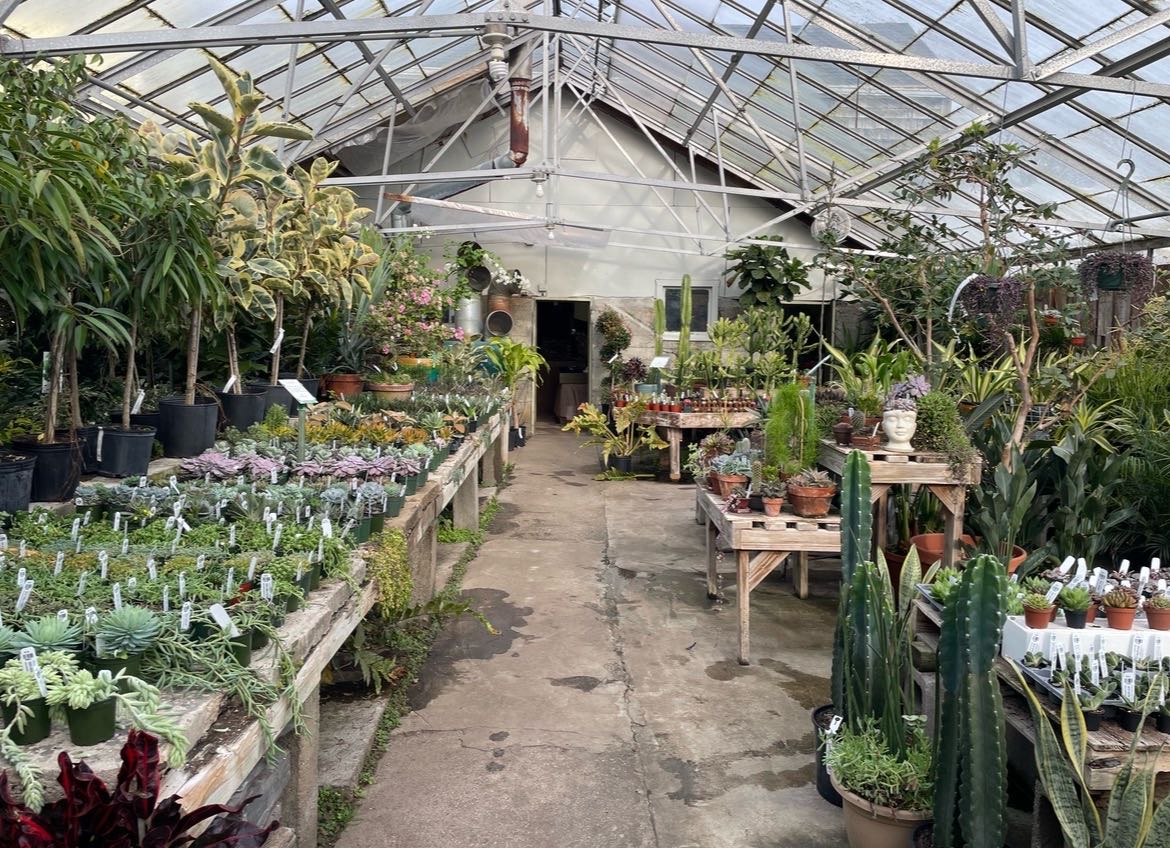
I’ve included some photos of the rest of Peckham’s and my own houseplants just for fun.


Anexo cdv_photo_1770148481_20260203145441.jpg
Anexo cdv_photo_1770149061_20260203150421.jpg
Anexo cdv_photo_1770149177_20260203150617.jpg
Anexo cdv_photo_1770149189_20260203150629.jpg
Anexo cdv_photo_1770149204_20260203150644.jpg
En respuesta a Primera publicación

Re: Week 1 Assignment

por Sathwik Manjunath -

Hello everyone, I am Sathwik and I am a master's student in Controlled Environment Agriculture at Cornell University. I took this course to train myself to be really good at scouting for little bugs and it's an interesting skill to have as a grower.

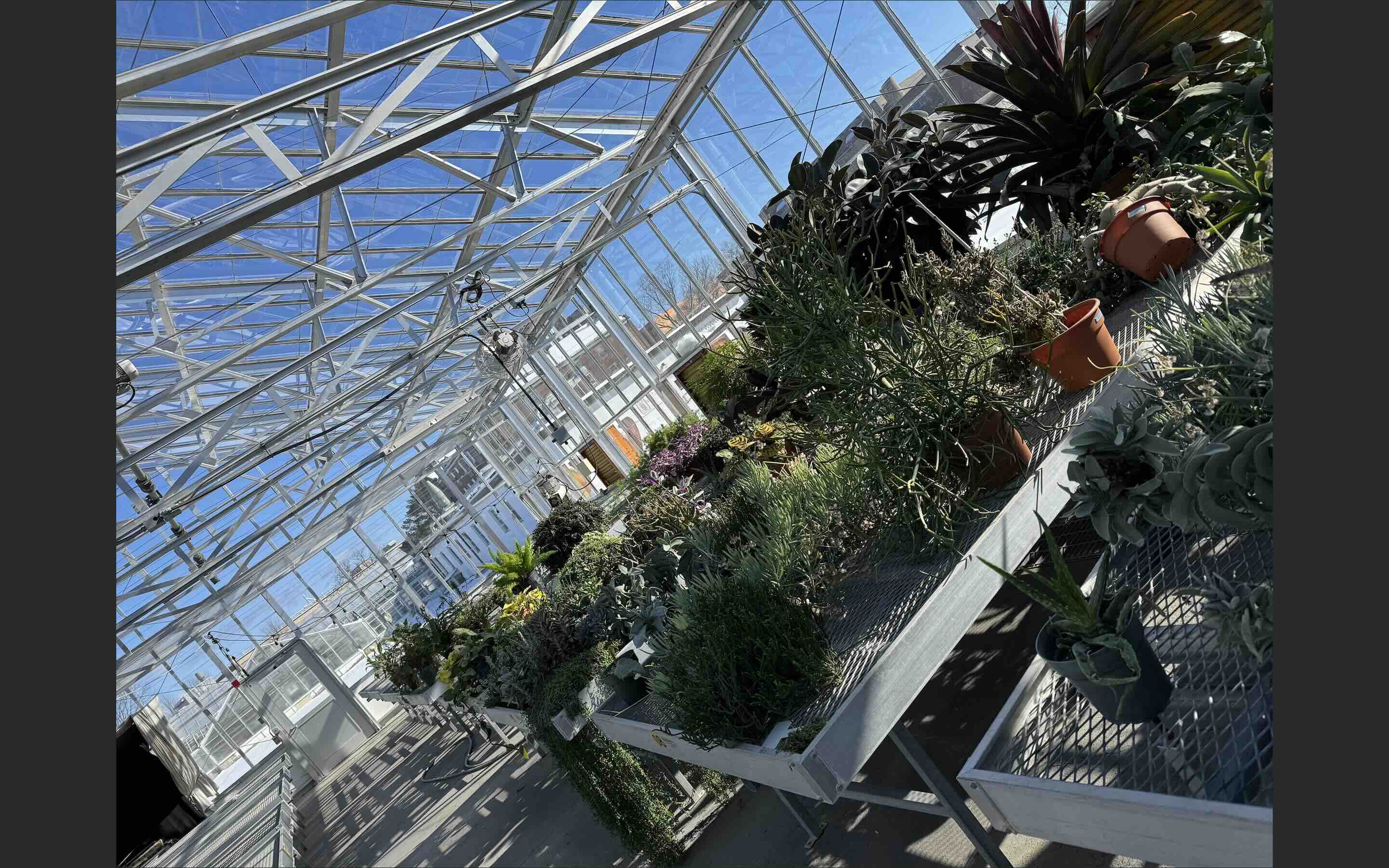
 I found a place to scout  in Kenneth Post laboratory,Cornell University and it is really interesting combination of the plants at this greenhouse. It's a combination of house plants like Begonia ,Bushy Green Plants of Pilea species, umbrella tree and spider plant.

Anexo new save.jpg
En respuesta a Primera publicación

Re: Week 1 Assignment

por Melissa Lazcano Prieto -
Hello everyone!

I'm Melissa Lazcano. I am located on Prince Edward Island, Canada. I run the tree nursery for the PEI Watershed Alliance. I am fairly new to the pest world, so I decided to take this course to learn more about all the little guys and all of your experiences. I don't have enough experience with greenhouses to have a favourite pest or disease yet, but overall, I find Beech Canker interesting. We have some beech populations on the island that seem to be resistant to it.
Question for everyone: What's your favourite tree and why? Mine is Striped Maple (Acer pensylvanicum). I find them gorgeous. I found a big one while out seed collecting during the summer, and I couldn't be happier. It is hard to find big trees on the island, so whenever I get to see one (especially of my favourite kind), I get so excited.

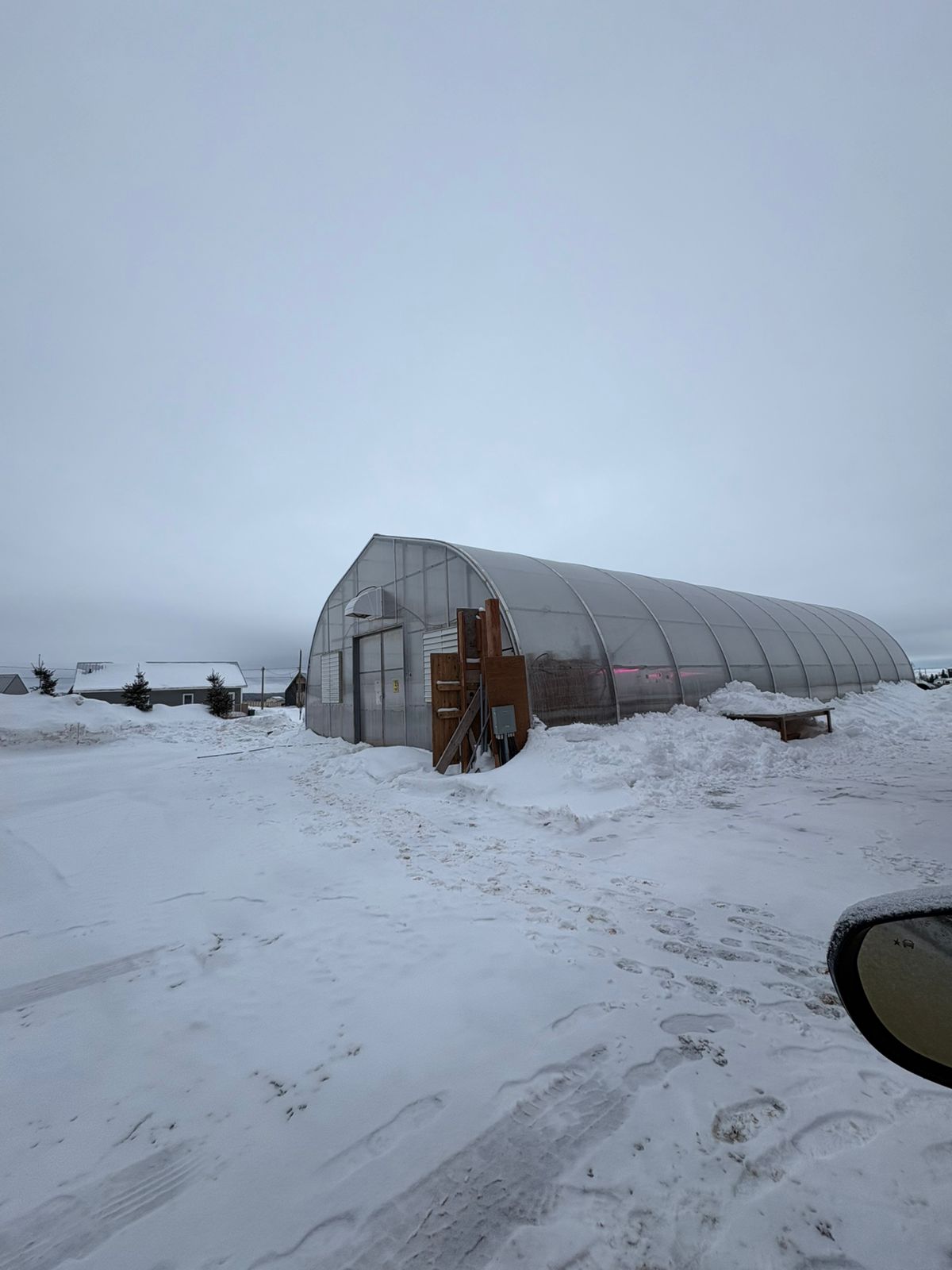
I am very thankful to be able to practice at the Abegweit First Nation community greenhouse. This greenhouse is super cool! It is a Geothermal greenhouse. These types of greenhouses have large tubes that absorb heat into an underlayer of soil and slowly release it during the cold days. These tubes can also help diffuse extra heat during the summer months.

This is a sketch of what is going on inside the greenhouse. I took a photo, but my phone decided to erase it, so please enjoy a picture of the outside of the greenhouse instead.

Anexo WhatsApp Image 2026-02-05 at 18.51.02 (1).jpeg
Anexo WhatsApp Image 2026-02-05 at 18.51.02.jpeg
Anexo WhatsApp Image 2026-02-05 at 18.51.19.jpeg
En respuesta a Melissa Lazcano Prieto

Re: Week 1 Assignment

por Elise Schillo-Lobdell -
Very interesting Melissa! Are those crops grown in beds or are they in pots on benches?, and do they rotate to different crops or are the same things grown in there year-round?