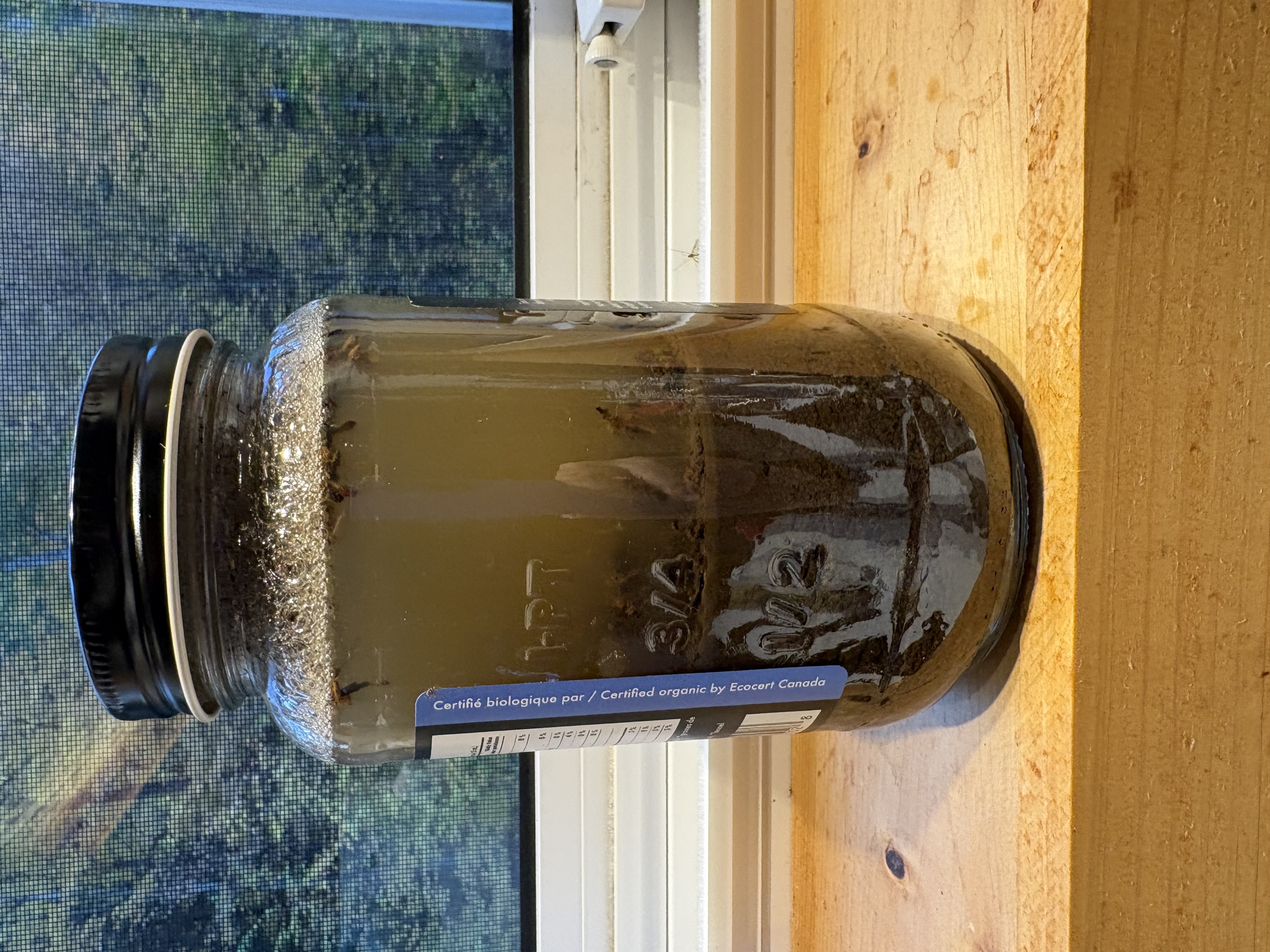
Please submit Jar Test Activity info and photo here!
I took this sample from my greenhouse, and I have another one going from a problem area in my garden.
This one didn't appear to have any clay, and in fact contained almost exactly 70% sand and 30% silt. While there might be a very tiny layer of clay on top of the silt and below the organic matter, that would still put my greenhouse soil into the Sandy Loam texture category.
This was fun to do, though as a soap rationer, I didn't like using a whole teaspoon for an experiment lol. It would be fun to do with kids, especially ones you see daily, as they can do the experiment over the course of two days. You could also take samples to a farmers' market or educational event, to show people lots of different types of soil classes, bringing both the dry version and the jar experiment next to it, so people can feel what a "sandy loam" vs a "sandy clay" looks like.
As for my soil, I'm more interested to see what my problem area looks like. This particular sample is what I would have expected from our greenhouse and is a good baseline to add amendments/compost to next year.
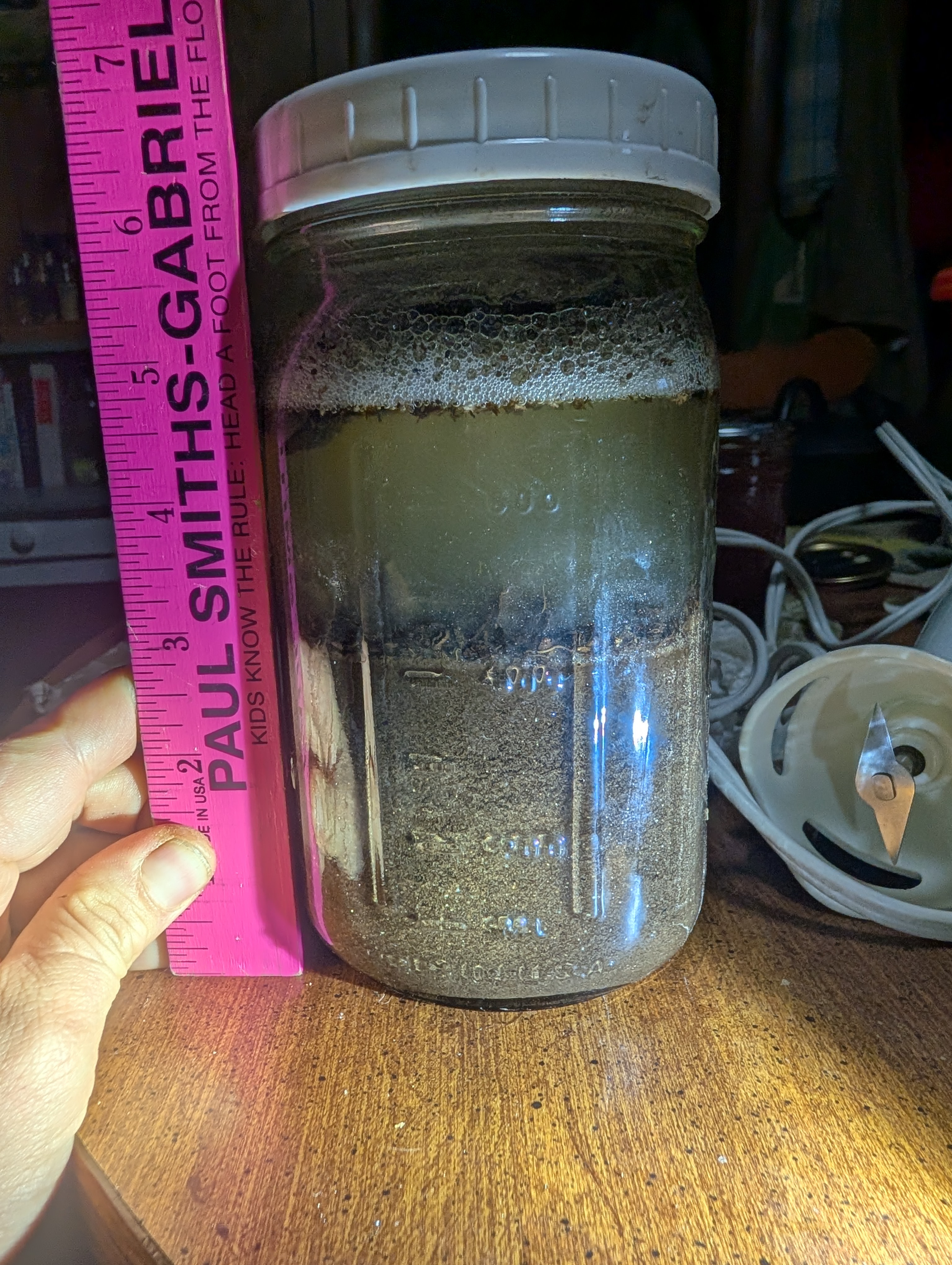
I found this fun and interesting. My sand is 80% and silt is 20%. On the soil texture triangle this means my soil is clay. Though I could not identify the clay in the jar. This sample was from the area that was my original vegetable garden beds which had top soil added. It now contains my pollinator garden including lots of mint.
I was able to figure out how to attach the photo but could not save it right sided up. Sorry.
En respuesta a Laura Trudell
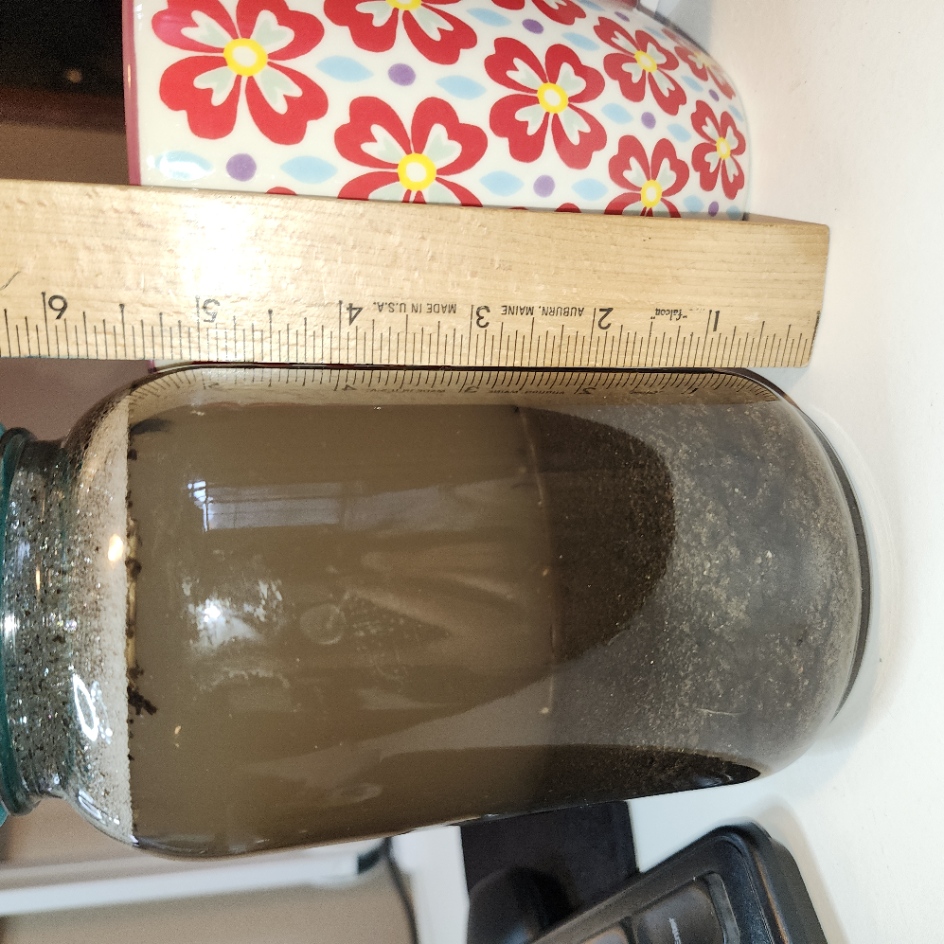
Soil had not changed much in 6 years-Croteau garden
de Patricia Croteau -
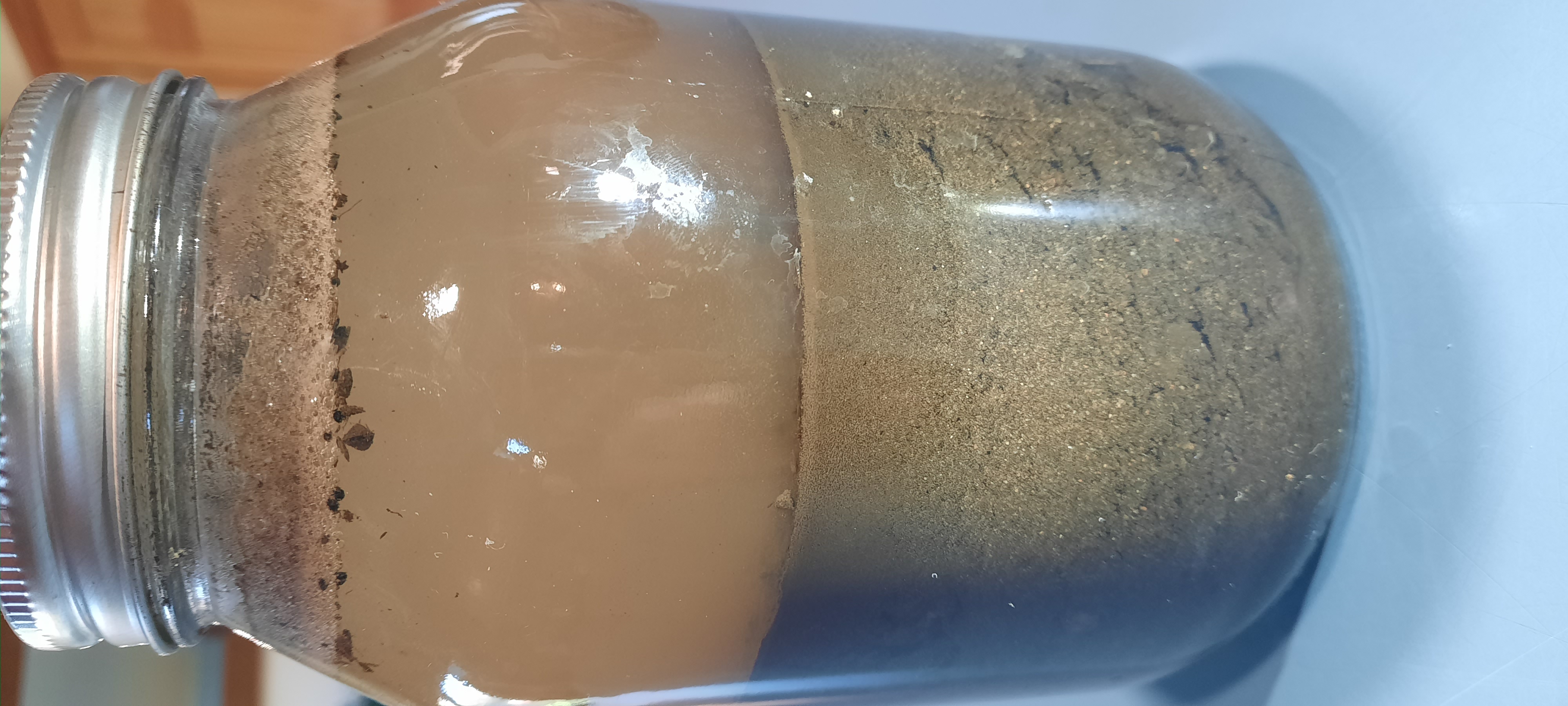
Out of the 3 layers in my soil jar the sand layer The sand was by far the thickest layer. I had 3 and 3/4 inches total. The sand was 3 inches, the silt was 1/4 of an inch and the clay was 1/16th.
I had done this when we first moved to our house and compared my 2 jars. I was surprised how little had changed. I have added lots of leaf litter and composted cow manure over the 6 years and thought I'd find a significant difference but I was wrong. I'm glad I kept my jar from 2020 to be able to see the comparison.
We have rotor-tilled our garden space each year for the first 5 years because we wanted to add compost and leaves. I wonder why it didn't change as much as I thought? We are making a shift this year and laid down cardboard with hardwood sawdust on top during the garden season. This fall I'm flopping the cardboard up on the raised rows. We are going to attempt raised bed in the garden and repeat the cardboard sawdust method again next summer to help build the height of the beds/rows. My hope is that we will get above the water so when I first plant in sprung my seeds and plants will have a better start when the soil is so damp.
I'll be interested in doing another jar in a few year to see how the sawdust/and cardboard affect things.
En respuesta a Patricia Croteau
Re: Soil had not changed much in 6 years-Croteau garden
de Patricia Croteau -
Tina,
The triangle was a little confusing but I bet that if you don't see clay in your jar you are actually in the sandy loamy category too. I had roughly 80% sand in my jar and 15% silt with maybe 5% or a little less of the clay. When I followed the lines, purple to blue to green it put me in sandy loamy.
En respuesta a Laura Trudell
Re: Submit Jar Test Activity info and photo here !
de Melissa Conners -
Not really sure haha. I think I see 3 layers. Not sure what they are. I also found that there was a worm in there. I saw one and got it out, but there were two I guess. I guess that means it the soil is good because there were lots of worms. This is going to be a challenging area for me. And not calling it dirt.
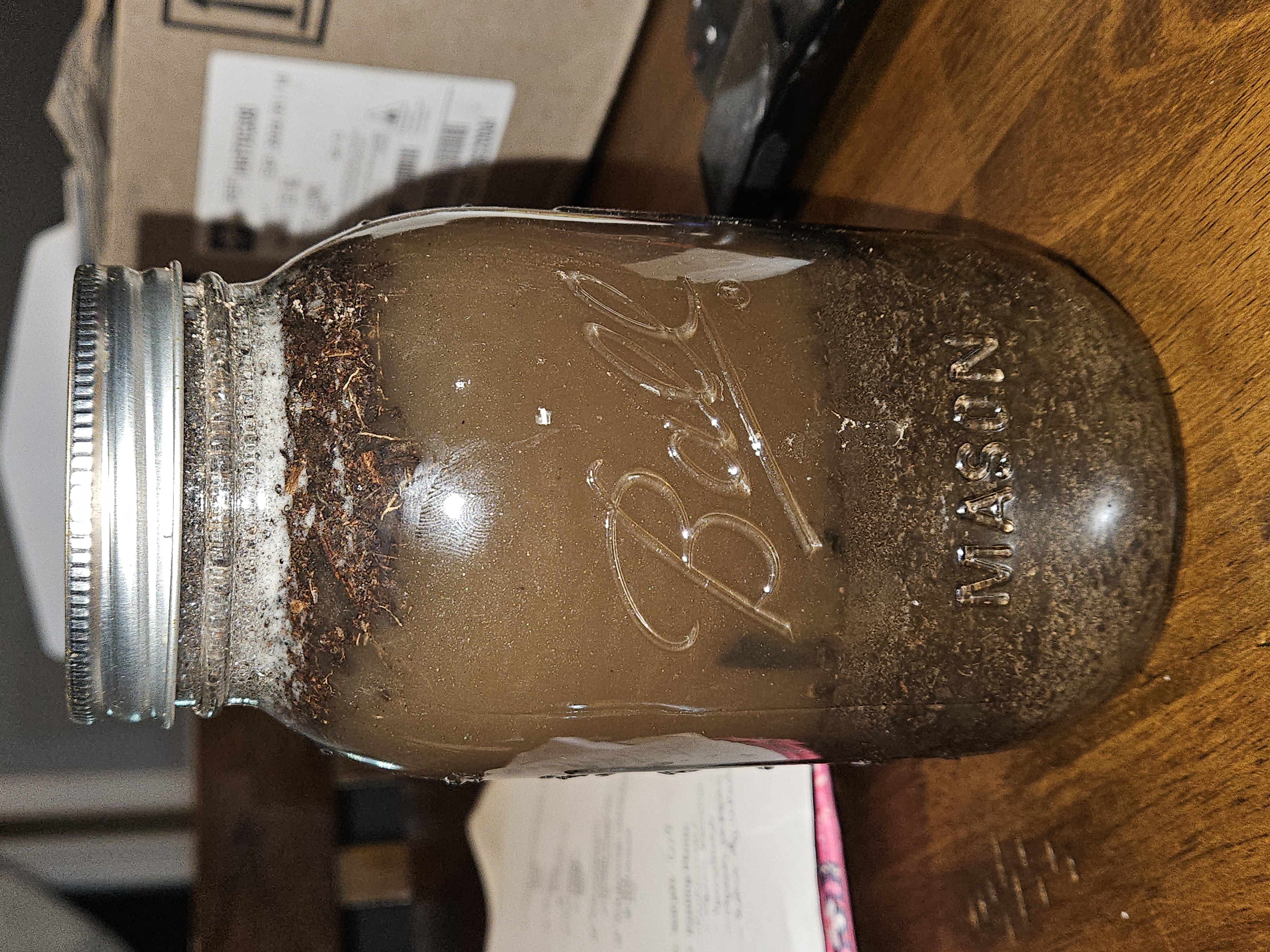
This soil sample is from my parents' new apartment complex. It represents the soil they can't plant into, but we'll pretend they can. They don't call this part of NC The Sandhills for nuthin', as the sample is 50% sand, 25% silt and 25% clay. I really think the developer's landscape team amended this soil with clay; I don't think it's representative of the surrounding areas and the clay was in small chunks throughout the unwashed sample. This puts the soil smack in the "loamy" category, leaving a broad choice for plantings.
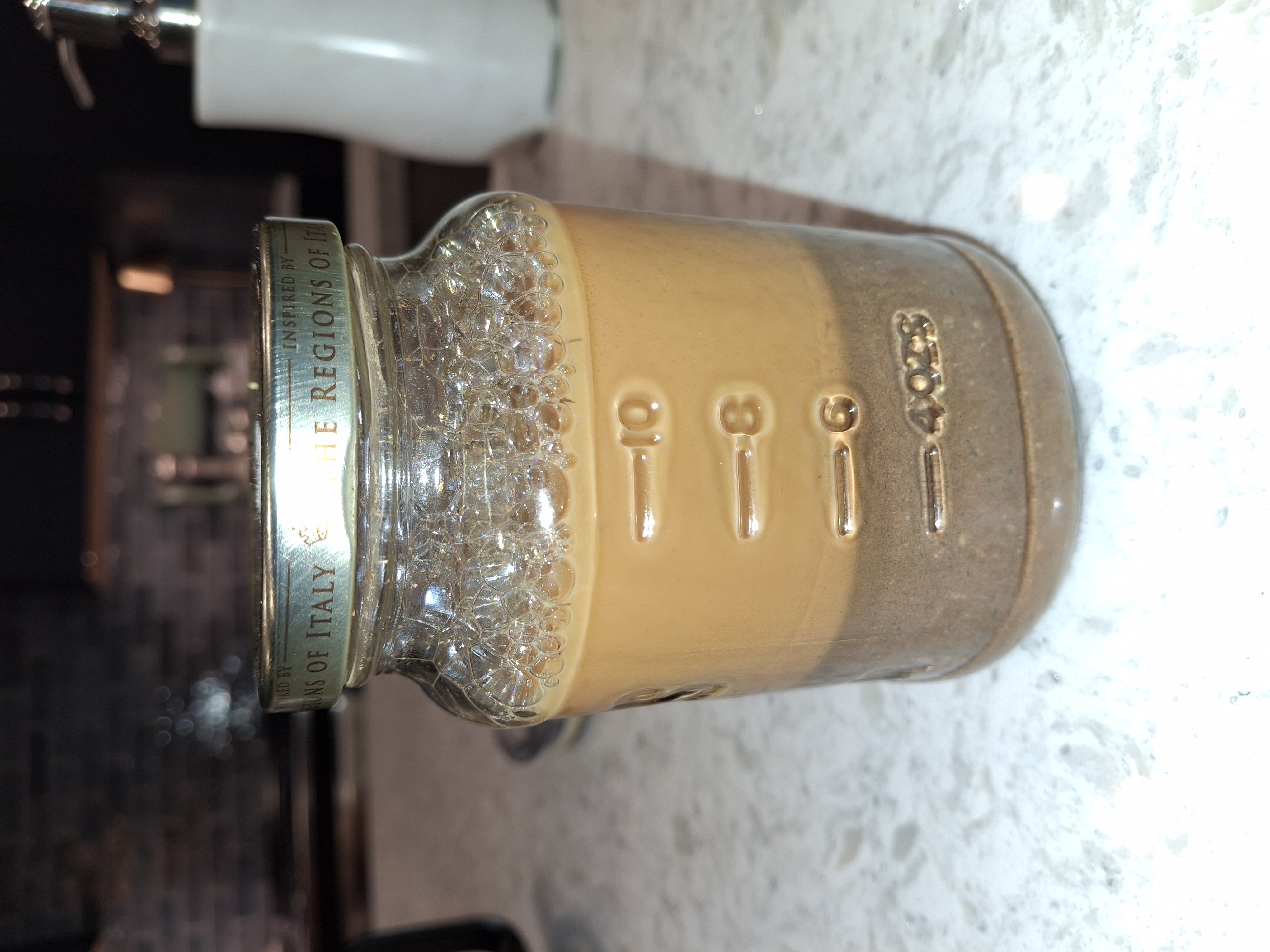
This is soil from my cabin in Quebec (Grenville-sur-la rouge) If I’m correctly interpreting the very thin brown line at the top of the soil sample as clay then the sample is 75% sand, 22% silt, 3% clay which would be in the loamy sand category. I’m going to do a sample in Malone tomorrow but figured I would try it out here first.